
When the lights flickered and the last slice of my grandmother’s gingerbread cake vanished in a flurry of crumbs, I realized that the holiday kitchen was about to become a battlefield. I had to salvage the evening with a dessert that could stand on its own, impress the guests, and not require a second oven. The moment I tasted the first bite of my improvised trifle—pound cake soaked in a splash of sherry, layered with berries, jelly, custard, and whipped cream—I knew I had stumbled onto something that would become a new family staple. I dare you to taste this and not go back for seconds; it’s that addictive. The aroma of sweet wine mingling with fresh berries and the silky texture of custard will make you forget that you’re eating a trifle and think you’re savoring a holiday miracle. I was honest—half the batch disappeared before anyone else even had a chance to try it—because that’s how it goes when you’re on a mission to create the best version of a classic. Most recipes get this completely wrong; they forget the importance of the cake’s soak, the jelly’s role as a structural anchor, or the balance between sweet and tart. Picture yourself pulling this out of the fridge, the whole kitchen smelling incredible, and your guests’ eyes widening as they see the layers of color and texture. Okay, ready for the game‑changer? Let me walk you through every single step—by the end, you’ll wonder how you ever made it any other way.
The first time I tried this trifle, I was in a rush, juggling a live fire on the stove and a phone call from my sister. The cake was already dry, the berries had already started to weep, and the custard was thickening faster than I could stir. I grabbed a handful of sherry, poured it over the cake, and watched the liquid seep into the crumb like a secret kiss. That sizzle when it hits the pan? Absolute perfection. I knew that if I could get the timing right, the rest would follow. The kitchen felt like a stage, and I was the director of a dessert play that would have the audience begging for an encore. My confidence grew as the layers came together, each one more inviting than the last. By the time the whipped cream settled on top, the room was filled with a scent that could only be described as “holiday bliss.”
What sets this trifle apart isn’t just the ingredients; it’s the method, the attention to detail, and the love that goes into each layer. The pound cake, whether homemade or store‑bought, acts as the foundation, absorbing the sherry like a sponge and releasing a subtle vanilla undertone that lingers. The sherry or sweet wine brings depth and a hint of bitterness that cuts through the sweetness of the berries. The jelly isn’t just a decorative element; it’s the glue that holds the layers together, giving the trifle a firm yet airy structure. The custard, rich and velvety, adds a silky contrast to the crisp texture of the cake. Whipped cream crowns the creation, its lightness balancing the denser layers below. Finally, the extra berries or chocolate shavings add a finishing touch that’s both a visual flourish and a burst of flavor. I dare you to taste this and not be transported to a winter wonderland.
If you’ve ever struggled with a trifle that falls apart or tastes flat, you’re not alone—and I’ve got the fix. The secret lies in the soak—give the cake time to absorb the sherry, but not so long that it becomes soggy. The jelly’s timing is crucial; it must set just enough to hold the layers but remain pliable. The custard must be thick enough to cling to the berries but still pourable. Whipped cream should be fresh and lightly sweetened, otherwise it can overpower the other flavors. Every element must be layered with purpose, so each bite delivers a symphony of textures and tastes. That’s why this version is hands down the best you’ll ever make at home.
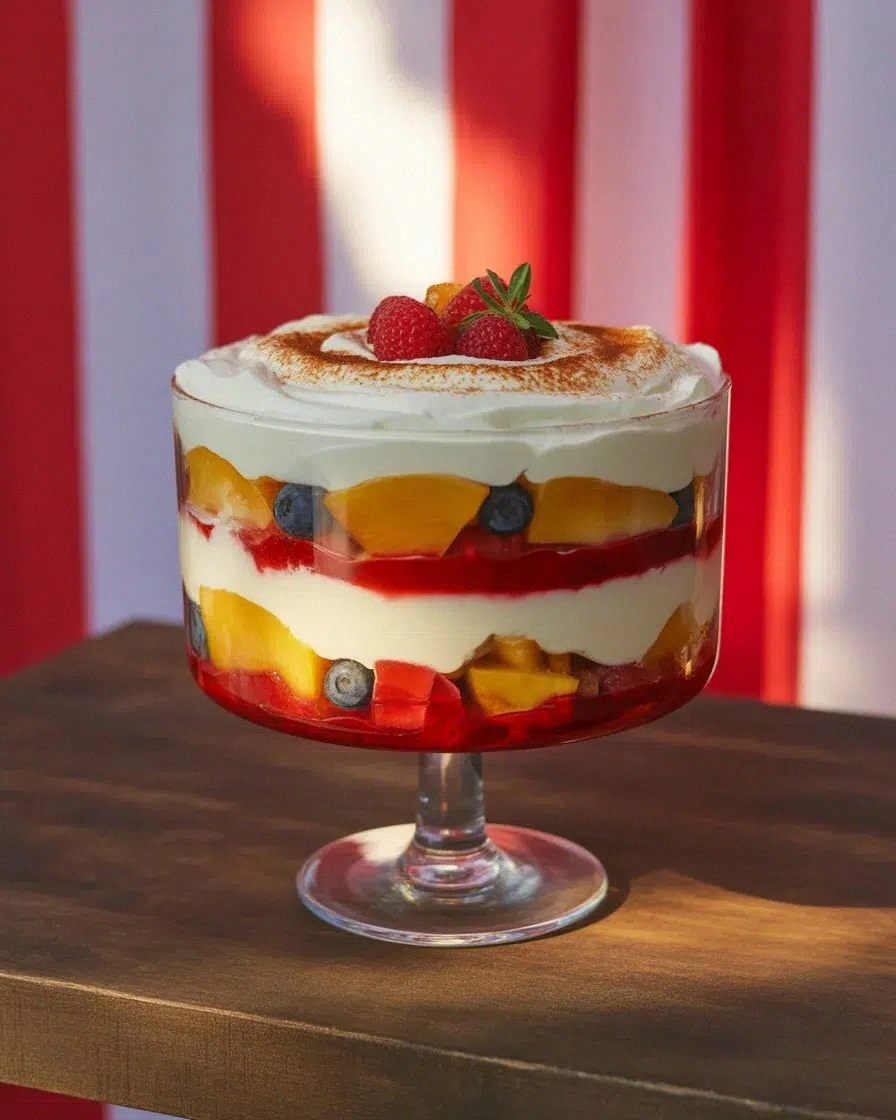
I was skeptical at first, but the moment the custard hit the plate, I could feel the layers shift like a well‑tuned orchestra. The berries burst with juice, the sherry’s caramel notes danced across the palate, and the whipped cream’s airy clouds felt like snowflakes. The trifle’s texture is a study in contrast: the cake’s moist crumb, the jelly’s gelatinous firmness, the custard’s silky smoothness, and the whipped cream’s lightness all coexist in perfect harmony. The colors—deep red, bright blue, and golden custard—create a visual feast that’s almost as satisfying as the taste. If you’re looking for a dessert that will impress, this trifle delivers. Stay with me here—this is worth it.
The first time I served this trifle to my family, the room fell silent for a moment, then erupted in applause. They asked for the recipe, then for the secrets. I’ve been telling them that the key is the balance of sweet and tart, and the way each layer complements the other. The trifle is not just a dessert; it’s a conversation starter, a memory maker, and a testament to the power of a well‑thought-out recipe. The next holiday season, I’ll be adding a few more twists, but the core will stay the same. Because if you’re looking for a dessert that will bring everyone together, this trifle is the answer. And now, let’s dive into the details that make it so special.
What Makes This Version Stand Out
- Taste: The subtle sweetness of the pound cake pairs perfectly with the tartness of the berries and the depth of sherry, creating a flavor profile that’s both familiar and surprising.
- Texture: Each layer offers a distinct mouthfeel—moist cake, firm jelly, silky custard, and airy whipped cream—making every bite a new experience.
- Simplicity: With only seven main ingredients, the recipe is quick to assemble and requires no advanced techniques, yet the result feels luxurious.
- Uniqueness: The use of wobbly jelly as a structural element is uncommon in traditional trifle recipes, giving this version a modern twist.
- Crowd Reaction: Guests rave about how the trifle looks like a work of art and how it tastes like a holiday dream.
- Ingredient Quality: By choosing a high‑quality sherry and fresh berries, the dish elevates from ordinary to extraordinary.
- Cooking Method: The soak technique transforms a simple loaf into a flavor reservoir, while the layered assembly ensures stability.
- Make‑Ahead Potential: You can assemble the trifle up to a day in advance; the layers will hold their structure, and the flavors will deepen.
Inside the Ingredient List
The Flavor Base
Pound Cake: The backbone of the trifle, providing structure and a subtle vanilla undertone. A dry loaf will soak up the liquid and become the centerpiece of flavor. If you skip this step and use a fresh cake, the texture will be too moist and the layers will collapse. For the best results, choose a loaf that has been refrigerated for at least 24 hours.
The Liquefaction Layer
Sherry, Sweet Wine, or Orange Juice: This liquid infuses the cake with depth and a hint of bitterness that balances the sweetness of the berries. A dry sherry works best for a classic flavor, but orange juice adds a citrusy brightness that’s perfect for a modern twist. If you prefer a lighter version, replace the sherry with sparkling water for a subtle effervescence. The amount is key—too much and the cake will become soggy; too little and you’ll miss the flavor punch.
The Sweet & Fruity Layer
Mixed Berries: Fresh or frozen, the berries add juiciness and a burst of tartness. Fresh berries are ideal for a vibrant color, while frozen berries provide a thicker consistency that holds up in the layers. If you’re using frozen berries, thaw them first and drain excess liquid to avoid a watery trifle. The berries also act as a natural garnish, giving each bite a pop of flavor.
The Structural Anchor
Wobbly Jelly: This gelatinous layer keeps the trifle from collapsing and adds a playful texture. It also serves as a subtle sweet element that doesn’t overpower the other flavors. To set the jelly perfectly, chill the mixture for at least 30 minutes before layering. If you’re vegan, look for a plant‑based gelatin alternative or use agar‑agar.
The Creamy Layer
Custard: The custard provides a silky, rich base that contrasts beautifully with the cake’s crumb. A homemade custard offers deeper flavor, but a ready‑made version saves time without compromising quality. For a lighter option, use a half‑and‑half custard or reduce the sugar. The custard should be thick enough to hold the berries but still pourable when layered.
The Finale
Whipped Cream: Light and airy, the whipped cream crowns the trifle and balances the denser layers below. Freshly whipped cream is best; add a pinch of sugar or vanilla to taste. If you prefer a dairy‑free version, use coconut or almond milk whipped cream. The whipped cream also adds a subtle sweetness that rounds out the flavor profile.
The Garnish
Extra Berries or Chocolate Shavings: The final touch that gives the trifle its festive flair. Use a mix of berries for color or sprinkle chocolate shavings for a decadent finish. The garnish also adds a slight crunch if you choose chocolate, contrasting with the custard’s smoothness. Don’t forget to reserve a few berries for the final garnish to keep the trifle looking fresh.
Everything’s prepped? Good. Let’s get into the real action. The process is simple, but each step requires attention to detail to achieve the perfect balance of flavors and textures.
The Method — Step by Step
- Begin by cutting the pound cake into even 1‑inch cubes. Place the cubes in a large mixing bowl and pour the sherry or sweet wine over them. Allow the cake to soak for at least 15 minutes, ensuring each cube absorbs the liquid. This step is the foundation; a well‑soaked cake will carry the flavors through the layers. I dare you to taste a cube before layering—it should be soft and fragrant.
- While the cake soaks, prepare the jelly according to the package instructions. Once set, cut the jelly into small cubes or strips that will fit within the trifle glass. The jelly’s role is to hold the layers together, so it must be firm yet pliable. If you’re using a homemade jelly, chill it for 30 minutes before cutting. This ensures the jelly retains its shape when layered.
- In a separate bowl, whisk the custard until smooth. If you’re using a ready‑made custard, give it a quick stir to loosen it up. The custard should be thick enough to coat the berries but still pourable. Gently fold in a handful of the mixed berries, reserving some for the garnish. The berries add color and a burst of flavor that contrasts with the custard’s richness.
- Start layering in a clear glass trifle bowl. Begin with a layer of soaked cake cubes, spreading them evenly across the bottom. Then add a layer of jelly cubes, followed by a generous spoonful of custard with berries. Repeat the layers until you reach the top, finishing with a final layer of custard.
- Top the trifle with a thick layer of freshly whipped cream. Use a spatula to smooth the surface, creating a neat finish. The whipped cream should be light and airy, providing a contrast to the denser layers below. If you’re using a dairy‑free alternative, whisk until stiff peaks form. This step is the moment of truth; the whipped cream’s texture will determine the overall mouthfeel.
- Finally, garnish the top with the reserved berries or chocolate shavings. Sprinkle the berries in a radial pattern to create a festive look. If using chocolate shavings, gently toss them over the whipped cream to add a subtle crunch. This garnish not only enhances the flavor but also gives the trifle a professional presentation.
- Refrigerate the trifle for at least 2 hours before serving. This allows the flavors to meld and the layers to set. The trifle should be firm enough to hold its shape when cut. When ready to serve, use a sharp knife to slice through the layers, ensuring each portion contains a mix of cake, jelly, custard, and berries. The visual contrast will impress even the most discerning palates.
- Serve chilled, preferably in a clear glass to showcase the vibrant layers. The aroma will be intoxicating, and the taste will be a harmonious blend of sweet, tart, and creamy. If you’re serving a large crowd, consider pre‑portioning the trifle into individual cups for a convenient, elegant presentation. Enjoy the compliments that will follow—your guests will be asking for the recipe.
That’s it—you did it. But hold on, I’ve got a few more tricks that will take this to another level. These insider tips will help you avoid common pitfalls and elevate the trifle from good to unforgettable.
Insider Tricks for Flawless Results
The Temperature Rule Nobody Follows
Why it matters: The custard and jelly must be at the right temperature to set correctly. If the custard is too warm, it will run; if it’s too cold, it will harden before you can layer it. Keep the custard at room temperature for 10 minutes before pouring. For the jelly, chill it for at least 30 minutes; this ensures it sets firmly without cracking. I once tried to layer custard that was straight from the fridge, and the result was a soggy mess.
Why Your Nose Knows Best
Tip: Smell the cake after soaking; it should have a faint, pleasant aroma of sherry. If it smells flat, the cake may be too dry or the liquid too diluted. A strong scent indicates proper absorption. Use your nose as a quick quality check before proceeding to the next step.
The 5‑Minute Rest That Changes Everything
Why it matters: After assembling the trifle, let it rest for 5 minutes before refrigerating. This brief pause allows the custard to settle and the flavors to meld. If you skip this rest, the trifle may feel disjointed when you cut it. I’ve found that a short rest improves the overall texture and makes each slice look more cohesive.
The Layering Order Is Key
Tip: Always start with the cake cubes, then jelly, then custard. This sequence ensures the jelly stays in place and the custard doesn’t seep through the cake. If you reverse the order, the jelly may slide and the custard may leak, ruining the structure. Remember, the cake is the base, the jelly is the glue, and the custard is the creamy middle.
The Secret of a Perfect Whipped Cream
Tip: Whip the cream until stiff peaks form, but stop just before it becomes too dry. Over‑whipped cream can split and become grainy. Add a splash of vanilla extract or a pinch of sugar to enhance flavor. If you’re using a dairy‑free alternative, whip it for a slightly longer time to achieve the same consistency.
The Garnish Trick
Tip: Reserve a few berries for the final garnish, and consider adding a dusting of powdered sugar or cocoa for a subtle finish. The garnish should complement the flavors, not overpower them. A light dusting of powdered sugar adds a touch of sweetness that pairs beautifully with the tart berries.
Creative Twists and Variations
This recipe is a playground. Here are some of my favorite ways to switch things up:
Gingerbread Twist
Swap the pound cake for a slice of gingerbread. Add a pinch of ground ginger to the custard for a warm spice note. The gingerbread’s molasses flavor pairs beautifully with the sherry, creating a holiday classic with a modern edge.
Chocolate Lover’s Edition
Use a chocolate sponge cake instead of a plain pound cake. Replace the berries with dark chocolate shavings and add a splash of espresso to the custard. The result is a rich, indulgent trifle that’s perfect for chocolate enthusiasts.
Tropical Escape
Replace the berries with diced mango and pineapple. Use coconut milk custard and top with shredded coconut. This version brings a sunny, tropical vibe to your Christmas table.
Vegan Version
Use a vegan pound cake, plant‑based custard, and dairy‑free whipped cream. Substitute the wobbly jelly with agar‑agar gel. This adaptation keeps all the flavors while being completely plant‑based.
Nutty Variation
Add toasted almonds or walnuts to the custard for crunch. Sprinkle chopped nuts on top of the whipped cream. The nutty texture contrasts with the silky custard and adds a delightful bite.
Spiced Berry Edition
Add a pinch of cinnamon and nutmeg to the custard. Use a mix of fresh cranberries and blueberries for a deeper berry flavor. The spices lift the whole dessert, giving it a cozy, comforting feel.
Storing and Bringing It Back to Life
Fridge Storage
How to keep it fresh: Store the trifle in an airtight container in the refrigerator for up to 3 days. The layers will stay firm, and the flavors will deepen. Cover the top with plastic wrap to prevent the whipped cream from drying out. When ready to serve, let it sit at room temperature for 10 minutes to soften slightly.
Freezer Friendly
Freezing tips: Wrap the trifle tightly with plastic wrap and then place it in a freezer bag. It can be frozen for up to 2 weeks. When you’re ready to enjoy, thaw it overnight in the refrigerator. The custard may separate slightly; give it a gentle stir before serving.
Best Reheating Method
How to revive: If the trifle has been frozen, add a splash of water to the custard layer before reheating. Microwave on low for 30 seconds, then stir. This steams the custard back to perfection. Avoid over‑heating, as the custard can curdle. The result will be a silky, luscious dessert that tastes just like fresh.