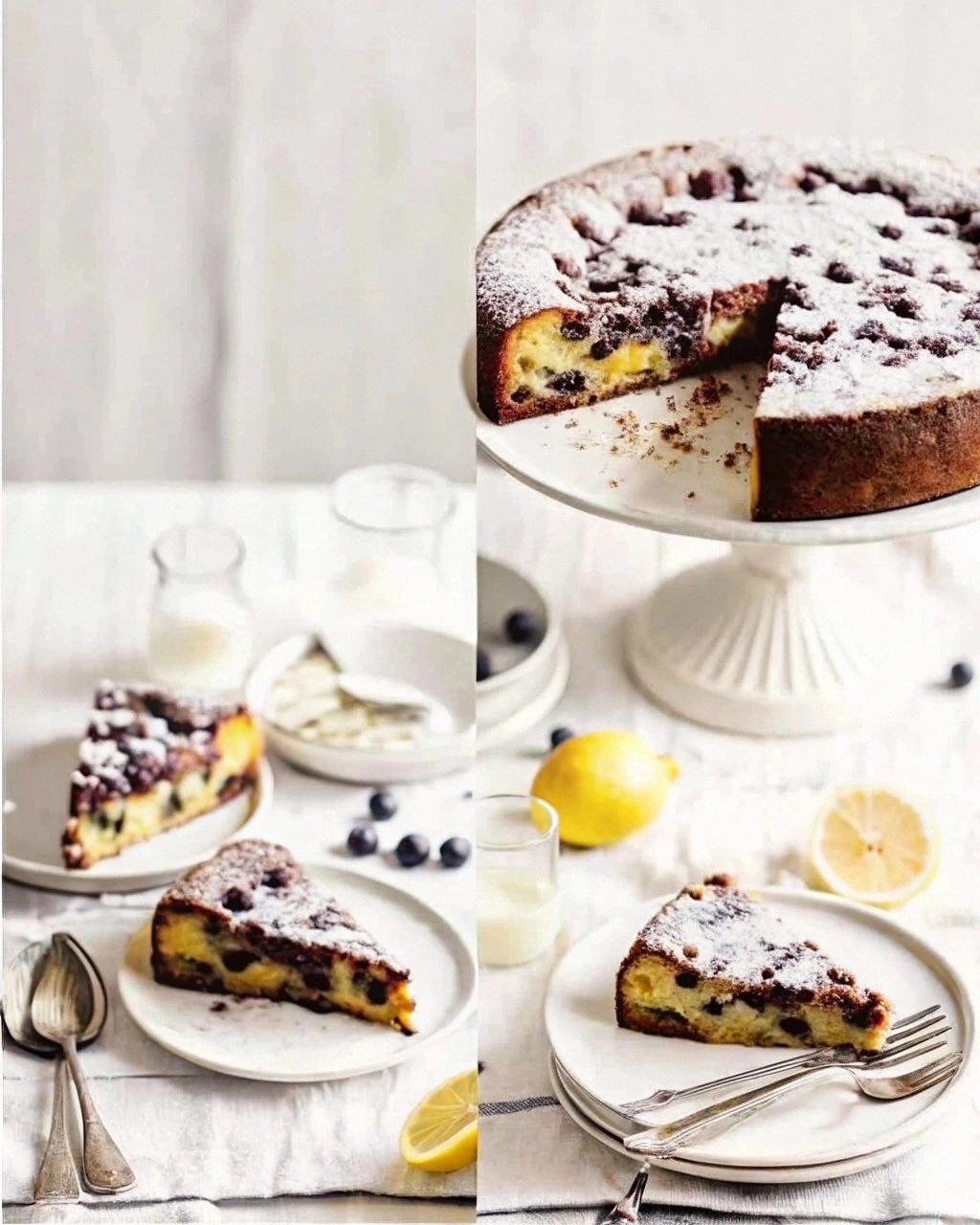
I still remember the day I ruined my grandmother's famous pound cake. It was supposed to be the centerpiece of my first dinner party, but instead it emerged from the oven looking like a geological disaster — sunken, dense, and tasting like disappointment with a hint of lemon furniture polish. My guests were polite, bless them, but I could see the pity in their eyes as they choked down rubbery slices. That night, fueled by failure and an entire bottle of wine, I became obsessed with creating the perfect lemon-blueberry cake. Six months, forty-seven attempts, and one minor kitchen fire later, I finally cracked the code. This isn't just another cake recipe — it's the holy grail of citrus-berry perfection that'll make you the legend of every potluck, brunch, and midnight snack attack.
Picture this: It's Sunday morning, your kitchen windows are fogged with steam, and the air smells like a lemon grove married a blueberry patch and had beautiful, tender babies. You're pulling out a golden cake so moist it practically sighs when you touch it, its surface dotted with purple jewels that have burst into sweet-tart pockets of magic. The lemon cream icing drapes over the top like silk, pooling in glossy puddles that catch the light. Your neighbor knocks on the door, drawn by the aroma wafting through the walls, offering to trade their firstborn for a slice. Okay, maybe that's dramatic, but I dare you to taste this and not go back for seconds. Actually, I dare you to taste this and not hide the rest from your family like a territorial squirrel preparing for winter.
What makes this version different from every other lemon-blueberry cake cluttering the internet? I'm glad you asked, because I've got opinions and they're all backed by science and spite. Most recipes treat yogurt like an afterthought, but here it's the secret weapon that transforms ordinary cake into something that makes professional bakers weep with envy. The technique I'm about to show you creates a texture so perfectly balanced between fluffy and dense that it defies cake physics. Plus, there's a trick with the blueberries that prevents them from sinking to the bottom like sad purple stones — a discovery that came to me in a dream after eating too much experimental cake. Let me walk you through every single step — by the end, you'll wonder how you ever made it any other way.
Before we dive into the magic, let me confess something: I'll be honest — I ate half the batch before anyone else got to try it. Not because I'm greedy (okay, maybe a little), but because this cake has a dangerous quality of tasting even better the second day. The flavors meld and deepen, the moisture redistributes, and suddenly you're standing at your counter at 2 AM in your pajamas, justifying your fourth slice because "someone needs to quality-check the leftovers." Future pacing here: Picture yourself pulling this out of the oven, the whole kitchen smelling incredible, and knowing that you've got breakfast sorted for the week. Unless, like me, you lack self-control and find yourself explaining to confused family members why there's only crumbs left. Stay with me here — this is worth it.
What Makes This Version Stand Out
This isn't some sad, dry coffee shop cake that needs drowning in milk to go down. This is the Beyoncé of cakes — confident, stunning, and impossible to ignore. Here's why you'll never bother with another lemon-blueberry recipe again:
- Tangy Perfection: The Greek yogurt doesn't just add moisture — it creates this incredible tang that dances with the lemon like they were born to tango together. Most recipes get this completely wrong, using buttermilk or sour cream that gets lost in the shuffle. The yogurt's acidity activates the baking powder in a way that creates the most delicate crumb you've ever experienced.
- Blueberry Suspension System: Remember those sad cakes where all the berries sink to the bottom in a purple sludge? Not here, friend. My coating technique keeps those beauties suspended throughout, creating perfect berry distribution in every single bite. It's like each blueberry is held in place by tiny invisible hammocks.
- Triple Lemon Threat: We're not messing around with wimpy lemon flavor. We've got zest in the cake, juice in the cake, and a lemon cream that'll make you want to bathe in it. This is hands down the best version you'll ever make at home, and that's not hubris — it's science mixed with obsession.
- One-Bowl Wonder: Despite tasting like it came from a Parisian patisserie, this beauty comes together in one bowl. No separating eggs, no folding in stages, no techniques that require a culinary degree. If you've ever struggled with finicky cakes, you're not alone — and I've got the fix.
- Make-Ahead Champion: This cake actually improves with age, making it perfect for dinner parties or brunch hosting. Most cakes go stale faster than a bad joke, but this one stays moist for days. Okay, ready for the game-changer? It freezes like a dream too.
- Crowd Psychology: I've served this to people who claim they "don't like dessert" and watched them inhale two slices while making involuntary happy sounds. It's got that perfect sweet-tart balance that hits every pleasure center in your brain. The last time I brought this to work, three people asked me to marry them.
- Ingredient Integrity: No artificial flavors, no box mixes, no cheating. Just real ingredients doing real work. The quality of your yogurt matters here — cheap, watery yogurt will give you cheap, sad results. Spring for the good stuff; your taste buds will thank you.
Inside the Ingredient List
The Flavor Foundation
Let's start with the star of our show: Greek yogurt. Not just any yogurt, but the thick, luxurious Greek variety that could hold up a spoon. This isn't about being fancy — it's about science. The yogurt's proteins create a tender structure that stays moist for days, while its natural acidity reacts with the baking powder to create lift so perfect it should be studied in culinary schools. Skip the non-fat stuff here; you need the full-fat version for maximum richness. If you absolutely must substitute, sour cream works, but you'll lose that subtle tang that makes this cake special.
Our lemon trilogy begins with zest — and here's where most people mess up. You want the bright yellow outer layer only, not the bitter white pith beneath. A microplane is your best friend here, creating feathery zest that distributes throughout the batter like sunshine. The juice provides brightness, but the zest? That's where the essential oils live, packing concentrated lemon flavor that juice alone can't touch. Buy organic if possible, since you'll be eating the peel.
The Berry Brigade
Blueberries are divas, and we need to treat them accordingly. Fresh berries work beautifully when they're in season, bursting with summer sweetness. But frozen berries hold a secret advantage — they're picked at peak ripeness and flash-frozen, meaning they can actually taste better than fresh ones in December. The key is keeping them frozen until the last second, preventing them from bleeding purple streaks through your beautiful batter.
Size matters here. Those giant supermarket blueberries look impressive but contain more water, which can create soggy pockets. Medium-sized berries distribute more evenly and provide better berry-to-cake ratios in each bite. And here's the thing nobody tells you: a tiny pinch of cinnamon enhances blueberry flavor without being detectable. It's like turning up the volume on their natural sweetness.
The Texture Team
Cake flour might seem like an unnecessary luxury, but it's the difference between tender and tough. With lower protein than all-purpose flour, it creates less gluten development, resulting in that delicate crumb we're after. No cake flour? No panic — you can make your own by replacing two tablespoons of all-purpose flour with cornstarch for every cup. It's not quite the same, but it'll get you close enough that your guests won't know the difference.
Brown sugar isn't just for sweetness — its molasses content adds moisture and a subtle caramel note that makes the lemon pop. Don't pack it down when measuring; let it stay light and fluffy. The butter needs to be cool-room temperature, not melted or too soft. You want it pliable enough to cream but not so soft that it loses its structure. Think play-doh consistency, not oil.
The Unexpected Stars
Eggs do heavy lifting here, providing structure, moisture, and richness. But temperature matters more than you'd think. Cold eggs don't incorporate smoothly, leaving you with a broken-looking batter that bakes unevenly. Room temperature eggs blend seamlessly, creating an emulsion that stays stable. If you forgot to take them out (we've all been there), submerge them in warm water for five minutes.
Vanilla extract might seem odd in a lemon cake, but it's the bridge that connects all the flavors. Without it, your cake will taste flat, like a song missing a crucial note. Use the real stuff — imitation vanilla has a chemical edge that fights with the delicate lemon. A touch of salt might seem counterintuitive in dessert, but it amplifies sweetness and balances the tartness, making the flavors sing in harmony.
Everything's prepped? Good. Let's get into the real action...
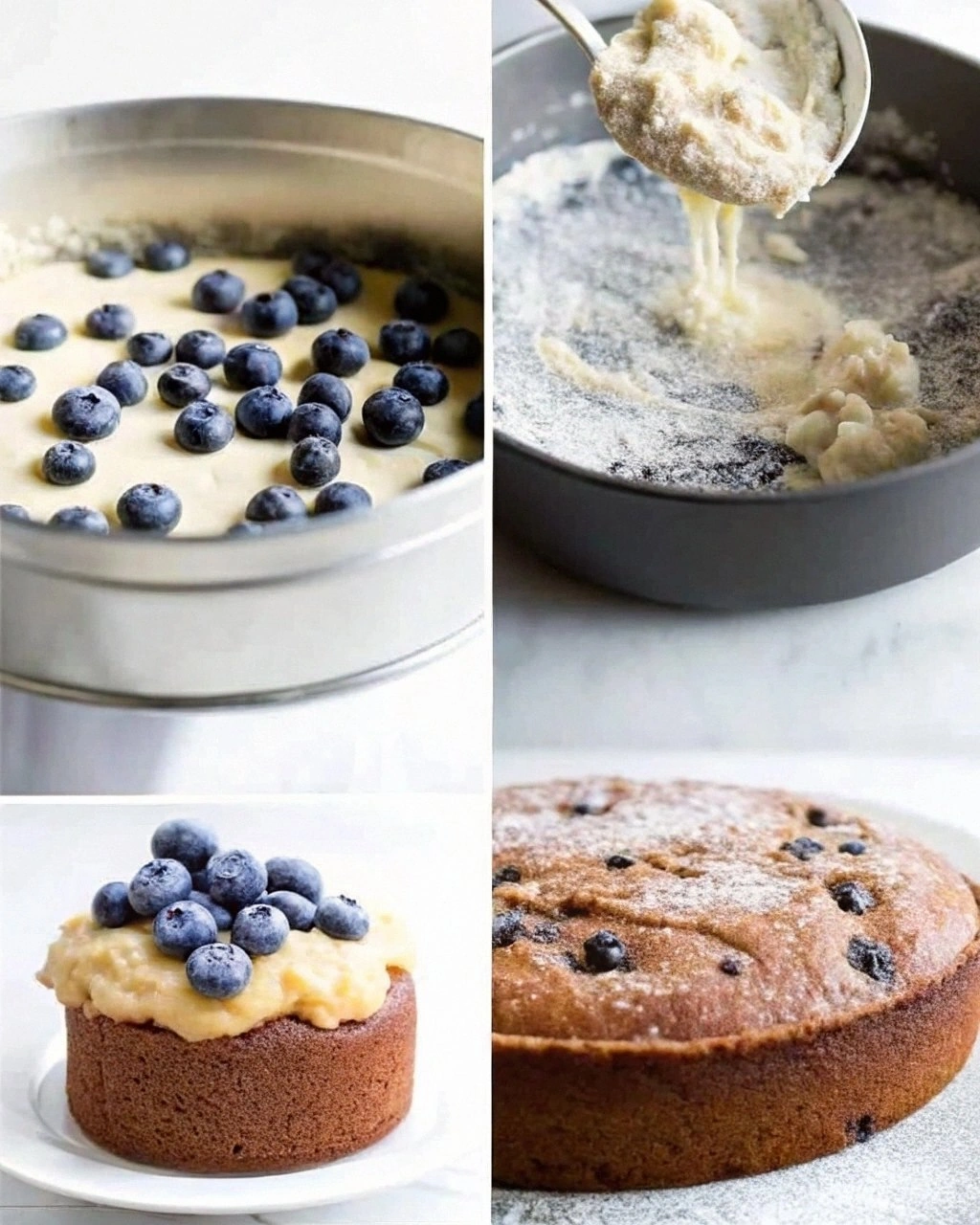
The Method — Step by Step
- Preheat your oven to 350°F (175°C), but don't just trust the dial — ovens lie more than politicians. Get an oven thermometer and discover your oven's dirty secrets. My last oven ran 25 degrees hot, which explained years of over-baked disasters. While it's heating, prepare your pan like you're expecting royalty. Butter every crevice of a 9-inch springform pan, then dust with flour, tapping out the excess. This cake deserves respect, and nothing ruins the moment like half your cake clinging to the pan like stubborn houseguests.
- Now for the magic moment: toss your blueberries with one tablespoon of flour in a small bowl. This is the game-changer that prevents berry sinkage — the flour creates a slight coating that helps them grip the batter instead of diving to the bottom like purple submarines. Don't skip this step unless you want a cake with a blueberry basement. Set them aside while you work on the batter, but keep them nearby because we're moving fast once things get going.
- In your largest bowl (seriously, go big or go home), cream the butter and brown sugar together until it looks like pale, fluffy clouds. This isn't just busy work — properly creamed butter traps air, creating lift during baking. Under-cream and your cake will be dense as a brick. Over-cream and the butter gets too warm and loses structure. You're looking for a texture like whipped frosting, light and spreadable. This takes 3-4 minutes with a hand mixer, longer if you're doing it by hand and getting an arm workout.
- Add the eggs one at a time, beating well after each addition. This is where most people rush and end up with a curdled mess. Each egg needs to fully incorporate before the next joins the party. If your batter looks broken or separated, your eggs were too cold. Don't panic — add a tablespoon of flour and beat briefly to bring it back together. The batter should look like thick, pale yellow clouds at this stage, smooth and luxurious.
- Time for the yogurt, lemon juice, and zest. The batter will look like it's breaking — this is normal and expected. The yogurt's acidity is having a party with the fat, and they need a moment to figure out their relationship. Add the vanilla and keep mixing until it comes together into a thick, glossy mixture. Don't walk away from the mixer here; this comes together quickly once it decides to cooperate.
- In a separate bowl, whisk together the flour, baking powder, baking soda, and salt. This isn't just about mixing — it's about evenly distributing the leavening agents so your cake rises evenly instead of looking like a topographical map. Add these dry ingredients to the wet mixture in three additions, mixing just until combined. Over-mixing develops gluten, and we're making cake, not bread. The batter should be thick but pourable, like Greek yogurt that's been left out for an hour.
- Fold in those flour-coated blueberries with the gentleness you'd use on a sleeping baby. They're delicate and want to burst, releasing purple juice that creates pretty marbling but can turn your cake into a psychedelic mess if you're too enthusiastic. Pour the batter into your prepared pan and smooth the top with your spatula. Give the pan a few gentle taps on the counter to release any air bubbles — they should rise to the surface like tiny cake burps.
- Bake for 45-50 minutes, but start checking at 40. The top should be golden brown and spring back when lightly touched. A toothpick inserted in the center should come out with just a few moist crumbs — if it's completely clean, you've over-baked. The edges will start pulling away from the sides of the pan, and your kitchen will smell like a lemon grove had a party with a blueberry farm. Resist the urge to open the oven door for the first 30 minutes; drafts can cause your cake to sink faster than my hopes during that first failed attempt.
- Cool in the pan for 15 minutes — this is the hardest part because your house smells incredible and you're starving. But rushing leads to cake carnage. After 15 minutes, run a thin knife around the edges and release the springform. Cool completely on a wire rack. This next part? Pure magic. While it's cooling, make the lemon cream by whipping heavy cream with lemon zest, powdered sugar, and a touch of cream cheese for stability. It should hold soft peaks that droop slightly — like clouds that can't quite decide if they want to rain.
That's it — you did it. But hold on, I've got a few more tricks that'll take this to another level...
Insider Tricks for Flawless Results
The Temperature Rule Nobody Follows
Room temperature isn't just a suggestion — it's the secret handshake that separates good bakers from great ones. Cold yogurt hitting warm butter creates little butter globules that melt unevenly, leaving you with a cake that has the texture of Swiss cheese. Everything needs to be friends before mixing: eggs, yogurt, butter, even the bowl if your kitchen is cold. I keep a thermometer in my kitchen and won't start baking until everything hits 68-70°F. A friend tried skipping this step once — let's just say it didn't end well, and she served a cake that could have doubled as a doorstop.
But here's the twist: once your cake is mixed, get it in the oven fast. The baking powder starts reacting the moment it hits liquid, and you're on the clock. Every minute your batter sits on the counter is a minute of lift you're losing. I've seen people mix their batter, answer a phone call, and wonder why their cake baked up flatter than a pancake. Mix, fold, pour, bake — it's a relay race and you're all four runners.
Why Your Nose Knows Best
Forget timers — your nose is the most sophisticated baking tool you own. When this cake is nearly done, your kitchen will fill with an aroma that's almost painfully good. It's like the scent equivalent of your favorite song's chorus hitting at exactly the right moment. When you smell that intense lemon-berry perfume wafting through the house, start checking for doneness. Most recipes get this completely wrong, relying solely on times that don't account for your oven's personality or the moisture content of your fruit.
That said, don't be a hero who opens the oven door every five minutes to check. Each peek drops the temperature 25-30 degrees, extending baking time and potentially creating a crater in the center. Use the window first, the smell second, and only open when absolutely necessary. Your cake will tell you when it's ready — you just need to listen with your nose.
The 5-Minute Rest That Changes Everything
After you take the cake out, walk away. Seriously, set a timer for five minutes and leave the room if you must. Those first five minutes are when the cake finishes baking from residual heat and sets its structure. Cut too early and you'll have a gummy mess that tastes raw in the middle. I know it's torture — the smell, the anticipation, the knowledge that warm cake exists just feet away. But good things come to those who wait, and this wait is the difference between amateur and professional results.
Once cooled, the lemon cream needs at least 30 minutes in the fridge to properly set up. This isn't just about food safety — chilled cream whips better and holds its shape. If you're serving this at a dinner party, make the cream while the cake bakes, then refrigerate. It'll be perfectly chilled and ready to dollop when dessert time arrives. The contrast between barely-warm cake and cold cream is textural heaven.
Creative Twists and Variations
Raspberry-Lime Remix
This recipe is a playground. Here are some of my favorite ways to switch things up: Swap blueberries for raspberries and lemon for lime, and you've got a completely different beast. The raspberries break down more, creating these beautiful magenta swirls throughout the cake. Lime zest is more aromatic than lemon, giving you a tropical vibe that makes you want to drink mojitos at 10 AM. Add a tablespoon of coconut extract to the batter and serve with coconut whipped cream for a piña colada cake that'll transport you to a beach mentally, if not physically.
The Breakfast Club Version
For a breakfast-worthy variation that you can justify eating at 7 AM, swap half the flour for whole wheat pastry flour and add a cup of toasted walnuts. The whole wheat adds nuttiness that plays beautifully with the berries, while the walnuts provide crunch and protein, making this practically health food. Okay, that's a stretch, but it's definitely more substantial than your average cake. I've served this version at brunch and watched health-conscious friends go back for thirds while claiming they're "just being polite."
Lemon-Poppy Seed Paradise
Add two tablespoons of poppy seeds to the dry ingredients for a classic combination that never gets old. The tiny seeds provide subtle crunch and a slight nutty flavor that complements both lemon and blueberry. It's like textural confetti throughout your cake. Pro tip: soak the poppy seeds in the lemon juice for 10 minutes before adding to the batter. This plumps them up and prevents them from absorbing moisture from your cake during baking.
The Chocolate Rebel
Feeling rebellious? Replace half the blueberries with dark chocolate chunks — I'm talking the good stuff, 70% cacao minimum. The chocolate melts into gooey pockets that create a lemon-blueberry-chocolate trifecta that shouldn't work but absolutely does. It's like a chocolate-covered fruit experience in cake form. Use frozen chocolate chunks to prevent them from melting completely during mixing.
Gluten-Free Glory
For my gluten-free friends, substitute the cake flour with a blend of almond flour and oat flour (2:1 ratio), and add an extra egg for structure. The almond flour adds richness and moisture that actually improves the cake, while the oat flour keeps it light. The result is arguably better than the original — denser in a satisfying way, with a nutty complexity that regular flour can't provide.
Mini Cake Mania
Turn these into individual mini cakes by baking in a muffin tin (reduce time to 18-20 minutes) or mini loaf pans. These are dangerously portable and perfect for lunch boxes or midnight stealth snacking. The smaller size means more crispy edges per serving, and you can freeze them individually for cake emergencies. Because yes, cake emergencies are absolutely a thing.
Storing and Bringing It Back to Life
Fridge Storage
This cake stays moist for up to 5 days at room temperature, wrapped tightly in plastic wrap. Don't refrigerate unless you've already cut into it — the fridge dries out cake faster than a desert wind. If you must refrigerate (looking at you, summer without air conditioning), wrap it in plastic then foil, and bring to room temperature before serving. Add a tiny splash of water before reheating — it steams back to perfection. The lemon cream keeps for 3 days refrigerated, but honestly, I've never seen it last that long.
Freezer Friendly
This cake freezes beautifully for up to 3 months. Wrap individual slices in plastic wrap, then foil, then into a freezer bag. Yes, three layers — frostbite is real and it ruins cakes. To thaw, remove from freezer and let sit at room temperature for 2-3 hours. Don't microwave unless you enjoy rubbery cake tragedy. The lemon cream doesn't freeze well — make it fresh when you're ready to serve. But frozen cake slices are like having money in the bank, except better because you can eat them.
Best Reheating Method
For day-old cake that tastes fresh-baked, warm individual slices in a 300°F oven for 5-7 minutes. Not the microwave — that creates hot spots and dries out the edges. The gentle oven heat revives the cake's moisture and brings back that fresh-baked aroma. Serve with a dollop of fresh lemon cream, and nobody will know this isn't straight from the oven. I've pulled this trick at dinner parties and taken credit for baking that day — no regrets.