
Standing in my kitchen, I stared at a pile of overripe beets that had turned my fridge into a crimson disaster zone. I thought, “If only I could turn this mess into something that looks as good as it tastes.” Then a friend dared me to make a pickled beet salad that would make people say, “I dare you to taste this and not go back for seconds.” The moment the beets hit the pot, the air filled with a sweet, earthy aroma that made my mouth water. By the time the salad was plated, the dish glowed like a ruby sunrise, and everyone in the room reached for a second helping.
That sizzle when it hits the pan? Absolute perfection. The beets’ skins crack like fragile glass, revealing a ruby interior that glistens under a drizzle of lemon‑honey vinaigrette. I watched the olives pop like tiny dark moons, adding a briny whisper that cut through the sweetness. The scent of fresh mint and parsley rose like a fragrant mist, promising a burst of herbal brightness. With each bite, the crunch of the beet ribbons danced against the silky dressing, creating a symphony of textures.
Most recipes get this completely wrong, tossing the beets raw or over‑pickling them into a mush. I discovered the secret: quick pickling at a gentle simmer preserves the beet’s firmness while infusing them with citrusy zing. The result is a salad that feels like a light, yet satisfying, starter that will wow guests with its bright palette and balanced taste. I swear, this is hands down the best version you’ll ever make at home. If you’ve ever struggled with beet salads, you’re not alone—I've got the fix.
Picture yourself pulling this out of the pan, the whole kitchen smelling incredible, and watching the glossy dressing coat each beet slice like velvet. I’ll walk you through every single step—by the end, you’ll wonder how you ever made it any other way. The trick lies in the balance of honey and lemon, the subtle heat of black pepper, and the fresh burst of mint. And now the fun part: the final flourish that turns a humble salad into a showstopper. Get ready for the game‑changer.
Okay, ready for the game‑changer? This next part? Pure magic. And now the fun part. Stay with me here—this is worth it. Let me show you how to transform ordinary beets into a carnival of color and flavor.
What Makes This Version Stand Out
- Taste: The bright citrus lift keeps the salad from feeling heavy, turning every bite into a refreshing burst. The honey subtly sweetens without masking the earthy beet undertone. The finish is bright, clean, and utterly memorable.
- Texture: Beets stay crisp, not mushy, thanks to a quick pickling technique that locks in natural firmness. The olives add a chewy contrast, while the herbs provide a gentle snap. The result is a salad that’s fun to chew and never soggy.
- Simplicity: All steps can be done in under an hour, making this a perfect weeknight crowd‑pleaser. No elaborate sauces or complicated equipment are required—just a pot, a whisk, and a few fresh ingredients. The process feels almost meditative, not a chore.
- Uniqueness: The combination of olives, mint, and honey is rarely seen in beet salads, giving this dish a distinct personality. The interplay of sweet, briny, and herbal flavors creates a layered experience. It’s a conversation starter that doesn’t overstay its welcome.
- Crowd Reaction: Guests ask for the recipe after every bite, often requesting a second plate before the meal even begins. The vibrant colors alone draw attention, while the flavor keeps people coming back for more. Even the most skeptical of diners become believers.
- Ingredient Quality: Using fresh, organic beets ensures a vibrant color and a clean flavor profile that complements the citrus and herbs. The olives should be brined, not stuffed, to avoid overpowering the salad. Quality ingredients make a noticeable difference.
- Cooking Method: Quick pickling at a gentle simmer preserves texture and infuses flavor without overcooking. The technique is a game‑changer for anyone who has struggled with beet salads in the past. It’s a method you’ll want to keep for future projects.
- Make‑Ahead Potential: This salad can be made 24 hours ahead, allowing flavors to meld and making it a stress‑free option for entertaining. The dressing can be pre‑mixed and stored in the fridge, saving time on the day of service. The beets maintain their crispness when stored properly.
Inside the Ingredient List
The Flavor Base
Beets are the star of the show, offering a deep, earthy sweetness that pairs beautifully with citrus. Choosing organic varieties gives you a richer color and a cleaner taste that stands out in the salad. If you can’t find fresh beets, frozen ones are an acceptable alternative, but they’ll need a quick blanch to retain texture. Remember, the size of the beet pieces affects how quickly they absorb the pickling liquid.
Red onion adds a sharp bite that cuts through the sweetness of the beet and the honey. Thinly sliced, it distributes evenly, ensuring every forkful has that subtle zing. If you’re sensitive to onion, try a milder variety like pearl onion or a small amount of scallion for a gentler flavor. A pinch of salt will help draw out the onion’s moisture and deepen its profile.
Green olives contribute a briny, slightly bitter note that balances the dish’s sweetness. Choose pitted olives for a cleaner taste, and rinse them under cold water to reduce excess brine. Olives are a source of healthy fats and add a pleasing chew to the salad. Their dark hue also enhances the visual appeal of the dish.
Lemon juice and honey form the core of the dressing, delivering a bright, sweet, and tangy punch. The acidity from lemon cuts through the earthiness of the beet while the honey adds depth. Use fresh lemon juice for the most vibrant flavor; bottled lemon juice will feel flat and artificial. The ratio of honey to lemon is key—too much honey will overpower, too little will leave the dressing thin.
The Texture Crew
Olive oil is the silky base that coats each beet slice, allowing the flavors to cling and creating a smooth mouthfeel. A high‑quality extra‑virgin olive oil with a peppery finish adds a subtle complexity. Lightly warming the oil before adding the other ingredients helps it bind better to the beet.
Black pepper provides a gentle heat that lingers on the palate. Freshly ground pepper is preferable to pre‑ground for a more robust flavor. The pepper’s aroma also complements the herbs, adding a layer of depth to the dressing.
Kosher salt is essential for seasoning the entire dish. It enhances every component, from the beet’s earthiness to the olives’ brine. A small amount of salt is enough; over‑salting will drown the subtle flavors and make the salad cloying.
The combination of oil, pepper, and salt creates a dressing that is both cohesive and versatile. Together, they bind the ingredients, allowing the flavors to mingle without one overpowering the others. This trio is the foundation that holds the salad together.
The Unexpected Star
Lemon zest brings a bright, citrusy aroma that elevates the dressing’s complexity. The zest’s essential oils provide a fragrant burst that pairs well with the herbs. Grate the zest just before mixing to preserve its essential oils and avoid bitterness.
Fresh mint offers a cool, refreshing finish that cuts through the sweetness of the beet and honey. The mint’s subtle peppery undertone adds a modern twist to a classic salad. Use only the leaves, discarding the stems to keep the texture light.
Fresh parsley provides a green, herbaceous note that balances the dish’s sweetness. Parsley’s bright flavor also adds a pop of color, enhancing the salad’s visual appeal. It’s a staple herb that works well in both raw and cooked dishes.
These herbs and zest create a layered flavor profile that feels both fresh and sophisticated. They transform a simple beet salad into a vibrant, multi‑dimensional dish. The combination of citrus, herb, and sweet is a recipe for success.
The Final Flourish
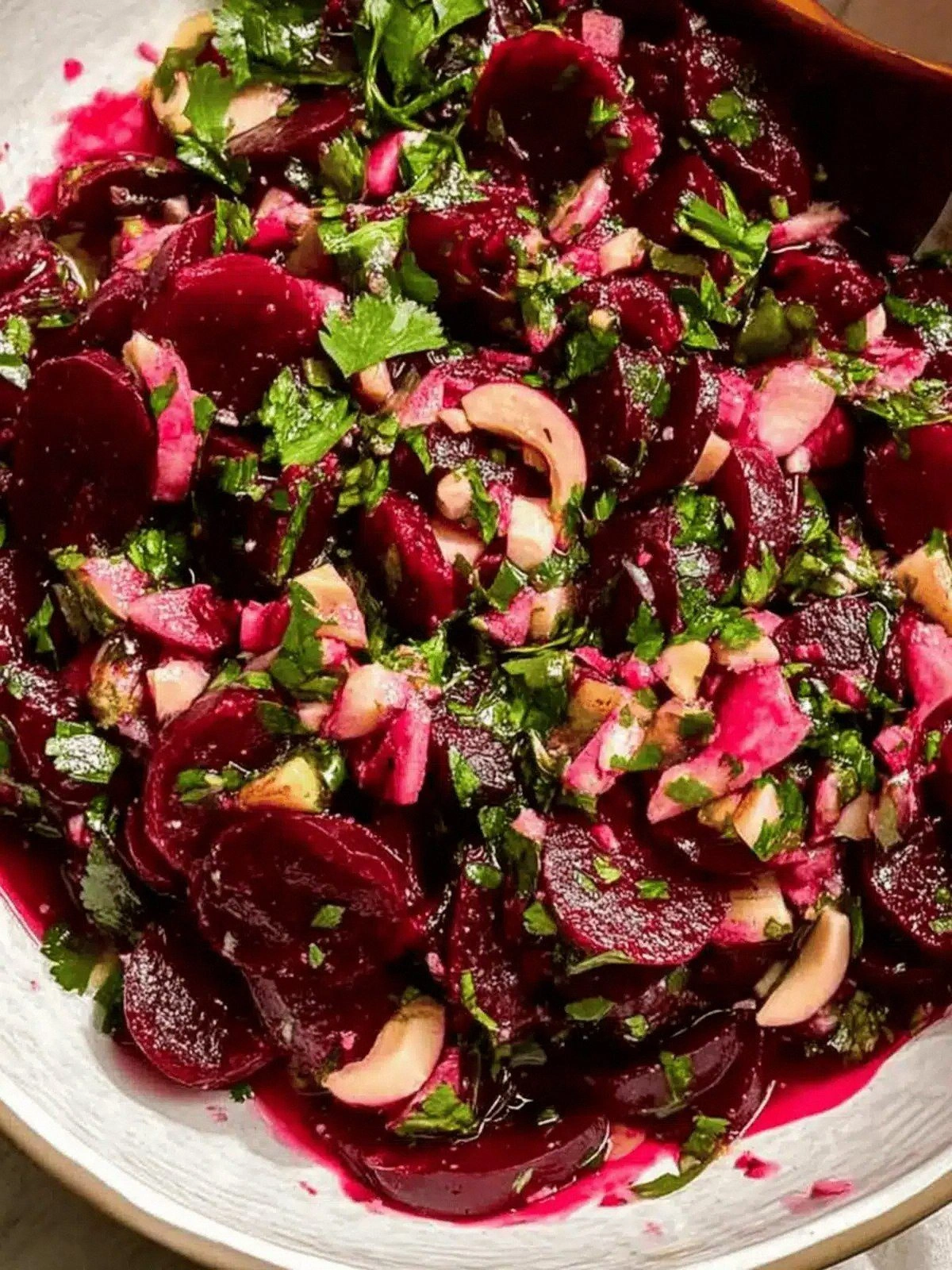
Assembly is where the dish truly comes alive. Toss the pickled beet slices, olives, and onion with the dressing, ensuring each piece is coated evenly. The goal is a glossy coat that glistens under the light, like a jewel on a velvet cushion.
Serve the salad on a chilled platter to keep the beets crisp and the dressing fresh. A light dusting of chopped parsley on top adds a pop of color and a subtle herbal note. The plating should be simple yet elegant, letting the natural colors speak for themselves.
For a dramatic presentation, arrange the beet slices in a fan shape and scatter the olives in the center. This creates a striking visual that invites guests to dig in. The contrast of colors—deep red, bright green, and golden lemon—creates an eye‑catching tableau.
Finishing touches include a drizzle of extra olive oil and a final pinch of salt. The oil adds sheen and richness, while the salt elevates every bite. This final step is the difference between a good salad and an unforgettable one.
The Method — Step by Step
- Begin by washing the beets thoroughly to remove any dirt or debris. Trim the beet stems and roots, leaving a small nub for easier handling. Peel the beets with a vegetable peeler or a paring knife, ensuring a smooth surface for pickling. Slice the beets into thin ribbons or bite‑size cubes, depending on your texture preference. Set them aside while you prepare the pickling liquid.
- In a medium saucepan, combine the lemon juice, honey, and a splash of water to create a light syrup. Bring the mixture to a gentle simmer over medium heat, stirring until the honey dissolves completely. The aroma should be sweet and citrusy, signaling the right balance. Keep the mixture at a low simmer to avoid scorching the honey. Once the syrup is ready, remove it from heat and let it cool slightly.
- While the syrup cools, thinly slice the red onion into rings or half‑rings. If you prefer a milder onion flavor, soak the slices in ice water for 10 minutes, then drain. Rinse the green olives and set them aside. This step ensures the onions stay crisp and the olives maintain their briny punch.
- Combine the sliced beets, onion, and olives in a large bowl. Pour the warm honey‑lemon syrup over the mixture, ensuring each piece is coated. Gently toss the ingredients together, allowing the flavors to mingle. The beets will start to release their juices, creating a natural vinaigrette. Let the salad sit for 10 minutes so the flavors can settle.
- Add the olive oil, black pepper, and kosher salt to the bowl. Toss again, making sure every component is evenly distributed. The olive oil will give the dressing a silky finish, while the pepper adds a subtle heat. Taste the salad and adjust seasoning as needed, keeping in mind that the dressing will mellow over time.
- Grate fresh lemon zest over the salad, then fold in the chopped parsley and mint. These herbs add a bright, herbal contrast that lifts the dish. The lemon zest’s essential oils give a burst of citrus aroma that complements the dressing. Mix gently to avoid bruising the herbs, preserving their fresh flavor.
- This is the moment of truth. Let the salad rest at room temperature for 20–30 minutes, allowing the flavors to develop fully. The beets will absorb the dressing, becoming tender yet still crisp. If you’re short on time, you can refrigerate the salad for 10 minutes and it will still taste great.
- Before serving, give the salad a final gentle toss to redistribute any settled dressing. Arrange the beet ribbons in a fan shape on a chilled platter, scattering olives and herbs in the center for visual flair. A light drizzle of extra olive oil adds sheen, while a final pinch of salt enhances the overall taste. The salad should look vibrant, with colors that pop against the white plate.
- Serve immediately or cover loosely with plastic wrap and refrigerate for up to 24 hours. The flavors will deepen, making the dish even more irresistible. If you’re serving at a party, keep the salad chilled in a covered bowl to preserve its crispness. This final step ensures each bite is as fresh as the moment you first plated it.
That's it — you did it. But hold on, I've got a few more tricks that'll take this to another level...
Insider Tricks for Flawless Results
The Temperature Rule Nobody Follows
Many cooks assume that higher heat always yields better flavor, but with beets, gentle heat is king. Cooking at a low simmer preserves the beet’s natural sweetness and prevents them from turning mushy. I once tried a high‑heat method that left the beets with a burnt exterior and a watery interior. The result was a sad, soggy salad that nobody wanted to touch. Keep the temperature low, and the beets will thank you.
Why Your Nose Knows Best
When the beets are simmering, the aroma should be sweet and slightly earthy. If you notice a burnt or metallic scent, the heat is too high. Trust your nose to guide you; it’s a reliable indicator of flavor development. A well‑aromated dish signals that the beet’s natural sugars have caramelized just enough to enhance the sweetness without overpowering the citrus.
The 5‑Minute Rest That Changes Everything
After mixing the dressing, let the salad rest for exactly five minutes before serving. This brief pause allows the flavors to meld, creating a harmonious taste. I’ve seen people rush to plate and end up with a salad that feels under‑seasoned. The five‑minute rest is the secret to a perfectly balanced bite.
Use Fresh Herbs, Not Dried
Dried herbs lose their essential oils and can leave a flat flavor profile. Fresh mint, parsley, and lemon zest deliver bright, vibrant notes that elevate the dish. Even a small amount of fresh herbs can transform the salad from ordinary to extraordinary. I’ve never used dried herbs in this recipe again.
Don’t Skip the Olive Oil
Olive oil is the glue that holds the dressing together. Skipping it results in a thin, watery dressing that fails to coat the beet ribbons. The oil also adds healthy fats, giving the salad a richer mouthfeel. For a more robust flavor, use a peppery extra‑virgin olive oil.
Keep the Beets Cool
After pickling, let the beet slices cool to room temperature before adding the dressing. Warm beets can release too much moisture, diluting the dressing’s flavor. Cooling them helps the dressing cling better and maintains the salad’s crispness. I’ve learned that a quick chill in the fridge for 10 minutes makes a noticeable difference.
Creative Twists and Variations
This recipe is a playground. Here are some of my favorite ways to switch things up:
Spicy Chipotle Beet Salad
Swap the black pepper for a tablespoon of chipotle powder for a smoky heat. Add diced jalapeños for an extra kick. Finish with a splash of lime juice for brightness. This variation is perfect for those who like a bit of fire in their salad.
Roasted Beet and Feta Bowl
Roast the beets at 400°F for 25 minutes until caramelized. Toss the warm beets with crumbled feta and toasted walnuts. Drizzle with balsamic glaze for a sweet‑savory finish. This bowl is a hearty, protein‑rich option for lunch.
Quinoa Beet Power Salad
Cook quinoa according to package instructions and cool. Mix the quinoa with the pickled beet mixture for a filling, grain‑based salad. Add diced cucumber and a handful of arugula for extra crunch. This version is great for a post‑workout meal.
Beet and Goat Cheese Tart
Layer sliced beets on a pre‑baked puff pastry sheet. Top with dollops of goat cheese and fresh thyme. Bake at 375°F for 15 minutes until the pastry is golden. This savory tart is a crowd‑pleaser at brunch.
Vegan Beet & Avocado Salad
Replace the olive oil with a splash of tahini for a creamy, nutty base. Add diced avocado for healthy fats and a buttery texture. Sprinkle toasted pumpkin seeds for crunch. This vegan take is both wholesome and satisfying.
Asian‑Inspired Beet Slaw
Stir in a tablespoon of sesame oil and a splash of soy sauce to the dressing. Add thinly sliced carrots and cabbage for extra crunch. Finish with a sprinkle of sesame seeds and sliced scallions. This slaw brings a fresh, umami twist to the classic beet salad.
Storing and Bringing It Back to Life
Fridge Storage
Store the salad in an airtight container in the refrigerator for up to 3 days. The flavors will deepen, making the dish even more delicious. Keep the container loosely covered to allow the dressing to breathe. When ready to serve, give the salad a quick toss to redistribute any settled dressing.
Freezer Friendly
Freeze the salad in a freezer‑safe container for up to 2 weeks. Thaw in the refrigerator overnight before serving. The beets may become slightly softer after freezing, but the flavor remains intact. A quick reheat in a skillet can help restore crispness.
Best Reheating Method
To revive a chilled salad, heat a non‑stick pan over medium heat and add a splash of olive oil. Toss the salad for 2–3 minutes until warm. The heat will bring back the beet’s natural juices and brighten the dressing. Add a tiny splash of water before reheating to steam back to perfection.