Love this? Pin it for later! 📌
There's something magical about the aroma of rosemary-roasted vegetables wafting through your kitchen on a crisp winter evening. This rustic, comforting dish has been my go-to for family gatherings ever since my grandmother first taught me the secret to perfectly crispy potatoes and caramelized squash. The way the earthy rosemary mingles with the natural sweetness of winter squash creates a harmony that speaks directly to the soul.
I remember one particularly snowy December evening when my entire extended family was snowed in at my parents' house. With 15 hungry relatives and limited groceries, I threw together what vegetables I could find in the cellar—some aging potatoes, a butternut squash, and the rosemary that stubbornly survived in my mother's winter garden. What emerged from the oven transformed a potentially stressful situation into one of our most cherished family memories. The dish was so beloved that it became our official "first night of winter" tradition, bringing us together year after year.
This recipe isn't just about feeding your family; it's about creating moments. The kind of moments where everyone gathers around the table, steam rising from their plates, sharing stories while the wind howls outside. It's simple enough for a weeknight dinner yet elegant enough for holiday gatherings, and the leftovers (if there are any!) taste even better the next day.
Why This Recipe Works
- Perfectly Balanced: The combination of starchy potatoes and sweet winter squash creates a textural harmony that satisfies every palate
- One-Pan Wonder: Everything roasts together on a single sheet pan, minimizing cleanup while maximizing flavor development
- Herb-Forward: Fresh rosemary infuses every bite with aromatic, woodsy notes that elevate simple vegetables to gourmet status
- Family-Friendly: Even picky eaters can't resist the crispy edges and caramelized surfaces of these roasted vegetables
- Nutrition Powerhouse: Packed with vitamins A and C, fiber, and complex carbohydrates for sustained energy
- Seasonal Flexibility: Works with any winter squash variety and adapts to whatever herbs you have on hand
Ingredients You'll Need
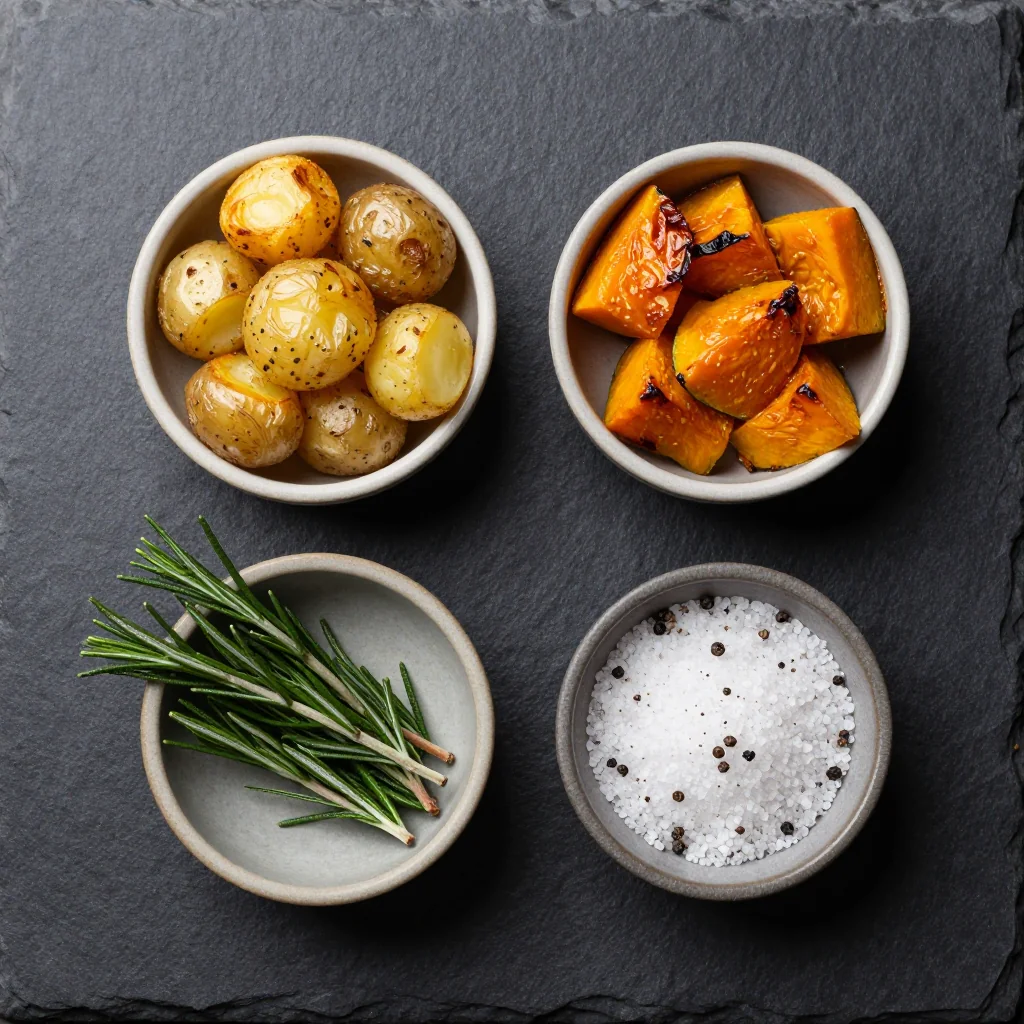
Creating this comforting dish requires just a handful of humble ingredients that transform into something extraordinary through the magic of roasting. Let me walk you through each component and share my tips for selecting the best produce.
The Foundation: Potatoes
You'll need 2 pounds of small to medium potatoes for this recipe. I prefer a mix of red and Yukon Gold potatoes for their buttery texture and ability to hold their shape during roasting. Red potatoes bring a waxy texture that stays firm, while Yukon Golds contribute a rich, almost creamy interior. Avoid russet potatoes here—they tend to fall apart and become mealy. Look for potatoes that are firm, without any green spots or sprouting eyes. If you can only find one variety, either red or Yukon Gold will work beautifully on their own.
The Sweet Element: Winter Squash
One large butternut squash (about 3 pounds) provides the sweet counterpoint to the savory potatoes. When selecting butternut squash, choose one with a matte, tan skin that's free from soft spots or cracks. The neck should feel heavy for its size, indicating dense, sweet flesh. If butternut isn't available, sugar pumpkin, acorn squash, or even sweet potatoes make excellent substitutes. The key is cutting the squash into uniform pieces so everything cooks evenly.
The Aromatic Star: Fresh Rosemary
Three to four sprigs of fresh rosemary are non-negotiable here. Dried rosemary simply cannot replicate the piney, almost citrusy brightness that fresh herb provides. When buying rosemary, look for vibrant green sprigs without any brown or black spots. The needles should be firmly attached to the stem and release their fragrance when gently crushed. If you have rosemary growing in your garden, winter-harvested sprigs are often more intensely flavored than summer ones.
The Supporting Cast
Extra-virgin olive oil (⅓ cup) acts as the carrier for all our flavors while helping achieve those coveted crispy edges. Use a good quality oil with a fruity, peppery note. Four cloves of garlic, smashed but kept whole, infuse their flavor without burning. Coarse kosher salt and freshly ground black pepper are essential for proper seasoning. A tablespoon of maple syrup adds subtle sweetness that helps with caramelization, while a pinch of red pepper flakes provides gentle warmth that balances the dish.
How to Make Warm Roasted Potatoes and Winter Squash with Rosemary for Cozy Family Dinners
Preheat and Prepare Your Pan
Position your oven rack in the center and preheat to 425°F (220°C). This high temperature is crucial for achieving crispy exteriors while maintaining fluffy interiors. Line a large rimmed baking sheet (13x18 inches works perfectly) with parchment paper for easy cleanup. If you don't have parchment, lightly oil the pan. The rim prevents vegetables from sliding off when you stir them during roasting.
Prep Your Vegetables
Scrub the potatoes clean but leave the skins on for extra nutrition and texture. Cut them into 1-inch chunks, ensuring they're all roughly the same size for even cooking. For the butternut squash, use a sharp knife to carefully cut off both ends, then slice it in half where the neck meets the bulb. Peel with a vegetable peeler, scoop out the seeds, and cut into 1-inch cubes. Remember, uniform size is key to perfect roasting.
Create the Flavor Base
In a small bowl, whisk together the olive oil, maple syrup, salt, pepper, and red pepper flakes until well combined. Strip the rosemary leaves from two sprigs and roughly chop them. Add these chopped leaves to the oil mixture. This infused oil will carry the rosemary flavor throughout every bite. Reserve the remaining whole sprigs for later—they'll perfume the vegetables during roasting.
Toss and Coat
Place all your cut vegetables in a large mixing bowl—this is crucial for even coating. Pour the herb-infused oil over the vegetables and toss thoroughly with clean hands or a large spoon. Take your time here; every surface should glisten with oil. This not only flavors the vegetables but ensures they'll caramelize rather than steam. Add the smashed garlic cloves and give one final gentle toss.
Arrange for Success
Spread the vegetables on your prepared baking sheet in a single layer, ensuring pieces aren't touching. Overcrowding leads to steaming instead of roasting. Tuck the remaining whole rosemary sprigs among the vegetables—they'll release aromatic oils as they roast. Place the garlic cloves strategically so they won't burn but will infuse their flavor. If necessary, use two pans rather than crowding one.
The First Roast
Slide the pan into your preheated oven and roast for 25 minutes. During this initial phase, resist the urge to open the oven door—maintaining consistent heat is crucial for proper caramelization. The high heat will begin to create those delicious golden-brown edges while the insides start to soften. Set a timer and use this time to prepare any accompanying dishes or set the table.
Stir and Rotate
After 25 minutes, remove the pan and use a sturdy spatula to flip and stir the vegetables. This ensures even browning and prevents sticking. Pay special attention to any pieces that might be browning faster—move them to the center and push lighter pieces to the edges where heat is more intense. Remove and discard any garlic cloves that are getting too dark to prevent bitterness.
The Final Roast
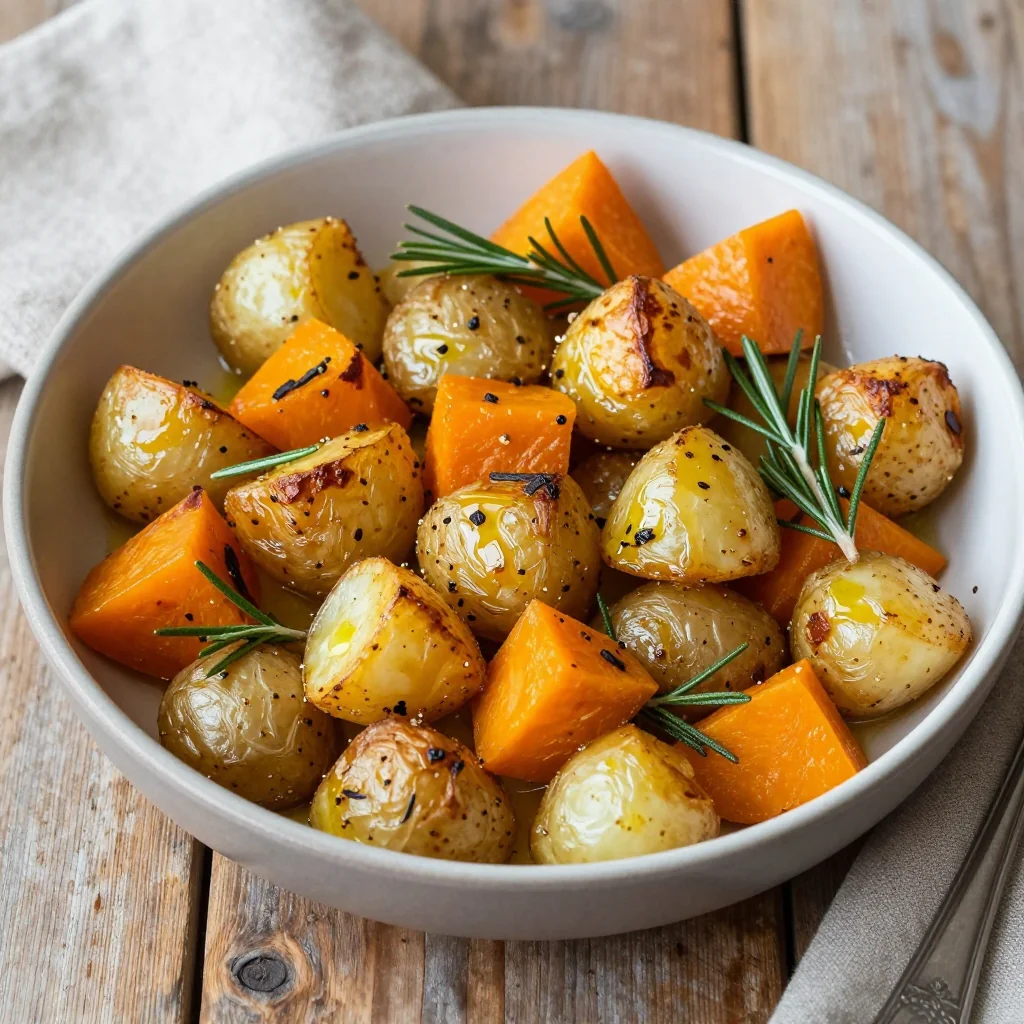
Return the pan to the oven for another 20-25 minutes. During this second roast, the vegetables will develop deep caramelization and concentrated flavor. The potatoes should be golden and crispy on the outside, fluffy inside. The squash will have darkened edges and intensified sweetness. Total roasting time is 45-50 minutes, but trust your eyes and nose over the clock.
Rest and Serve
Once perfectly roasted, remove the pan from the oven and let rest for 5 minutes. This brief rest allows the vegetables to settle and makes them easier to serve. Remove the spent rosemary sprigs and discard. Transfer to a warm serving platter or serve directly from the pan for a rustic presentation. The vegetables will stay warm for 15-20 minutes, perfect for family-style serving.
Expert Tips
Temperature is Key
Don't be tempted to lower the oven temperature for faster cooking. The high heat is essential for caramelization. If your vegetables are browning too quickly, move the rack lower rather than reducing heat.
Oil Distribution
Use just enough oil to coat the vegetables without pooling on the pan. Excess oil makes vegetables soggy. Start with less and add more if needed—vegetables should glisten but not swim in oil.
Make-Ahead Strategy
Cut vegetables up to 24 hours ahead and store in zip-top bags with a slightly damp paper towel. Bring to room temperature before roasting for even cooking.
Pan Placement
For extra crispy bottoms, preheat your baking sheet in the oven for 5 minutes before adding vegetables. The sizzle when they hit the hot pan jumpstarts caramelization.
Seasoning Timing
Season vegetables just before roasting. Salt draws out moisture, so seasoning too early makes vegetables release water and steam rather than roast.
Color Contrast
Mix different colored vegetables—red potatoes, orange squash, purple onions—for visual appeal. Different colors often indicate different nutrients too.
Variations to Try
Autumn Harvest
Add chunks of parsnips, carrots, and beets for a colorful autumn medley. The natural sweetness pairs beautifully with rosemary.
SeasonalMediterranean Twist
Include whole garlic cloves, cherry tomatoes, and olives. Finish with crumbled feta and a squeeze of lemon juice.
FlavorfulSpicy Comfort
Add smoked paprika, chipotle powder, or Cajun seasoning for a warming kick. Perfect for those who like it hot.
SpicyHerb Garden
Mix in fresh thyme, sage, and oregano with the rosemary. Different herbs bloom at different temperatures.
AromaticProtein Power
Add cubed firm tofu, chickpeas, or chicken sausage during the last 20 minutes for a complete one-pan meal.
HeartySweet & Savory
Drizzle with balsamic glaze during the last 5 minutes and finish with toasted pecans and dried cranberries.
FestiveStorage Tips
Refrigeration
Store completely cooled roasted vegetables in an airtight container in the refrigerator for up to 5 days. Line the container with paper towels to absorb excess moisture and prevent sogginess. For best results, store in shallow containers to cool quickly and evenly.
Freezing
While roasted vegetables can be frozen, the texture changes upon thawing. If you must freeze, spread cooled vegetables on a baking sheet to freeze individually, then transfer to freezer bags for up to 2 months. Thaw overnight in the refrigerator and reheat in a hot oven or skillet to restore some crispness.
Reheating
For best results, reheat in a 400°F oven for 10-15 minutes until hot and crispy. A skillet over medium heat also works well. Avoid microwaving, which makes vegetables soggy. Add a fresh drizzle of olive oil and a sprinkle of salt to revive flavors.
Make-Ahead
Cut vegetables up to 48 hours ahead and store separately in zip-top bags with paper towels. Mix the oil and seasonings up to a week ahead. Store cut vegetables in the crisper drawer of your refrigerator. Bring everything to room temperature before roasting for even cooking.
Frequently Asked Questions
While fresh rosemary is strongly recommended for its vibrant flavor and aromatic oils, you can substitute dried in a pinch. Use 1 tablespoon of dried rosemary for every 4 sprigs of fresh, but crush it between your palms first to release its oils. Add it to the oil mixture 10 minutes before coating the vegetables to allow it to rehydrate slightly.
Soggy vegetables usually result from overcrowding the pan, too low oven temperature, or excess moisture. Ensure vegetables are spread in a single layer with space between pieces. Use a hot oven (425°F) and don't skimp on oil. Also, avoid adding vegetables straight from washing—pat them dry first. Finally, don't stir too frequently; let them develop a crust before moving.
Absolutely! Air fryers excel at roasting vegetables. Work in batches to avoid overcrowding, and reduce cooking time to 15-20 minutes at 400°F, shaking halfway through. The smaller capacity means more frequent batches, but you'll achieve excellent crispiness. Reduce oil by about 25% since air fryers need less fat.
Thyme and sage are classic companions to rosemary and root vegetables. Use 2 tablespoons fresh thyme leaves or 1 tablespoon chopped fresh sage. Winter savory, oregano, or even a bay leaf or two also complement the dish. Avoid delicate herbs like parsley or cilantro, which burn at high temperatures.
Perfectly roasted vegetables have golden-brown, crispy edges and tender centers. Test doneness by piercing with a fork—there should be slight resistance but no crunch. The squash should be caramelized on the edges, and potatoes should have crispy skins. If uncertain, taste one; it should be sweet and fully flavored.
Certainly! For large gatherings, use two baking sheets and rotate their positions halfway through cooking. You may need to increase cooking time by 5-10 minutes. The key is maintaining the single layer on each pan. Consider roasting in batches and keeping finished vegetables warm in a 200°F oven while subsequent batches cook.
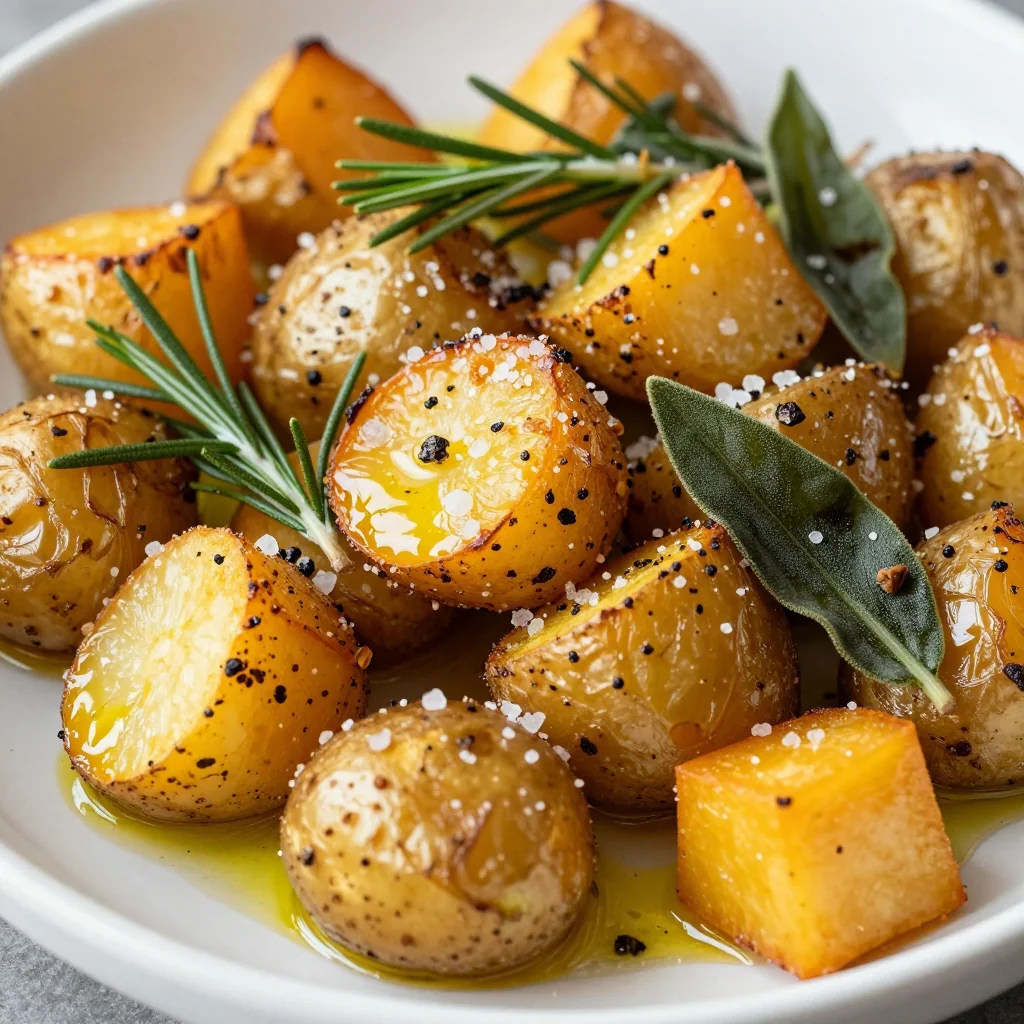
warm roasted potatoes and winter squash with rosemary for cozy family dinners
Ingredients
Instructions
- Preheat oven: Position rack in center and preheat to 425°F (220°C). Line a large rimmed baking sheet with parchment paper.
- Prepare vegetables: Scrub potatoes and cut into 1-inch chunks. Peel, seed, and cube butternut squash into 1-inch pieces.
- Make seasoning oil: In a small bowl, whisk together olive oil, maple syrup, salt, pepper, and red pepper flakes. Strip leaves from 2 rosemary sprigs and chop; add to oil mixture.
- Coat vegetables: Place potatoes and squash in a large bowl. Pour seasoned oil over vegetables and toss to coat evenly. Add garlic cloves.
- Arrange on pan: Spread vegetables in a single layer on prepared baking sheet. Tuck remaining whole rosemary sprigs among vegetables.
- Roast: Bake for 45-50 minutes, stirring once halfway through, until vegetables are golden and tender.
- Serve: Remove from oven and let rest 5 minutes. Discard rosemary sprigs and serve hot.
Recipe Notes
For extra crispy edges, ensure vegetables are completely dry before coating with oil. Don't overcrowd the pan—use two sheets if necessary. Vegetables will stay warm for 20 minutes if covered with foil.