Love this? Pin it for later! 📌
There’s a moment every December morning when the sky outside my kitchen window is still charcoal-dark, the radiators clank awake, and the thermometer on the back porch stubbornly hovers somewhere south of 20 °F. That is the precise minute I reach for my heaviest copper saucepan, a knuckle-sized knob of fresh ginger, and the small cedar box that holds my hand-mulled chai spices. In the next ten minutes, while the first snowflakes drift past the streetlamp, the kitchen fills with the scent of cardamom, black pepper, and caramelizing sugar, and I know—no matter how frantic the day ahead looks—those ten minutes belong to me. This Warm Spiced Chai Latte is my love letter to winter mornings: creamy, peppery, gently sweet, and strong enough to make your whole circulatory system feel like it just slipped into cashmere slippers.
I started brewing this recipe fifteen years ago when I was a bleary-eyed college student pulling sunrise shifts at the campus radio station. The station’s coffee was battery acid; the tea bags were older than my textbooks. So I stashed a plastic bag of cracked spices and a tiny grater in my backpack. By mid-winter, roommates were waking up early just to loiter in the hallway outside the studio, hoping I’d have a thermos to share. Today, even with a professional espresso machine humming on my countertop, this stovetop chai remains the most requested “main dish” at every December brunch I host—yes, I call it a main dish, because on the first truly cold morning of the year, nothing else matters until you’ve had your chai.
Why This Recipe Works
- Whole spices, never pre-ground: Toasting cardamom pods, cinnamon quills, and peppercorns releases volatile oils that powdered spices lost months ago.
- Double-steep technique: A rapid boil extracts maximum flavor; a gentle simmer keeps tannins smooth.
- Caramelized sugar base: A quick dry melt before the milk hits the pan adds depth reminiscent of crème brûlée without extra sweetness.
- Flexible dairy: Use whole dairy for silkiness, oat milk for vegan velvet, or a 50/50 split for the best of both worlds.
- Make-ahead concentrate: Brew the spiced black tea base up to five days ahead; reheat with hot milk in under 90 seconds.
- Built-in sweetness calibration: Adding raw sugar while the tea is scalding lets you dissolve less for a cleaner finish, or more for a dessert-level treat.
Ingredients You'll Need
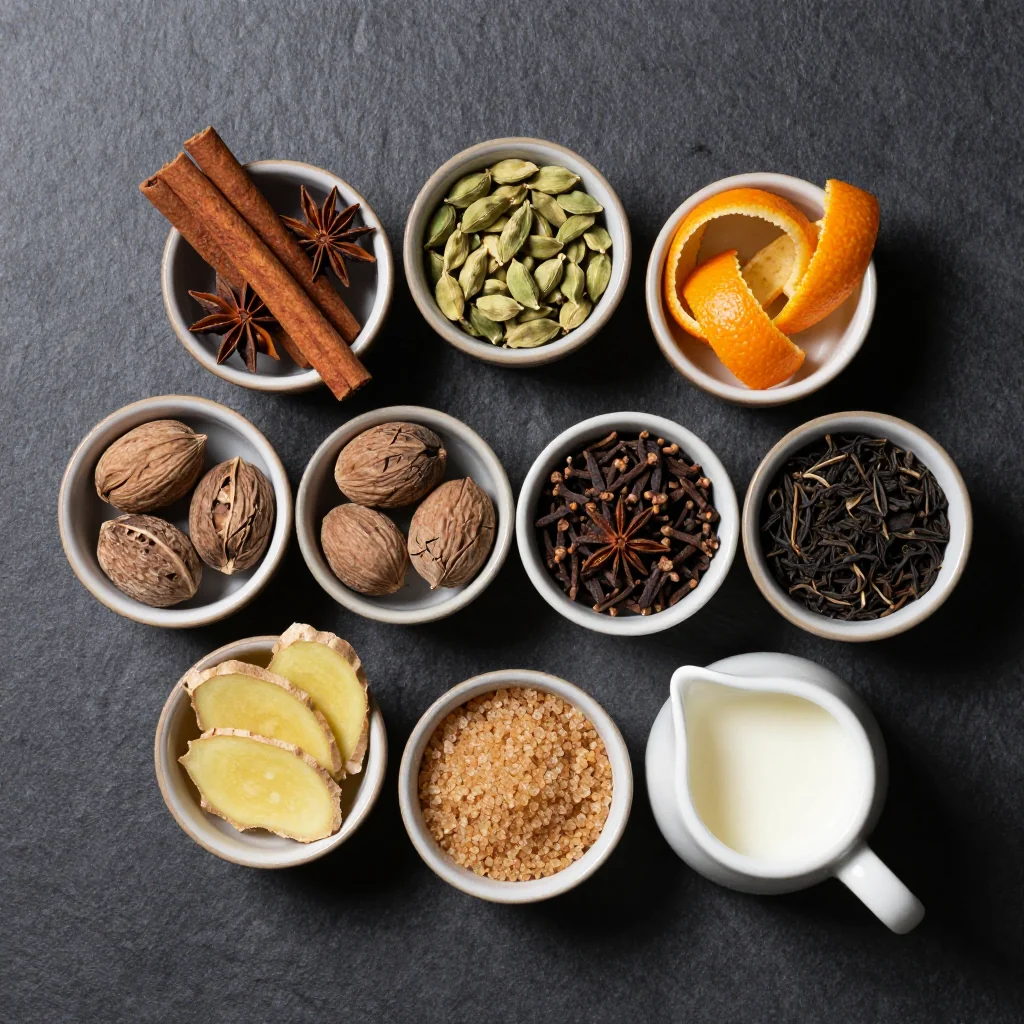
Quality ingredients are non-negotiable when your chai is the star of the breakfast table. Think of this as building a soup: every component must pull its weight. Below are the non-negotiables plus the little upgrades that turn a good latte into a great one.
Black tea: Assam’s malty body stands up to aggressive spicing, while Ceylon adds brightness. I blend 2 parts Assam to 1 part Ceylon, but if you only have one, use Assam. Avoid paper-bag supermarket tea; the leaf is too dusty and will over-steep into bitterness. Look for “OP” (orange pekoe) grade or higher.
Green cardamom pods: The floral backbone of any respectable chai. Buy them green, not white, and feel the shells: they should rattle when you shake them, indicating the seeds inside are still oily. If you can only find pre-shelled seeds, reduce the quantity by a third—they’re more concentrated.
Ceylon cinnamon quills: True cinnamon curls into thin papery layers and smells almost citrusy. Cassia bark is acceptable in a pinch, but the sweeter, more delicate Ceylon variety lets you push the cinnamon flavor without introducing harsh coumarin notes.
Fresh ginger: Plump, shiny, with tight skin. If the knobs look wrinkled or the ends are blue-tinged, skip them. Peel just before using; the volatile gingerol that gives chai its zip evaporates within minutes of grating.
Whole black peppercorns: They supply a subtle heat that blooms minutes after you swallow. Tellicherry peppercorns are larger and fruitier; standard Malabar are fine.
Whole cloves: Use sparingly—two normal-size cloves per batch is plenty. Their eugenol can bulldoze the quieter spices.
Fennel seeds: Optional, but a pinch adds a mellow, licorice-like roundness that marries beautifully with brown sugar.
Dairy or plant milk: Whole dairy milk froths best and has natural lactose sweetness. Oat milk barista blends mimic dairy’s viscosity almost perfectly. Avoid ultra-filtered milks; they scorch at lower temperatures.
Sweetener: Traditional Indian chai uses jaggery, which brings earthy molasses notes. Dark brown sugar is the closest supermarket equivalent, but coconut sugar dissolves faster and tastes faintly of toasted marshmallow.
How to Make Warm Spiced Chai Latte for Winter Mornings
Crack & toast the spices
Using the flat side of a chef’s knife, lightly crush 6 cardamom pods, 4 cloves, and 1 tsp peppercorns. You want the husks split, not pulverized. Warm a heavy saucepan over medium heat; add the cracked spices plus a 2-inch Ceylon cinnamon quill. Toast 90 seconds, tossing once, until the cardamom pods puff like tiny balloons and the cinnamon unfurls. The moment you smell peppery perfume, remove from heat and transfer spices to a small bowl so they don’t scorch.
Bloom the ginger
Return the pan to medium-low heat. Add 1 tsp ghee or unsalted butter. When it foams, stir in 1 heaping Tbsp freshly grated ginger and, if desired, ½ tsp fennel seeds. Cook 45 seconds—the ginger will hiss and turn golden at the edges. This quick fat-bloom tames the ginger’s sharpness and infuses the fat with flavor that will later emulsify into the milk for a silkier mouthfeel.
Add water & tea
Pour in 1¼ cups cold filtered water and the toasted spices. Increase heat to high; bring to a rolling boil. The moment large bubbles erupt, scatter 2 Tbsp loose black tea across the surface. Boil 45 seconds, stirring once. This aggressive extraction pulls maximum tannins and polyphenols, giving the latte its robust body without a 5-minute bitter steep.
Caramelize the sugar
Sprinkle 2 Tbsp dark brown sugar over the boiling surface. Do not stir yet. Let it melt and caramelize 60–75 seconds; you’ll smell toasted marshmallow. Now swirl the pan gently to dissolve any crunchy bits. This quick caramel layer adds a round, almost malted sweetness that balances the peppery bite.
Pour in the milk
Lower heat to medium. Add 1¾ cups cold milk. Stir once, then let the mixture rise until foam threatens the rim—about 2 minutes. The instant it climbs, lift the pan off the burner for 3 seconds, then return. Repeat this “panic lift” twice more; this old chai-wallah trick prevents boil-overs and aerates the milk for natural micro-foam.
Simmer & infuse
Reduce heat to low. Simmer 3 minutes, stirring occasionally and scraping the bottom to prevent scorching. Watch for the color to deepen from mahogany to espresso-brown. When a wooden spoon dragged across the pan leaves a 2-second trail, you’re ready.
Strain & aerate
Position a ultra-fine strainer over a heat-proof jug. In one confident motion, pour the chai through. Hold the strainer high—about 12 inches above the jug. The stream folding through air knocks out bitterness and incorporates tiny bubbles for a barista-quality crema. If you like extra froth, use a handheld frother for 5 seconds.
Serve immediately
Pour into pre-warmed mugs. Garnish with a dusting of cinnamon or—for a party trick—float a thin star anise on top. Chai waits for no one; its flavor peaks 90 seconds after straining. If you must hold it, keep the jug in a water bath at 140 °F for up to 20 minutes, whisking before each pour.
Expert Tips
Temperature sweet spot
Milk scalds at 180 °F. Clip a candy thermometer to the pan; the moment the mercury kisses 175 °F, slide the pan off heat. You’ll retain natural lactose sweetness and avoid the protein skin that dulls flavors.
Water-to-milk ratio
Classic Mumbai street chai is 1:1. For a lighter morning sip, use 1½ cups water to 1 cup milk. The recipe above splits the difference; adjust in ¼-cup increments until you find your forever ratio.
Overnight concentrate
Brew steps 1–4, omit milk. Cool, refrigerate up to 5 days. To serve, fill mug ⅓ full with concentrate, top with steamy milk. Perfect for camping or office mornings when stovetop brewing isn’t an option.
Sugar-free hack
Replace brown sugar with 2 pitted Medjool dates. Blend them with ¼ cup hot water until silky, then add during step 4. The dates caramelize just like sucrose but add potassium and fiber.
Iced winter chai
Yes, it’s a thing. Brew double strength, strain over a cocktail shaker packed with ice, shake 10 seconds. The rapid chill locks in aromatics. Serve in a chilled coupe with an orange twist.
Scaling for parties
Multiply everything except sugar by your guest count. For sugar, use 1½ Tbsp per mug; too much and the chai tastes thin rather than rich. Hold in a thermal carafe; re-whisk before each pour to re-incorporate the crema.
Variations to Try
-
Chocolate-orange chai: Whisk 1 Tbsp Dutch-process cocoa into the sugar during step 4. Finish with a strip of fresh orange zest floated on top.
-
Rooibos caffeine-free: Replace black tea with 2 Tbsp rooibos. Reduce boiling time to 30 seconds to avoid woody notes.
-
Turmeric-golden chai: Add ½ tsp ground turmeric and 2 crushed white peppercorns with the ginger. The pepper boosts curcumin absorption.
-
Maple-pecan brunch chai: Swap brown sugar for 2 Tbsp pure maple syrup. Garnish with a teaspoon of toasted chopped pecans for texture.
-
Thai twist: Replace ¼ cup of the water with full-fat coconut milk, add 1 bruised lemongrass stalk, and finish with a squeeze of lime.
Storage Tips
Refrigerate: Cool the strained chai base (no milk) and refrigerate in a sealed jar for up to 5 days. Add fresh milk when reheating. Once dairy is mixed in, drink within 2 hours for best flavor, or 24 hours if kept below 38 °F.
Freeze: Pour cooled concentrate into ice-cube trays; each cube is ~2 Tbsp. Freeze solid, then transfer to a zip bag. Drop 3 cubes into a mug, top with steamy milk, stir to thaw—instant single serve.
Reheating: Warm on the stovetop over low heat, stirring, until just steaming. Microwaves break the emulsion and create a “spice sludge” at the bottom; avoid if possible.
Spice longevity: Whole spices lose ~40% potency after 12 months. Buy in 2-oz quantities, store in dark tins, and date the lid. If a pod doesn’t rattle, it’s toast.
Frequently Asked Questions

Warm Spiced Chai Latte for Winter Mornings
Ingredients
Instructions
- Toast spices: In a heavy saucepan over medium heat, toast cracked cardamom, cinnamon, cloves, and peppercorns 90 seconds until fragrant. Transfer to a bowl.
- Bloom ginger: In the same pan melt ghee. Add ginger and fennel; cook 45 seconds.
- Boil tea: Return toasted spices to pan with water. Bring to a rolling boil, add tea, boil 45 seconds.
- Caramelize sugar: Sprinkle sugar over surface; let melt 60–75 seconds, then swirl to dissolve.
- Add milk: Reduce heat to medium, add cold milk, and allow to rise three times, lifting pan off heat as needed.
- Simmer: Lower heat; simmer 3 minutes until a spoon leaves a 2-second trail.
- Strain & serve: Strain into pre-warmed mugs; enjoy immediately.
Recipe Notes
Chai tastes best within 90 seconds of straining. Reheat leftovers gently on the stove, not in the microwave, to preserve the silky texture.