Love this? Pin it for later! 📌
When the first real snowstorm of the season arrived last year, I found myself standing at the butcher counter, watching the snow swirl outside the market windows. There’s something about the hush of winter that calls for slow-cooked meals—the kind that fill your home with aromas so inviting, neighbors knock to ask what you’re making. These braised short ribs have become my answer to winter’s longest nights, a recipe born from my grandmother’s Sunday suppers and refined through years of Sunday meal prep sessions.
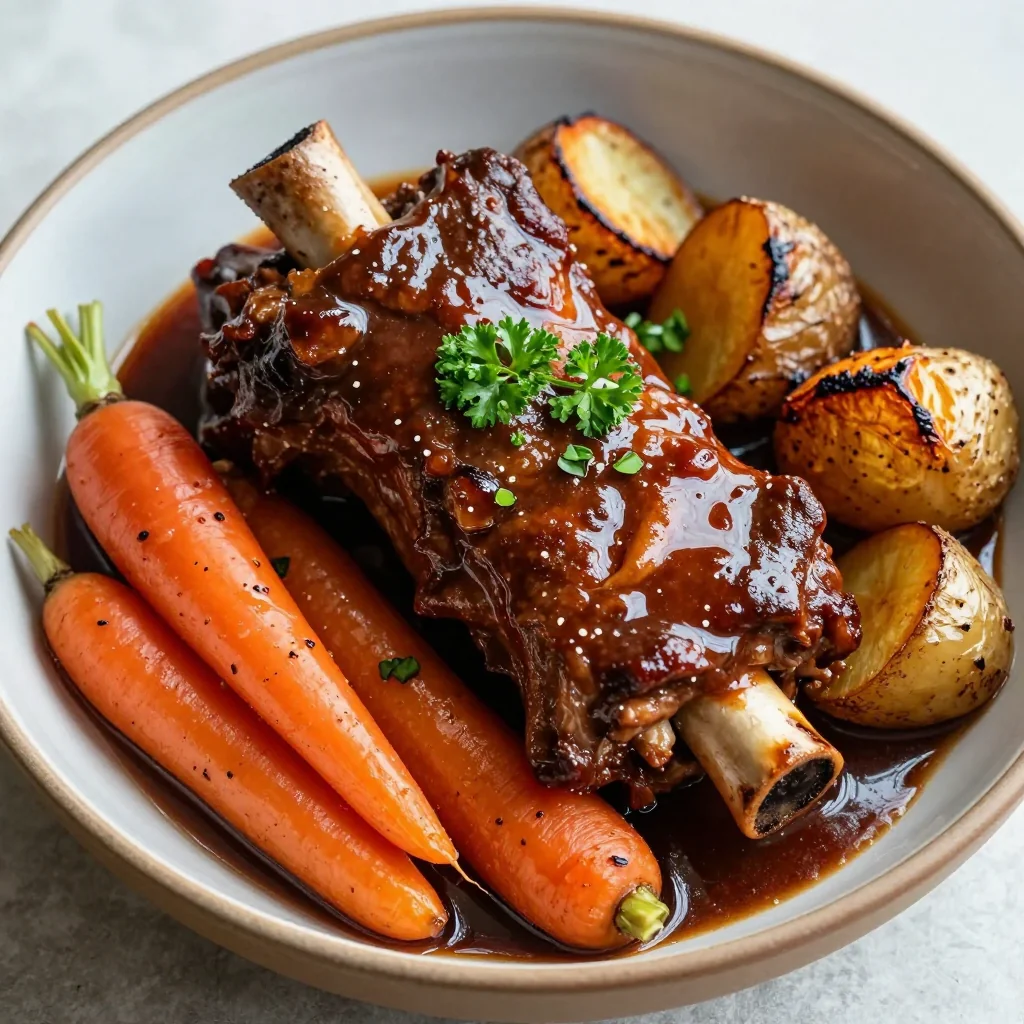
What makes this dish extraordinary isn’t just the fall-apart tender beef (though that alone would be worth the effort). It’s how the root vegetables—sweet parsnips, earthy turnips, and buttery Yukon gold potatoes—transform in the cooking liquid, becoming spoon-soft and infused with the rich, wine-laced sauce. After four hours in the oven, what emerges is nothing short of alchemy: meat that surrenders to the slightest touch of a fork, surrounded by vegetables that taste of winter comfort itself.
I’ve served this at intimate dinner parties where guests lingered until midnight, sopping up sauce with crusty bread. I’ve made it for new parents, delivering it in a heavy Dutch oven with reheating instructions taped to the lid. And I’ve made it just for us, on ordinary Tuesday nights when the world feels too cold and too fast. Each time, it performs the same quiet miracle: it slows time down, draws people together, and reminds us that the best things in life can’t be rushed.
Why This Recipe Works
- Low and slow cooking: transforms tough short ribs into spoon-tender perfection while developing deep, complex flavors
- Root vegetables absorb flavors: parsnips, turnips, and potatoes soak up the rich braising liquid, becoming luxuriously tender
- Make-ahead friendly: flavors actually improve overnight, making this perfect for entertaining
- One-pot wonder: everything cooks together, minimizing cleanup while maximizing flavor development
- Wine selection flexibility: works beautifully with leftover red wine, even mixing varieties for depth
- Impressive presentation: emerges from the oven looking like something from a French bistro
- Comfort food elevated: sophisticated enough for dinner parties, comforting enough for family meals
Ingredients You'll Need
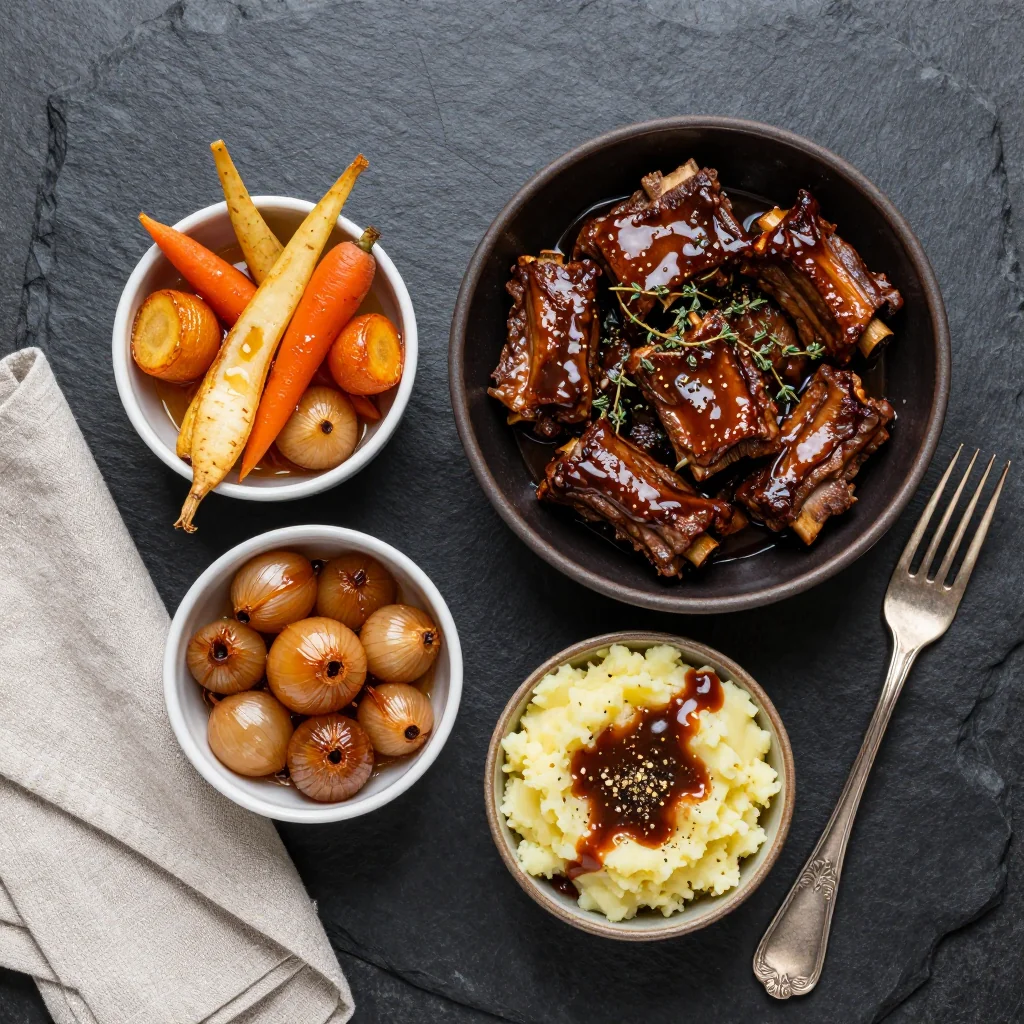
The magic of this dish lies in the quality of your ingredients. Seek out meaty, well-marbled short ribs from your butcher—look for pieces about 3-4 inches long with good fat distribution. The fat is your friend here; it renders during the long braise, keeping the meat incredibly moist while adding body to the sauce. If you can only find flanken-style ribs (cut across the bone), they’ll work, but English-cut ribs (cut parallel to the bone) give you those impressive, fall-off-the-bone portions that make this dish so dramatic.
For the wine, use something you’d happily drink, but don’t break the bank. A hearty Côtes du Rhône, Chianti, or even a robust Merlot all work beautifully. I’ve made this with a mix of half-finished bottles left after parties, and it’s always divine. The alcohol cooks off, leaving behind the wine’s fruity complexity and tannins that help tenderize the meat.
The root vegetables are your canvas for seasonal creativity. I’ve written the recipe with the classic trio—parsnips for sweetness, turnips for gentle peppery notes, and Yukon gold potatoes for their buttery texture—but feel free to swap in rutabaga, celery root, or even sweet potatoes. The key is cutting them into large, 2-inch chunks so they maintain their structure during the long cooking time. Nothing sadder than mushy vegetables in your stew.
Don’t skip the tomato paste—it adds umami depth and helps thicken the sauce. I buy it in tubes now, so I’m not opening a whole can for two tablespoons. The anchovy paste might seem odd, but trust me: it melts into the sauce, adding a subtle savory note that no one can identify but everyone tastes as “something special.” If you’re absolutely opposed, substitute a splash of Worcestershire sauce.
How to Make Braised Short Ribs with Root Vegetables for Winter Comfort Dinners
Prep and Season the Short Ribs
Pat the short ribs completely dry with paper towels—this is crucial for proper browning. Season generously on all sides with salt and freshly ground black pepper. Let them sit at room temperature for 30 minutes while you prep the vegetables. This waiting time allows the salt to penetrate the meat and brings the ribs to room temperature for more even cooking. Meanwhile, prep your vegetables and measure out your ingredients; once you start cooking, things move quickly.
Sear the Meat to Perfection
Heat 2 tablespoons of oil in a heavy Dutch oven over medium-high heat until shimmering. Working in batches (crowding the pan will steam rather than brown), sear the short ribs on all sides until deeply caramelized, about 3-4 minutes per side. Don’t rush this step—those brown bits (fond) on the bottom of the pot are flavor gold. Transfer browned ribs to a plate. Pour off all but 2 tablespoons of fat from the pot; save the rendered fat for roasting potatoes another day.
Build the Aromatic Base
Reduce heat to medium and add the onion, carrots, and celery. Cook, stirring occasionally, until vegetables are softened and beginning to brown, about 8-10 minutes. Add the garlic and cook for 1 minute more. Stir in the tomato paste and anchovy paste, cooking for 2-3 minutes until the paste darkens to a brick red color. This caramelization adds incredible depth to the final sauce. Deglaze with a splash of wine, scraping up all those beautiful browned bits from the bottom of the pot.
Add Liquid and Return the Meat
Pour in the remaining wine and beef stock. Add the thyme, bay leaves, and reserved short ribs (along with any accumulated juices) back to the pot. The liquid should come about ¾ of the way up the ribs; add more stock if needed. Bring to a gentle simmer, then reduce heat to low. Cover the pot with a tight-fitting lid and transfer to a preheated 325°F (165°C) oven for 2½ hours. This low, slow cooking breaks down the collagen in the meat, transforming tough connective tissue into silky gelatin.
Add Root Vegetables
After 2½ hours, carefully remove the pot from the oven. The meat should be beginning to pull away from the bones. Scatter the parsnips, turnips, and potatoes around the ribs, nestling them into the sauce but not stirring vigorously—you want to keep the ribs intact. Return the covered pot to the oven for another 1 to 1½ hours, until the vegetables are tender and the meat is fork-tender. If your Dutch oven is too full, you can roast the vegetables separately and add them during the last 30 minutes.
Finish and Serve
Remove the pot from the oven and let it rest for 10 minutes. Skim excess fat from the surface (or use a fat separator). Remove the thyme stems and bay leaves. Taste and adjust seasoning with salt and pepper. The sauce should be thick enough to coat the back of a spoon; if it’s too thin, remove the meat and vegetables, then simmer the sauce on the stovetop until reduced. Serve in shallow bowls with crusty bread, garnished with fresh parsley. The meat should fall off the bone at the gentlest nudge.
Expert Tips
Make-Ahead Magic
This tastes even better the next day. Make it entirely, cool completely, refrigerate overnight, and reheat gently. The flavors meld beautifully, and you can easily remove the solidified fat.
Fat Removal Trick
Refrigerate the entire pot overnight. The fat will solidify on top and lift off in one piece. Alternatively, use a fat separator while the sauce is warm.
Temperature Matters
Keep your oven at a true 325°F. Too hot and the meat will dry out; too cool and it won’t break down properly. An oven thermometer is your friend here.
Don't Overcrowd
When searing, work in small batches. Overcrowding drops the pan temperature, causing the meat to steam rather than develop that crucial brown crust.
Save the Bones
Don’t discard those bones! They make incredible stock. Simmer them with onion, carrot, and celery for 4-6 hours for rich beef stock.
Quality Wine Rule
If you wouldn’t drink it, don’t cook with it. Cheap “cooking wine” has salt and preservatives that ruin the dish’s delicate balance.
Variations to Try
Mediterranean Style
Add olives, sun-dried tomatoes, and a strip of orange zest. Swap the thyme for rosemary and oregano. Finish with a squeeze of fresh lemon.
Asian-Inspired
Replace half the wine with sake or rice wine. Add ginger, star anise, and soy sauce. Include daikon radish and baby bok choy in the last hour.
Smoky Version
Add a smoked ham hock or ½ teaspoon smoked paprika. Include smoked salt in your seasoning. The smoky flavor pairs beautifully with the rich beef.
Vegetable Swap
Replace root vegetables with butternut squash, mushrooms, and pearl onions. Add them during the last hour to prevent overcooking.
Storage Tips
This dish stores beautifully, making it perfect for meal prep or entertaining. Cool completely before storing, then refrigerate in an airtight container for up to 4 days. The flavors actually improve overnight as they meld together. For longer storage, freeze portions in heavy-duty freezer bags for up to 3 months. Thaw overnight in the refrigerator before reheating.
When reheating, add a splash of beef stock or water to loosen the sauce, as it will thicken considerably when cold. Warm gently in a covered pot over low heat, stirring occasionally. Avoid microwaving, which can make the meat tough and dry. If reheating from frozen, place the frozen portion in a pot with a bit of liquid, cover, and warm over very low heat, stirring occasionally.
The sauce will gel when cold due to the natural gelatin from the bones. This is a good sign! It will melt back into a luxurious sauce when reheated. If you’ve removed the fat, the dish will keep better and taste cleaner upon reheating.
Frequently Asked Questions
Bone-in short ribs provide better flavor and texture, but boneless will work in a pinch. Reduce cooking time by about 30 minutes, as boneless ribs cook faster. The sauce won’t be quite as rich without the bones, so consider adding a bit more gelatin or simmering the sauce longer to achieve the same body.
Remove the meat and vegetables, then simmer the sauce uncovered over medium heat until reduced by about one-third. You can also mix 1 tablespoon of cornstarch with 2 tablespoons of cold water and whisk into the simmering sauce. Another trick is to mash a few of the cooked vegetables into the sauce—they’ll naturally thicken it while adding body.
Yes, but you’ll miss the depth from stovetop browning. Sear the meat and aromatics on the stovetop first, then transfer everything to your slow cooker. Cook on low for 8-10 hours or high for 5-6 hours. Add the root vegetables during the last 2 hours of cooking to prevent them from becoming mushy.
Tough meat usually means it hasn’t cooked long enough. Short ribs need time for the collagen to break down into gelatin. If it’s tough after 4 hours, keep cooking! Check every 30 minutes. Oven temperature matters too—if your oven runs cool, the meat won’t reach the temperature needed to break down connective tissue. An oven thermometer can help ensure accuracy.
Serve with the same wine you cooked with! A hearty Côtes du Rhône, Chianti Classico, or Oregon Pinot Noir all complement the rich beef beautifully. If you want something different, try a full-bodied white like a white Burgundy or even a dry Riesling. The key is matching the wine’s body to the dish’s richness.
Absolutely! This is ideal for entertaining because it’s better made ahead. Complete the recipe 1-2 days before your party, refrigerate, then reheat gently while you enjoy appetizers with guests. The flavors develop beautifully overnight, and you can focus on being with your company rather than cooking during the party.
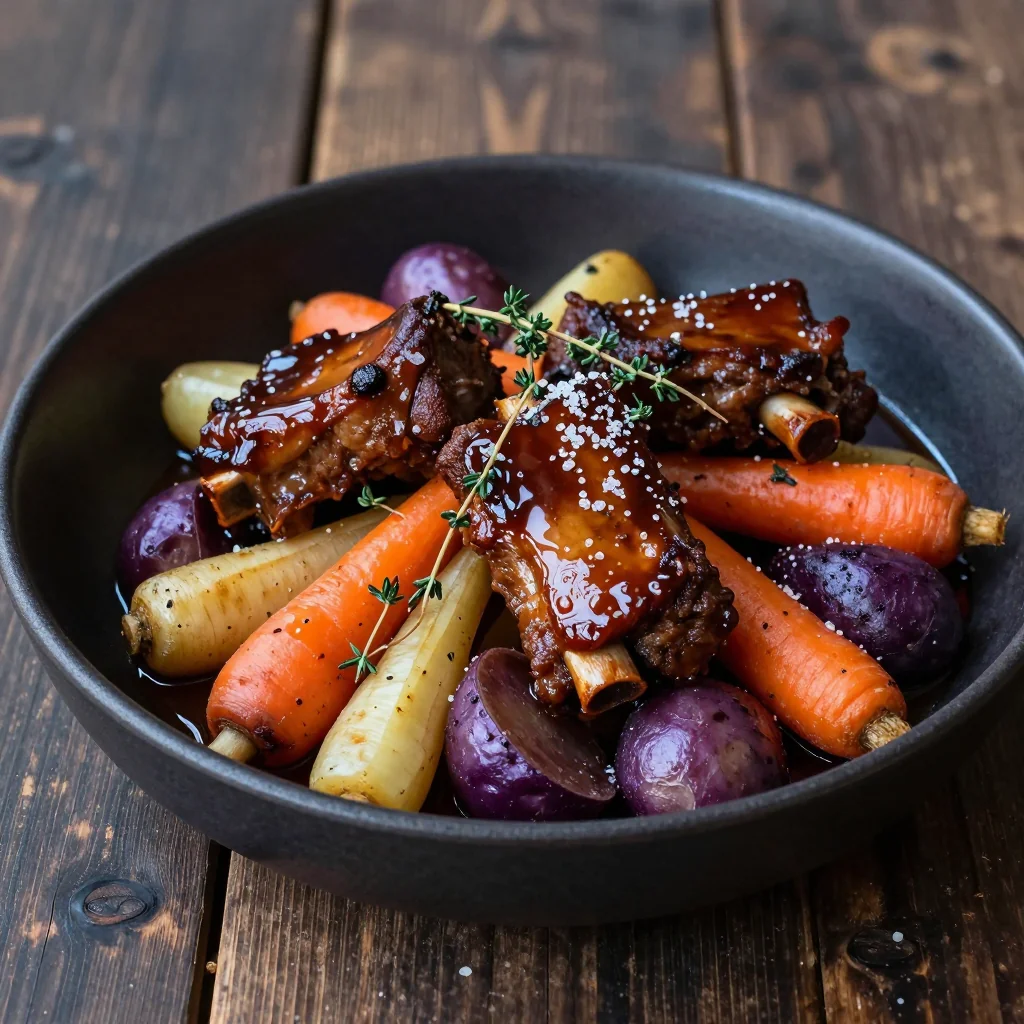
Braised Short Ribs with Root Vegetables for Winter Comfort Dinners
Ingredients
Instructions
- Prep: Season short ribs generously with salt and pepper. Let stand at room temperature 30 minutes.
- Sear: Heat oil in Dutch oven over medium-high heat. Brown ribs on all sides, 3-4 minutes per side. Transfer to plate.
- Sauté aromatics: Cook onion, carrots, and celery until softened, 8-10 minutes. Add garlic, tomato paste, and anchovy paste; cook 2-3 minutes.
- Deglaze: Add wine and stock, scraping up browned bits. Add thyme, bay leaves, and return ribs to pot.
- Braise: Cover and cook in 325°F oven for 2½ hours.
- Add vegetables: Scatter parsnips, turnips, and potatoes around ribs. Cover and cook 1-1½ hours more.
- Finish: Rest 10 minutes. Skim fat, remove thyme and bay leaves. Season sauce if needed.
- Serve: Spoon into bowls with crusty bread, garnished with parsley.
Recipe Notes
For best results, make this recipe 1-2 days ahead. The flavors meld beautifully overnight, and you can easily remove the solidified fat before reheating. Always brown the meat in small batches to develop proper fond.