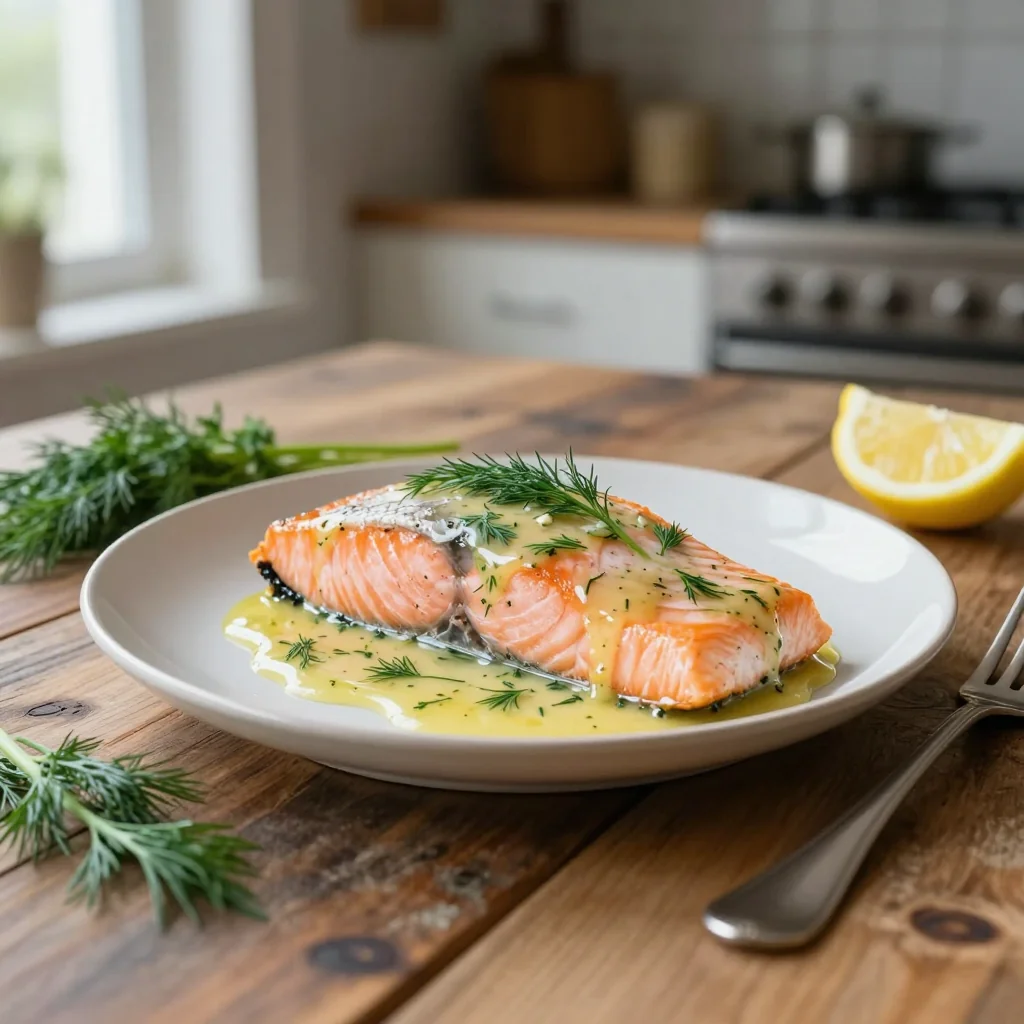
A silky, herb‑infused salmon dish that balances bright citrus with a luscious dill cream sauce.
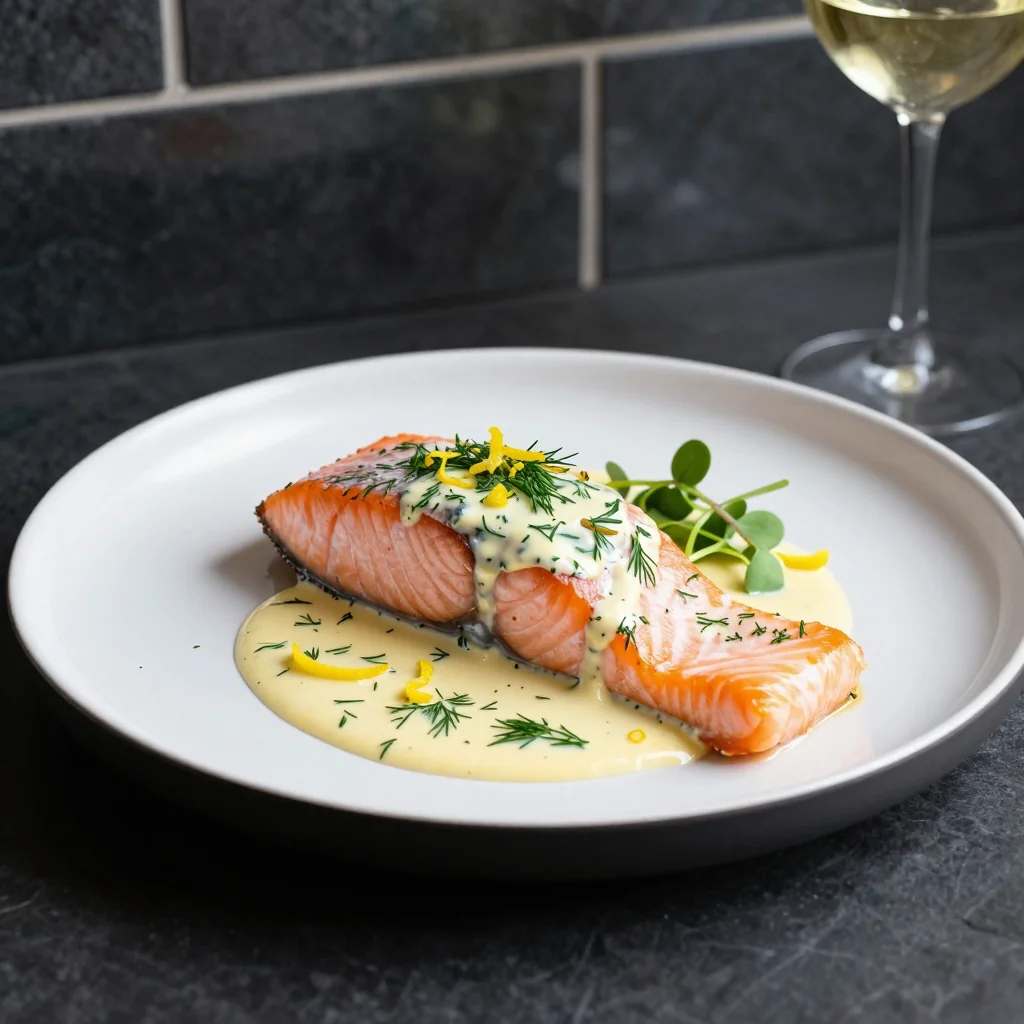
I still remember the first time I tasted a perfectly pan‑seared salmon draped in a velvety dill‑lemon sauce while traveling along the rugged coast of Maine. The salty sea breeze, the gentle clatter of a small fishing village kitchen, and that unforgettable burst of citrus mingling with fresh dill created a memory that has lingered in my palate ever since. It was a moment where simplicity met elegance, and I knew I had to bring that experience home.
This dish hails from the classic Nordic tradition of pairing fatty fish with bright, herbaceous sauces that cut through richness while honoring the natural flavors of the sea. In many coastal cultures, dill is the herb of choice, celebrated for its ability to lift the taste of fish without overwhelming it. The lemon adds a lively acidity that balances the cream, creating a harmonious dance of flavors.
In this article, I’ll walk you through every step—from selecting the freshest salmon fillets at the market to mastering the emulsification of the sauce—so you can recreate that coastal magic in your own kitchen. You’ll learn why each ingredient matters, how to adjust the recipe for any number of guests, and the little tricks that turn a good dinner into a memorable feast.
Grab your skillet, preheat your oven, and let’s embark on this culinary journey together. I can’t wait to see your plates shine with this radiant sauce!
🌟 Why This Recipe Will Captivate You
This salmon dish is more than a meal; it’s a celebration of balance, texture, and flavor that fits any occasion.
- ✨ Perfect Balance of Richness and Freshness: The creamy base softens the buttery salmon while the lemon zest injects a bright, clean finish.
- ✨ Quick and Manageable: With only 35 minutes from start to finish, you can serve a restaurant‑quality plate even on a busy weeknight.
- ✨ Nutrient‑Dense Protein: Salmon provides omega‑3 fatty acids, essential for heart health, paired with a modest amount of cream for indulgence without excess.
- ✨ Versatile Presentation: Whether plated on a rustic wooden board or a sleek white platter, the sauce’s golden hue makes it visually stunning.
- ✨ Kid‑Friendly Adaptation: The mild flavor profile can be tweaked with a touch of honey to appeal to younger palates while still retaining elegance.
- ✨ Seasonal Flexibility: Fresh dill and lemon are available year‑round, making this recipe truly all‑year, no matter the season.
🥗 The Ingredients
📝 Complete Ingredient List
For the Salmon:
- 4 pieces salmon fillets (6 oz each)
- 2 tbsp olive oil
- 1 tsp sea salt
- ½ tsp freshly ground black pepper
For the Creamy Dill & Lemon Sauce:
- 200 ml heavy cream
- 2 tbsp fresh dill, finely chopped
- 1 tbsp Dijon mustard
- 1 tsp honey
- 1 clove garlic, minced
- 1 whole lemon (zested and juiced)
- to taste salt and pepper
For Garnish:
- 1 tbsp capers, rinsed
- 1 tbsp fresh parsley, chopped
- to taste lemon wedges for serving
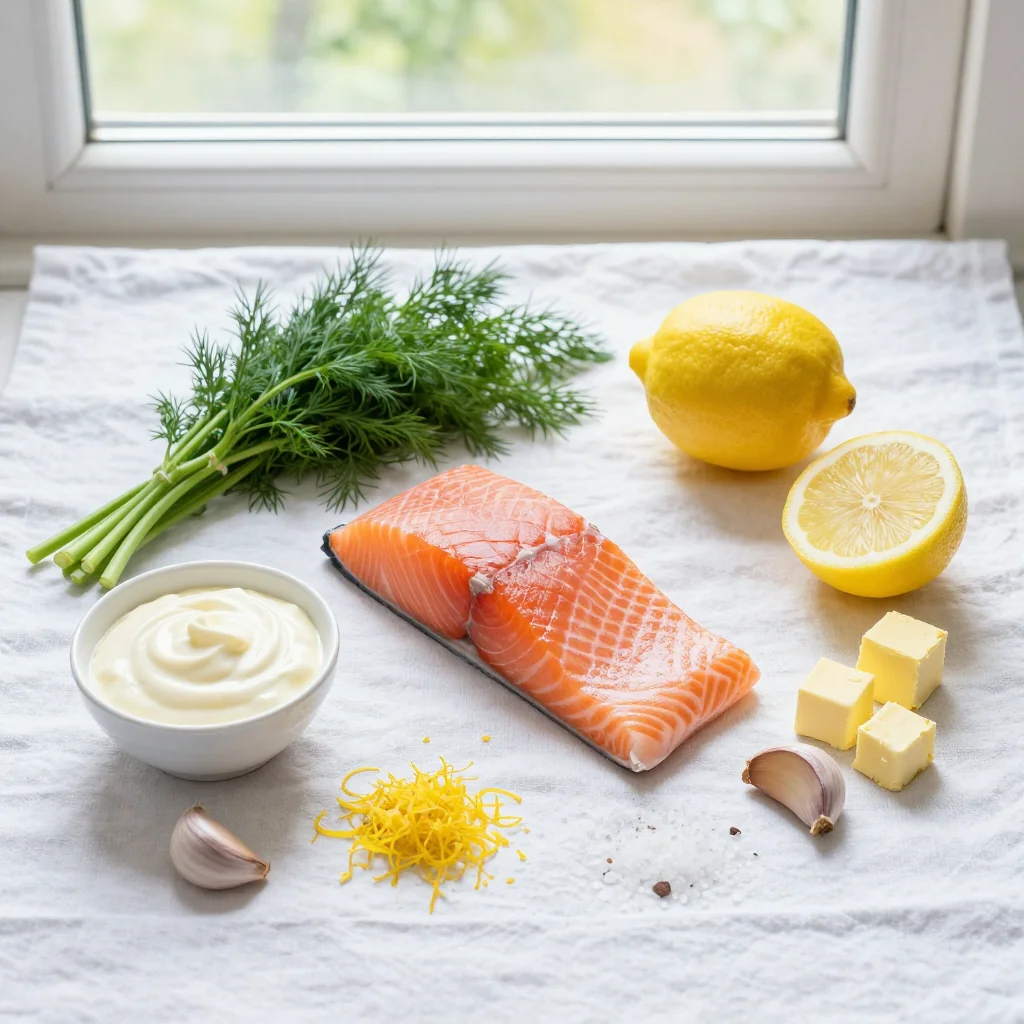
🔍 Focus on Key Ingredients
Salmon Fillets
Choosing high‑quality salmon is the foundation of this recipe. Wild‑caught salmon offers a firmer texture and richer flavor compared to farmed varieties. Look for fillets that are uniformly pink, with a slight sheen and no grayish edges. The fat content not only delivers omega‑3s but also ensures the fish stays moist during searing, creating a buttery mouthfeel that pairs beautifully with the sauce.
Fresh Dill
Dill is the aromatic star that defines this dish. Its delicate, slightly sweet, and anise‑like notes brighten the cream without overpowering the fish. When buying dill, select stems that are crisp and leaves that are bright green. Store it in a glass of water in the refrigerator, loosely covered with a plastic bag, and use within a day for maximum flavor.
Lemon
The lemon provides the essential acidity that cuts through the richness of the cream. Zesting the lemon before juicing ensures you capture the essential oils, adding a fragrant layer to the sauce. Opt for organic lemons when possible, as their zest is free from pesticide residues and offers a cleaner taste.
🔄 Quick Substitutions
| If you don’t have... | Use instead... |
|---|---|
| Heavy cream | Half‑and‑half with a splash of butter |
| Fresh dill | Fresh tarragon or a mix of parsley and chives |
| Salmon fillets | Trout or cod (adjust cooking time slightly) |
👨🍳 Step‑by‑Step Instructions
Follow these detailed steps to achieve perfectly seared salmon and a silky dill‑lemon sauce that clings lovingly to each piece.
📋 Phase 1: Preparation & Mise en Place
Getting everything ready before you start cooking ensures a smooth, stress‑free process.
Pat the salmon dry and season
Using paper towels, gently pat each salmon fillet until completely dry. This step is crucial for achieving a golden crust. Sprinkle sea salt and freshly ground black pepper evenly on both sides. Let the seasoned fillets rest for five minutes while you prep the sauce; this allows the salt to begin breaking down the proteins, enhancing flavor.
Measure and combine sauce ingredients
In a medium bowl, whisk together the heavy cream, Dijon mustard, honey, minced garlic, lemon zest, and half of the chopped dill. This mixture should be smooth and glossy. Set aside, then zest the lemon directly over the bowl to capture the aromatic oils before squeezing the juice. Add the lemon juice, then season with a pinch of salt and pepper. The sauce will thicken slightly as it sits.
🔥 Phase 2: Cooking & Assembly
Now we’ll sear the salmon and finish the sauce to create that luxurious coating.
Sear the salmon
Heat a large non‑stick skillet over medium‑high heat. Add olive oil and swirl to coat. Once the oil shimmers, lay the salmon fillets skin‑side down (if skin is present) or presentation side down if skinless. Press gently for 10 seconds to ensure even contact. Cook for 4‑5 minutes without moving the fillets; you’ll see the edges turn opaque. Flip carefully with a spatula and cook another 3‑4 minutes until the interior reaches 125 °F (52 °C) for medium‑rare or 140 °F (60 °C) for well‑done.
Reduce the pan and add the sauce
Remove the salmon onto a warm plate and tent with foil. Reduce the heat to medium‑low, then pour the prepared sauce into the same skillet. Stir constantly with a wooden spoon, scraping up any browned bits (fond) from the bottom—these add depth. Allow the sauce to simmer gently for 3‑4 minutes, stirring until it thickens enough to coat the back of a spoon.
Finish the sauce with remaining dill and seasonings
Stir in the remaining fresh dill, capers, and a squeeze of fresh lemon juice for brightness. Taste and adjust salt or pepper as needed. The sauce should be glossy, slightly thick, and fragrant with herbaceous notes.
✨ Phase 3: Finishing & Plating
The final touches bring everything together for a restaurant‑worthy presentation.
Check doneness and rest
Insert a thin probe into the thickest part of each fillet; the internal temperature should read 130 °F (54 °C) for a tender, moist center. Let the salmon rest for two minutes; this allows juices to redistribute, preventing dryness.
Plate the salmon and drizzle sauce
Arrange each fillet on a warmed plate. Generously spoon the creamy dill‑lemon sauce over the top, allowing it to cascade down the sides. Sprinkle the remaining fresh parsley and a few extra capers for texture and visual contrast.
Serve with suggested accompaniments
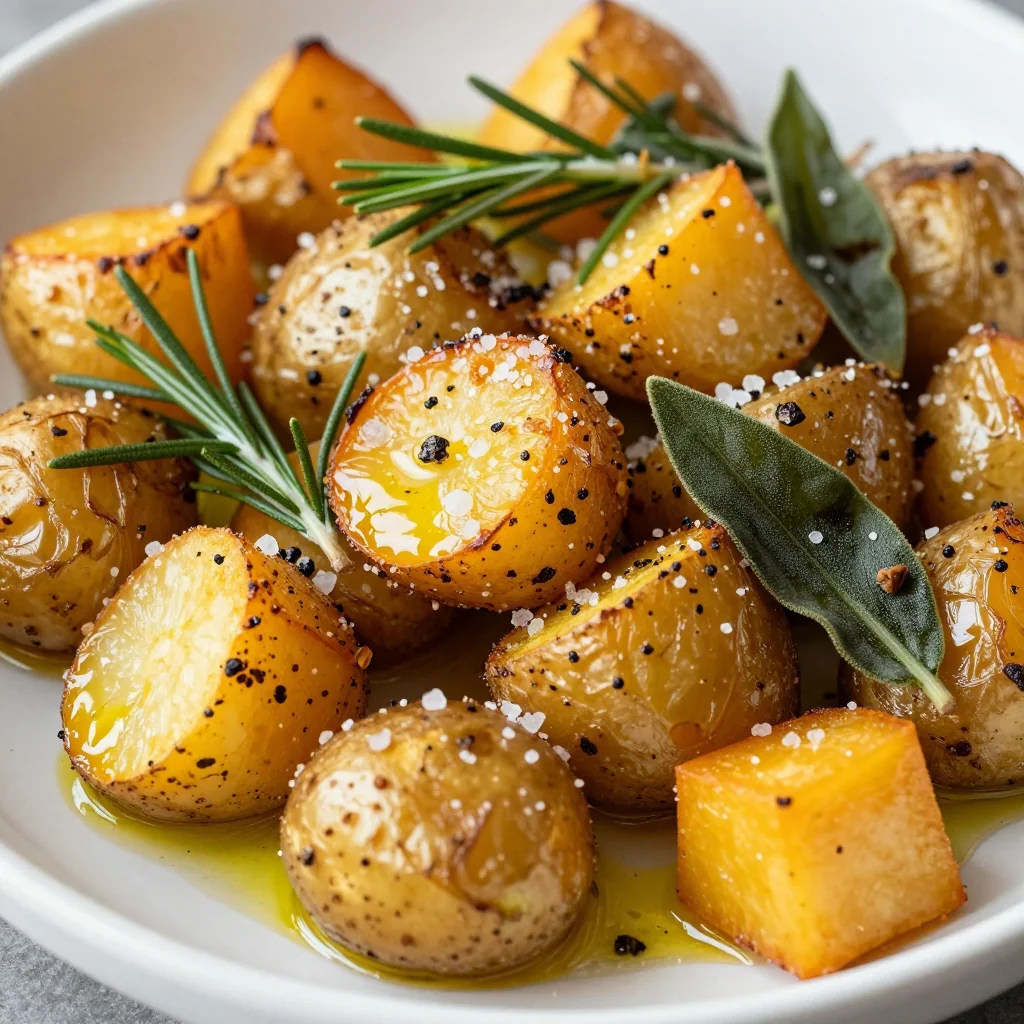
Serve immediately with steamed asparagus, roasted new potatoes, or a simple mixed‑green salad. A crisp glass of Sauvignon Blanc or a lightly chilled sparkling water with a twist of lemon complements the dish beautifully.
💡 Expert Tips & Tricks
🛒 Choosing the Right Ingredients
When shopping for salmon, opt for fillets that have a firm, slightly translucent flesh and a fresh sea scent. Avoid any with a milky appearance or a strong fishy odor. Fresh dill should be vibrant, with no yellowing or wilting. For lemons, choose those that feel heavy for their size, indicating high juice content. If you can, source your ingredients from a reputable fish market or a trusted organic produce stand.
🔪 Preparation Techniques
Patting the salmon dry is essential for a crisp sear; moisture creates steam, which prevents browning. Use a sharp knife to trim any skin edges and ensure uniform thickness across fillets for even cooking. When mincing garlic, crush it first with the flat side of the knife to release more flavor before chopping finely.
🌡️ Mastering the Cooking
Maintain a medium‑high heat for the initial sear; the oil should shimmer but not smoke. If you prefer a slightly crispier crust, finish the salmon under a broiler for the last minute, watching closely to avoid burning. The sauce should never boil vigorously; a gentle simmer preserves the cream’s smooth texture.
🍽️ Presentation & Service
For an elegant look, place the salmon slightly off‑center on a white plate, drizzle the sauce in a circular motion, and garnish with a few lemon wedges and a sprig of dill. Adding a small drizzle of high‑quality extra‑virgin olive oil just before serving adds a glossy finish and subtle richness.
🏆 Pro Tips
A professional chef’s perspective can elevate a good dish to a spectacular one.
- 🎯 Control the Pan Temperature: A seasoned chef knows that the pan’s temperature should be tested with a few drops of water—if they sizzle and evaporate instantly, the pan is ready. This ensures a perfect crust without overcooking the interior.
- 🎯 Emulsify the Sauce Correctly: Adding the cream slowly while whisking prevents the sauce from separating. The mustard acts as an emulsifier, binding the fat and water phases, while the honey balances acidity.
- 🎯 Use a Thermometer: For precise doneness, insert an instant‑read thermometer into the thickest part of the fillet. This eliminates guesswork and guarantees consistent results every time.
- 🎯 Finish with Acid: A splash of fresh lemon juice at the end brightens the sauce, cutting through the richness and enhancing the dill’s herbaceous notes.
- 🎯 Plate Temperature Matters: Warm your plates in the oven for a few minutes before serving. A warm plate keeps the salmon and sauce at optimal temperature, preventing the sauce from thickening too quickly.
- 🎯 Rest the Fish: Allowing the salmon to rest after cooking lets the muscle fibers relax, retaining moisture and yielding a tender bite.
"Cooking is about balance—between heat and flavor, simplicity and complexity." — Massimo Bottura
🔄 Variations & Adaptations
This recipe is a canvas for creativity; here are several ways to tailor it to different tastes and dietary needs.
🥬 Vegetarian / Vegan Version
Replace salmon with firm tofu or thick-cut cauliflower steaks. Marinate the tofu in a light soy‑ginger mixture, then sear as instructed. For the sauce, substitute heavy cream with coconut cream and use Dijon mustard with a splash of apple cider vinegar for tang. The dill and lemon still provide the bright, herbaceous profile.
- Tofu (400 g) – pressed and sliced into 1‑inch slabs.
- Coconut cream (200 ml) – full‑fat for richness.
🌶️ Flavor Variations
Explore different culinary directions by tweaking the aromatics and spices.
Spicy Version:
Add ½ teaspoon of crushed red pepper flakes to the sauce and finish with a drizzle of chili oil for a gentle heat that complements the fish.
Mediterranean Version:
Incorporate chopped Kalamata olives and sun‑dried tomatoes into the sauce, and garnish with crumbled feta for a salty, tangy twist.
Asian‑Inspired Version:
Swap dill for fresh cilantro, add a teaspoon of toasted sesame oil, and finish with a splash of soy sauce and a sprinkle of toasted sesame seeds.
⚠️ Dietary Adaptations
Gluten‑Free:
All ingredients are naturally gluten‑free; ensure the Dijon mustard you use is labeled gluten‑free.
Lactose‑Free:
Replace heavy cream with lactose‑free cream or a blend of oat milk and coconut cream (use 150 ml oat milk + 50 ml coconut cream).
Low‑Calorie:
Use half‑and‑half instead of full‑fat cream and reduce the amount of oil to 1 tbsp. Increase the proportion of vegetables on the side to keep the meal filling.
👶 Family / Kids Version
Kids often prefer milder flavors. Reduce the amount of dill by half and add a teaspoon of maple syrup to the sauce for a subtle sweetness. Serve the salmon in bite‑size pieces and pair with a simple buttered rice or mashed potatoes.
📦 Storage & Reheating
🧊 Conservation
Refrigerator:
- Duration: 2 days
- Container: Airtight glass container
- Tip: Store sauce separately to maintain its creaminess.
Freezer:
- Duration: 1 month
- Method: Portion the cooked salmon and sauce into freezer‑safe bags, removing excess air.
- Defrost: Thaw overnight in the refrigerator, then reheat gently.
💡 For best texture, reheat only the sauce on the stovetop and the salmon briefly in the oven.
♨️ Reheating
🔥 Oven (Recommended):
- Preheat to 150 °C (300 °F).
- Cover the dish with foil to prevent drying.
- Reheat for 10‑12 minutes until warmed through.
- Remove foil, add a splash of cream, and heat an additional 2 minutes to restore silkiness.
⚡ Microwave (Quick):
- Place salmon and sauce in a microwave‑safe dish, cover loosely.
- Heat on medium power for 1 minute, stir sauce, then continue in 30‑second intervals.
- Check temperature; avoid overcooking to keep fish tender.
🍳 Stovetop:
Warm the sauce in a small pan over low heat, adding a splash of water if it thickens too much. Add the salmon, cover, and heat for 3‑4 minutes, turning once.
🍷 Perfect Pairings
🥗 Side Dishes
- Roasted Asparagus: Lightly tossed in olive oil, salt, and lemon zest; its earthy crunch balances the creamy sauce.
- Garlic Mashed Potatoes: Creamy potatoes absorb the sauce, creating a comforting base.
- Mixed Green Salad: A vinaigrette with white wine and mustard adds acidity and freshness.
🍷 Wine & Beverage
- Sauvignon Blanc: Its crisp acidity mirrors the lemon and cuts through the richness.
- Chardonnay (unoaked): Offers a buttery mouthfeel that complements the cream.
- Non‑Alcoholic: Sparkling water with a slice of cucumber and mint provides a refreshing palate cleanser.
🍰 To Complete the Meal
Start with a light citrus‑y shrimp cocktail, follow with the salmon main, and finish with a delicate lemon panna cotta or a berry crumble. The continuity of citrus notes ties the courses together beautifully.
❓ Frequently Asked Questions
Q: Can I use frozen salmon instead of fresh?
Yes, frozen salmon works well if it’s properly thawed. Transfer the fillets to the refrigerator overnight or place them in a sealed bag submerged in cold water for 30‑45 minutes. Pat them dry before seasoning to ensure a good sear.
Q: How do I prevent the cream sauce from curdling?
Maintain a gentle simmer rather than a rapid boil, and whisk continuously while adding the cream. The Dijon mustard acts as an emulsifier, stabilizing the mixture. If the sauce does start to separate, lower the heat and whisk in a splash of cold water or extra cream.
Q: What if I don’t have fresh dill?
You can substitute dried dill (½ teaspoon) but add it earlier in the cooking process to allow the flavor to develop. Fresh dill provides a brighter, more aromatic profile, so consider using a mix of fresh parsley and a pinch of fennel fronds for a similar effect.
Q: Is it possible to bake the salmon instead of pan‑searing?
Absolutely. Preheat the oven to 200 °C (400 °F), place seasoned fillets on a parchment‑lined tray, and bake for 12‑15 minutes, depending on thickness. Finish the sauce on the stovetop and drizzle over the baked salmon just before serving.
Q: How can I make the dish lower in fat?
Swap half of the heavy cream for low‑fat milk or Greek yogurt (add at the end off the heat to prevent curdling). Reduce the amount of oil used for searing and serve with a larger portion of vegetables to keep the meal satisfying yet lighter.
Q: Can I prepare the sauce ahead of time?
Yes, the sauce can be made up to 24 hours in advance. Store it in an airtight container in the refrigerator. Reheat gently over low heat, adding a splash of cream or milk if it thickens too much.
🎉 To Your Kitchen!
This Salmon with Creamy Dill and Lemon Sauce brings together the best of simplicity and sophistication. By respecting each ingredient’s role—from the buttery richness of the salmon to the bright zing of lemon—you’ll create a dish that feels both comforting and celebratory. The step‑by‑step guide, paired with expert tips, ensures you’ll master the technique and impress anyone at the table.
I encourage you to experiment with the variations, adjust the portion sizes using the handy selector, and share your personal twists. Cooking is an ever‑evolving art, and your feedback fuels the community.
Have you tried this recipe?
Leave a comment and rating below! Share your photos on Instagram with #DillLemonSalmon for a chance to be featured.
Salmon with Creamy Dill and Lemon Sauce
A silky salmon fillet bathed in a bright dill‑lemon cream sauce.
📝 Ingredients
Salmon
Creamy Dill & Lemon Sauce
Garnish
👨🍳 Instructions
- 1 Pat salmon dry, season with salt and pepper, and let rest 5 minutes.
- 2 Whisk together cream, mustard, honey, garlic, lemon zest, and half the dill.
- 3 Heat oil in a skillet over medium‑high; sear salmon 4‑5 min per side.
- 4 Remove salmon, lower heat, add sauce to pan, simmer 3‑4 min.
- 5 Stir in remaining dill, capers, and a splash of lemon juice; adjust seasoning.
- 6 Return salmon to plate, rest 2 min.
- 7 Drizzle sauce over salmon, garnish with parsley and capers.
- 8 Serve with asparagus, potatoes, or salad; enjoy!
- 9 Store leftovers in airtight containers; reheat gently.
- 10 Share your creation on social media with #DillLemonSalmon.
🥗 Nutritional Information (per serving)
*Values are estimates based on standard ingredient data.
📚 You Might Also Like
Grilled Shrimp with Garlic Butter
Pan‑Seared Scallops with Pea Purée
Lemon Herb Baked Cod



💬 Comments & Reviews
Leave a Comment
[Comments will appear here]