Love this? Pin it for later! 📌
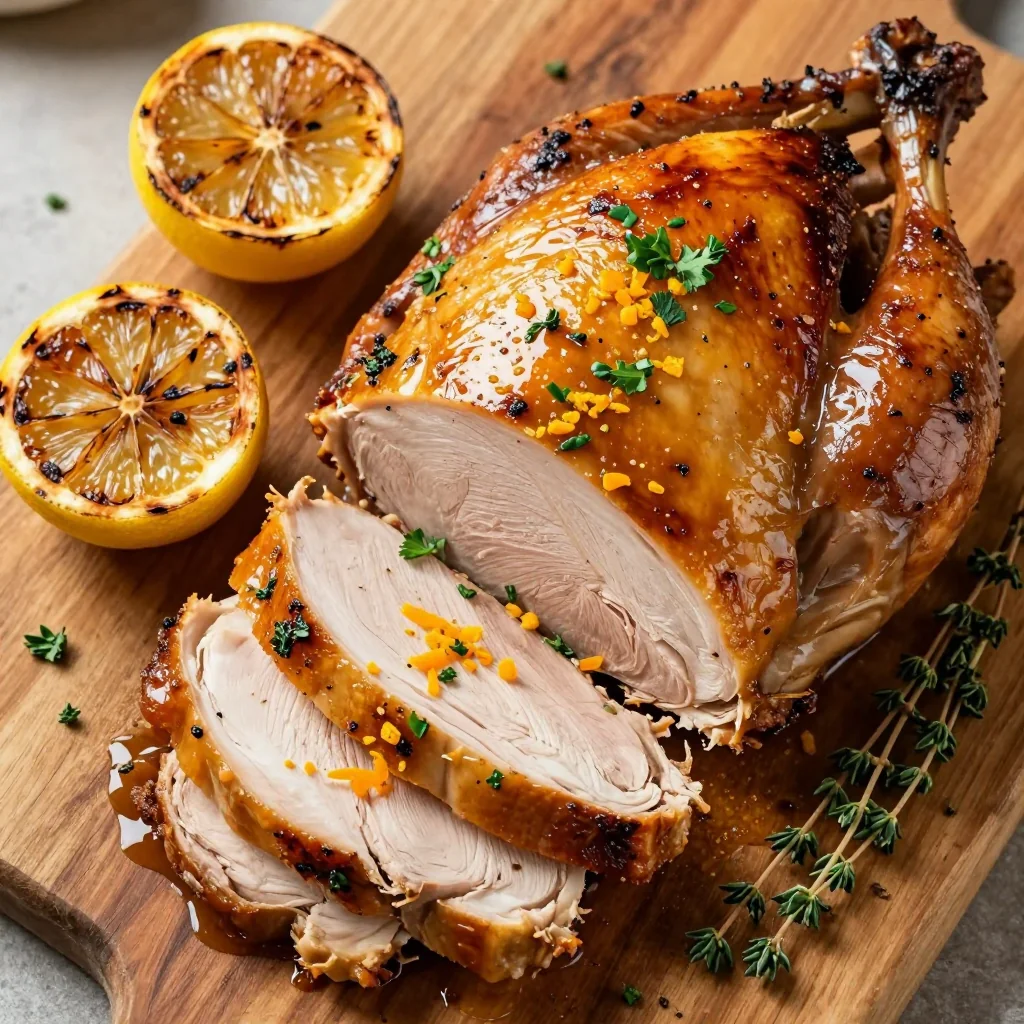
Slow-Roasted Turkey Breast with Citrus & Herb Butter
There’s something quietly magical about the way a turkey breast transforms when it’s given time, low heat, and a generous cloak of citrus-kissed herb butter. The first time I served this slow-roasted beauty at a spring luncheon, the room fell silent—forks hovered mid-air, eyes closed involuntarily, and someone actually sighed. Not the polite dinner-party kind, but the deep, involuntary exhale that happens when flavor catches you off guard. Since then, this recipe has become my go-to for every occasion that deserves applause without the stress: Easter brunch when the in-laws visit, Friends-giving in a tiny apartment kitchen, or a random Tuesday when the grocery store marks fresh turkey breasts down to $6.99/lb and I decide the universe is telling me to feast.
Unlike a whole bird, a bone-in turkey breast roasts evenly, needs no flipping or brining theatrics, and graciously accepts any citrus you have on hand—blood oranges in January, Meyer lemons in March, or the grocery-store navel oranges that live perpetually in my crisper. The herb butter is more than a rub; it’s a built-in baste that slowly melts, pooling in the crevices between skin and meat, carrying ribbons of zest, rosemary, and thyme deep into every fiber. Low and slow heat (275 °F/135 °C) buys you a forgiving window—overcook by 20 minutes and it’s still succulent—while the skin lacquers to a golden crackle that shatters like gourmet parchment. If you can wield a micro-plane and have the patience to wait four uneventful hours, you can serve restaurant-worthy turkey without a culinary degree or a stress ball.
Why This Recipe Works
- Low & Slow Heat: Collagen melts gradually, so breast meat stays plump even past 165 °F.
- Reverse-Seasoning: Butter is worked under the skin, so flavors infuse from the inside out.
- Citrus & Herb Aromatics: Zest releases oils that perfume meat; juice in the pan creates built-in jus.
- Room-Temp Rest: A 30-minute counter rest before carving equals 30% less juice loss on the board.
- Skin-Saving Finish: Quick 450 °F blast at the end crisps without drying the interior.
- One-Pan Wonder: Veggies roast in drippings—no extra skillet required.
- Make-Ahead Friendly: Season the night before; pop in oven when guests arrive.
Ingredients You'll Need
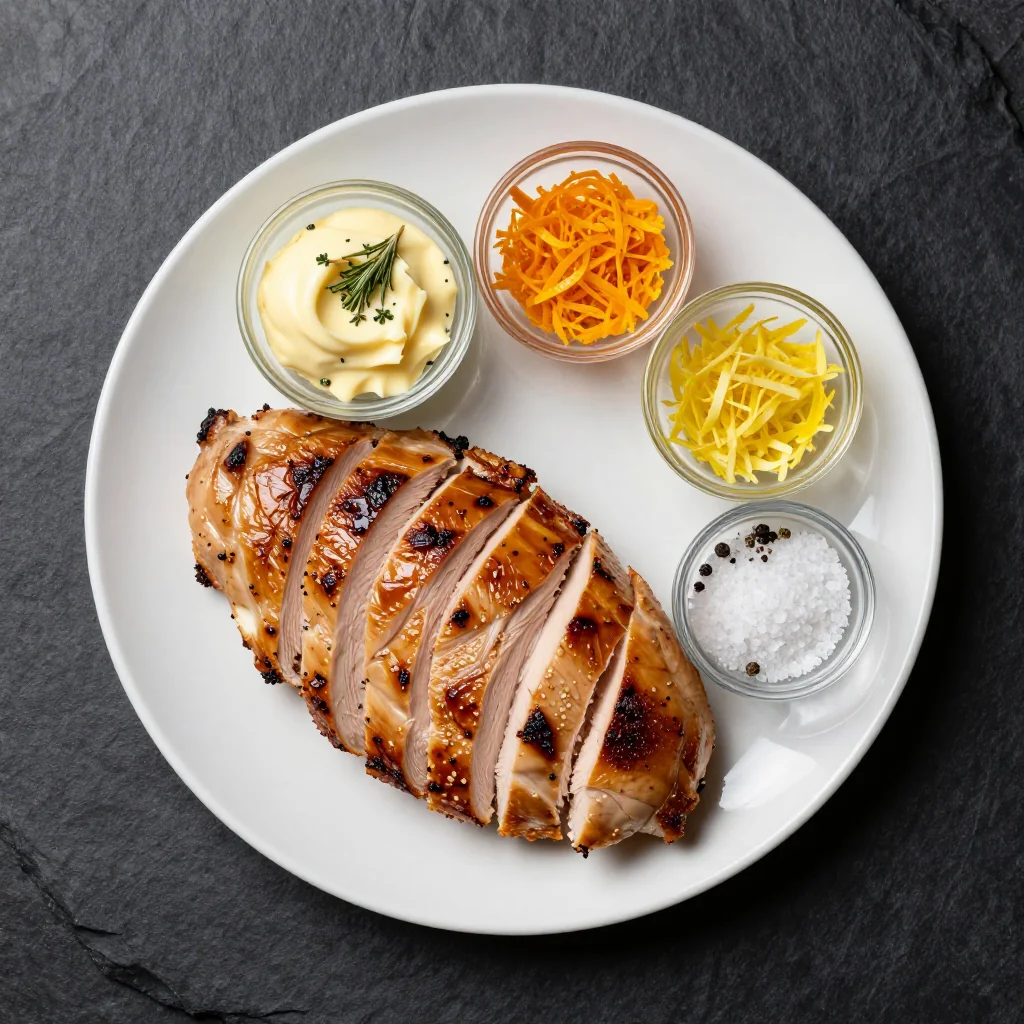
A turkey breast is essentially a blank canvas: mild-mannered, lean, and eager for bold friends. Start with a bone-in, skin-on half-breast (4½–5½ lb). The bone acts as a heat conductor, insulating the delicate white meat so it cooks evenly, while the skin renders into a self-basting blanket. If your butcher only has boneless, that’s fine—just reduce cook time by 20–25 minutes and truss into a tidy roll so it doesn’t dry on the edges.
For the citrus, aim for two different types: one sweet (navel, Cara Cara, blood orange) and one tart (Meyer lemon or regular lemon). The sweet zest rounds out the herb bitterness; the tart juice brightens the pan drippings. Always zest before juicing—zest oils live in the colored outer layer, while the pith beneath is bitter. If you keep organic citrus on hand, wash under warm water and scrub gently with a vegetable brush to remove wax.
Butter quality matters. European-style (82–84% fat) contains less water, so it browns faster and carries flavor better. Unsalted lets you control salinity; if salted is all you have, reduce kosher salt by half. Soften to the point where a finger leaves a clean indentation but the butter isn’t melted—about 65 °F/18 °C. From there, you can fold in herbs up to 48 hours ahead; the fat preserves the aromatics and saves you prep on roast day.
Speaking of herbs, fresh is non-negotiable. Dried rosemary feels like pine needles in comparison. I use a 2:1 ratio of soft herbs (parsley, thyme leaves) to woody herbs (rosemary, sage). Chop finely so they integrate into the butter; big leaves scorch and turn acrid. If you’re harvesting from a garden, pick in the morning after dew evaporates—essential oils are at their peak.
Finally, a humble note on salt. I use Diamond Crystal kosher; if you use Morton's, reduce volume by 25% (its flakes are denser). Season the cavity, the skin, and the vegetables—layering salt throughout builds depth rather than a salty crust.
How to Make Slow-Roasted Turkey Breast with Citrus & Herb Butter
Prep & Season
Remove turkey from fridge 45 minutes before roasting. Pat every surface absolutely dry with paper towels—moisture is the enemy of crispy skin. In a small bowl, combine 6 Tbsp softened butter, 2 tsp finely chopped rosemary, 1 tsp thyme leaves, 1 tsp orange zest, ½ tsp lemon zest, 1 minced garlic clove, ¾ tsp kosher salt, and ¼ tsp black pepper. Mash with a fork until homogenous.
Work the Butter Under the Skin
Gently slide your fingers between skin and meat, starting at the neck cavity. Loosen as far as you can reach without tearing. Using a small spoon or your fingers, deposit dollops of herb butter under the skin and massage outward so it forms an even layer. Rub any remaining butter over the exterior and season with another ½ tsp salt.
Truss & Chill (Optional Overnight)
Tuck wing tips under and tie the breast with kitchen twine every 2 inches so it roasts into a uniform shape. Place on a rack set inside a rimmed baking sheet. Refrigerate uncovered up to 24 hours; the skin will air-dry and turn translucent—insurance for crackling results.
Build the Bed of Aromatics
Heat oven to 275 °F/135 °C. Under the rack, scatter 1 quartered onion, 2 chunked carrots, 2 chunked celery ribs, 1 halved head of garlic, and the juiced orange & lemon carcasses. Add 1 cup low-sodium chicken stock and ½ cup dry white wine. These create aromatic steam and the base for a quick jus.
Slow Roast
Place turkey on the middle rack and roast undisturbed until the thickest part registers 155 °F/68 °C on an instant-read thermometer, about 2 hours 45 minutes for a 5-lb breast. Resist basting; opening the door drops the oven temp and extends cook time.
Crank for Golden Skin
Increase oven to 450 °F/230 °C. Roast an additional 8–12 minutes, rotating pan halfway, until skin is deep mahogany and internal temp hits 162 °F. The carry-over cooking will bring it to the USDA-safe 165 °F while it rests.
Rest & Collect Juices
Transfer turkey to a carving board and tent loosely with foil. Rest at least 20 minutes (up to 45). Meanwhile, strain pan liquids into a fat separator or measuring cup. Let stand 5 minutes, then pour off 1 Tbsp fat into a small saucepan; reserve juices.
Quick Jus (Optional but Worth It)
Whisk 1 tsp all-purpose flour into the turkey fat over medium heat for 1 minute. Whisk in reserved juices plus enough stock to equal 1½ cups. Simmer 3 minutes, taste, and season. Carve turkey into ¼-inch slices and serve with warm jus.
Expert Tips
Calibrate Your Thermometer
Submerge the probe in ice water for 30 seconds; it should read 32 °F. If not, adjust or note the offset so you don’t overshoot your target.
Don’t Skip the Rack
Airflow underneath prevents the bottom from braising in liquid and turning soggy. A wire cooling rack works if you don’t own a V-rack.
Overnight Air-Dry
Refrigerating uncovered overnight is like a mini dry-brine; salt penetrates, skin dehydrates, and you’ll get lacquer-like crackling.
Save the Bones
Simmer the carcass with onion skins and carrot tops for 4 hours. The citrus-herb stock makes killer turkey ramen or turkey pot pie.
Slice Against the Grain
Locate the direction of muscle fibers and cut perpendicular. You’ll shorten them into tender ½-inch segments instead of chewy ribbons.
Freeze Raw Butter Logs
Double the herb butter, roll into a 1-inch log in parchment, and freeze. Slice pats for steak, fish, or weeknight chicken.
Variations to Try
- Smoked Paprika & Lime: Swap orange zest for lime and add 1 tsp smoked paprika to butter. Serve with charred corn salsa.
- Maple-Mustard Glaze: Whisk 2 Tbsp maple syrup with 1 Tbsp whole-grain mustard; brush during the final 450 °F blast for sticky shine.
- Mediterranean: Replace rosemary with 1 tsp chopped oregano and ¼ tsp fennel seeds. Add olives to the vegetable bed.
- Garlic-Chili: Stir ½ tsp red-pepper flakes and 1 tsp grated fresh ginger into butter. Serve with coconut rice.
- Truffle Butter Finish: Use plain butter for roasting, then dollop 2 Tbsp truffle butter on the hot carved meat just before serving.
Storage Tips
Refrigerate: Cool slices completely, then store in the cooking jus or additional stock to prevent drying. Airtight container up to 4 days.
Freeze: Wrap slices in parchment, then foil, then a freezer bag. Freeze up to 3 months. Thaw overnight in fridge; reheat gently in 300 °F oven with a splash of stock until just warmed through.
Make-Ahead: The herb butter can be prepared 3 days ahead. The turkey can be seasoned 24 hours ahead and refrigerated uncovered. If roasting a day in advance, stop at 155 °F, cool, refrigerate, then reheat at 300 °F until 145 °F internal and finish with the 450 °F flash just before serving.
Frequently Asked Questions
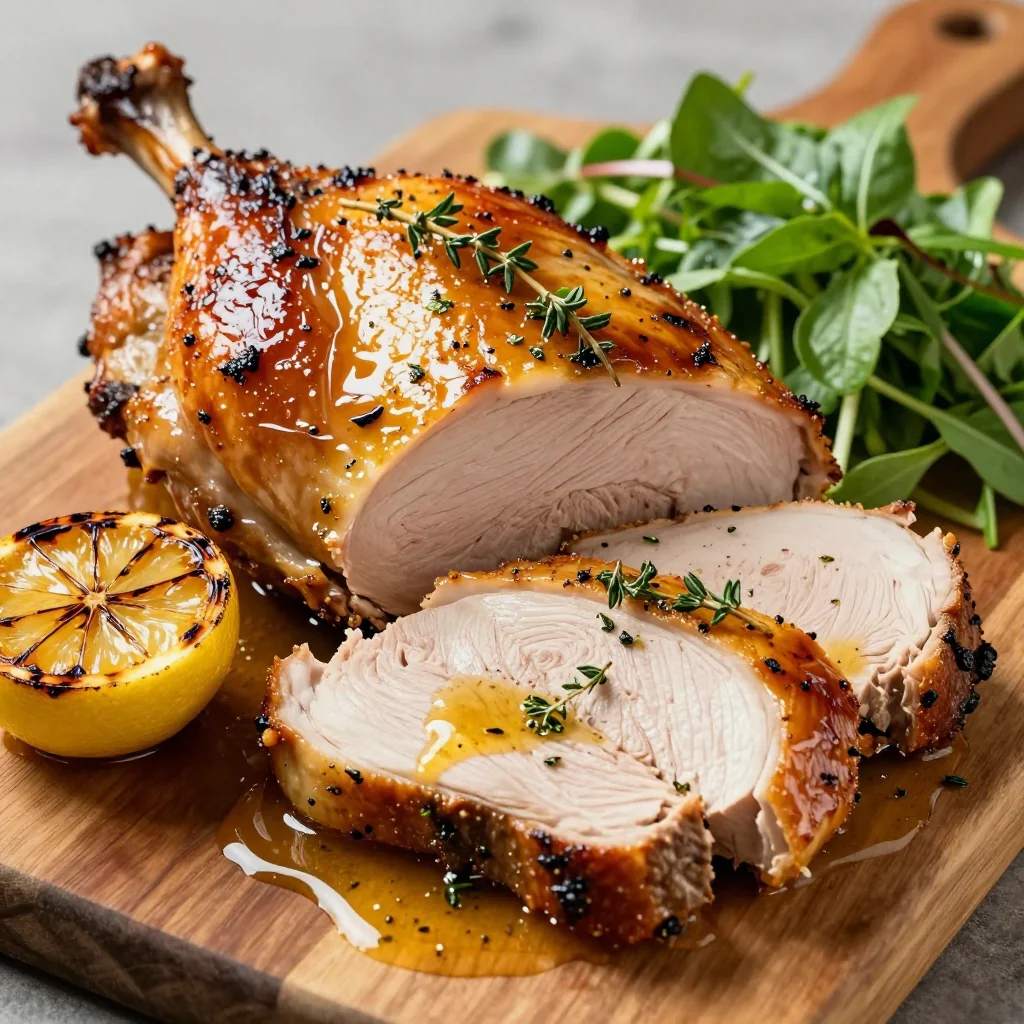
slowroasted turkey breast with citrus and herb butter
Ingredients
Instructions
- Prep butter: Combine softened butter, herbs, zests, garlic, ¾ tsp salt, and pepper.
- Loosen skin: Gently separate skin from meat and spread butter underneath. Season exterior with remaining ½ tsp salt.
- Truss: Tie with twine every 2 inches. Let stand 45 minutes at room temp.
- Roast: Heat oven to 275 °F. Scatter vegetables, citrus carcasses, stock, and wine in pan. Set turkey on rack and roast until 155 °F, ~2 hrs 45 min.
- Crisp: Increase oven to 450 °F; roast 8–12 min more until 162 °F and skin is golden.
- Rest: Tent loosely with foil 20 minutes before carving. Strain pan juices, skim fat, and simmer for a quick jus.
Recipe Notes
Turkey is safe to eat when the thickest part reaches 165 °F. Use an instant-read thermometer for best results.