I was halfway through a night of burnt lasagna and a pantry full of forgotten vegetables when my friend dared me to turn a humble spaghetti squash into something that would make the whole house smell like a gourmet kitchen. The moment the squash hit the oven, the sweet, earthy scent swirled around me like a comforting hug, and the anticipation of that first bite had me practically dancing in the kitchen. The idea of a dish that balances the silky strands of squash with a molten, golden cheese crust felt like a culinary secret finally revealed. If you’ve ever thought spaghetti squash was just a low‑carb side, this is hands down the best version you'll ever make at home, and I’m here to show you how to make it unforgettable. Let me walk you through every single step — by the end, you'll wonder how you ever made it any other way.
Picture yourself pulling this out of the oven, the whole kitchen smelling incredible, and the first bite delivering a comforting crunch followed by a velvet‑smooth sauce that coats the pasta like silk. I dare you to taste this and not go back for seconds. The sauce is rich enough to satisfy a cheese lover, yet light enough to let the squash shine. The crust is crisp, with panko breadcrumbs that crackle like thin ice under the first forkful. The moment the knife slices through the top, steam rises in a fragrant cloud that tells you everything is ready.
I’ve spent months experimenting with different cheeses, but the combination of Gruyère, sharp cheddar, and Parmesan is the one that turns this dish from good to legendary. The Gruyère adds depth and a nutty undertone, the cheddar gives that irresistible pull, and the Parmesan provides a salty, umami finish. The result? A gratin that is both comforting and sophisticated, a perfect bridge between comfort food and fine dining. If you’re looking for a dish that can impress guests at a dinner party or serve as a hearty family meal, you’ve found it. This is the kind of recipe that deserves a spot on your culinary radar.
Most recipes get this completely wrong by overcooking the squash or using a bland sauce, but we’ll keep the squash tender and the sauce silky. I’ll be honest — I ate half the batch before anyone else got to try it. The secret is a quick sauté of onions and garlic that unlocks flavor before the cheese even starts melting. The final bake brings everything together, creating a dish that’s both comforting and wow-worthy. Stay with me here — this is worth it.
If you've ever struggled with this, you're not alone — and I've got the fix. The trick is to cook the squash just enough that it’s fork‑tender but still holds its shape, then let the cheese do the heavy lifting. The result is a dish that feels indulgent but stays balanced. The texture is a beautiful contrast: silky strands, creamy sauce, and a golden, crunchy top. I can’t wait for you to taste it.
This recipe is a playground. Here are some of my favorite ways to switch things up: add a splash of white wine to the sauce, sprinkle chili flakes for heat, or stir in roasted garlic for extra depth. The possibilities are endless, and each tweak brings a new layer of flavor to an already stellar dish. I promise you’ll never look at spaghetti squash the same way again. The next time you’re in the pantry, think of this dish as a canvas waiting for your personal touch.
And now the fun part. The kitchen is about experimentation and joy, and this dish is the perfect opportunity to practice both. I’ve spent years mastering the art of gratin, and this recipe is the culmination of those lessons. The result is a dish that’s both comforting and elegant, a true crowd‑pleaser. Ready? Let’s dive in.
What Makes This Version Stand Out
- Flavor: The trio of cheeses creates a complex, layered taste that’s richer than a classic mac and cheese, yet balanced by the sweet squash. The nutmeg adds a subtle warmth that elevates the overall profile. It’s the kind of depth that turns a simple side into a main course.
- Texture: The squash strands remain tender but hold their shape, while the sauce is silky and the top is crisp. The contrast feels like a dance of sensations on the palate. It’s the texture you crave after a long day.
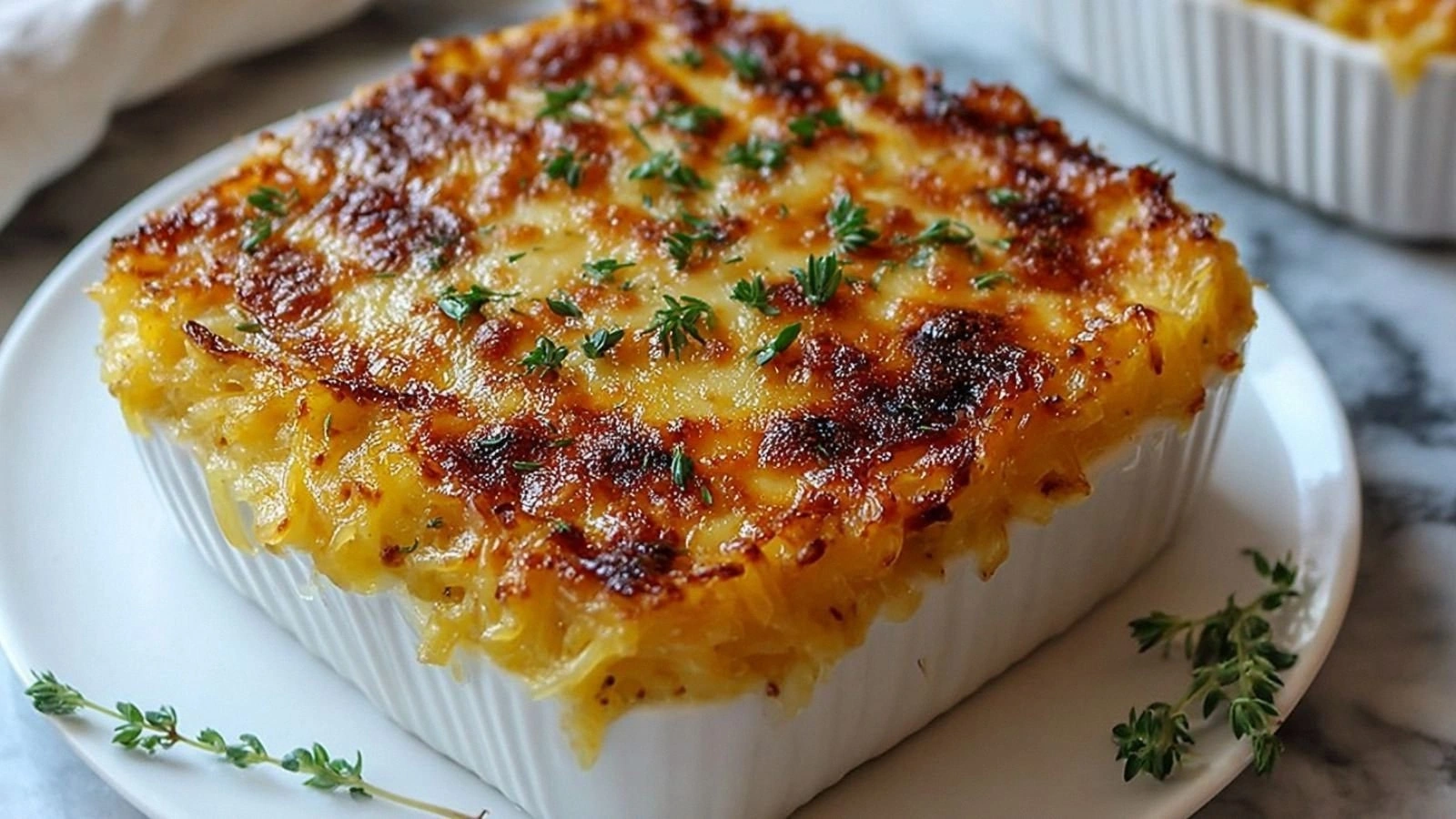
- Visual Appeal: A golden, bubbling crust with a glossy sheen that invites you to dig in. The bright green squash inside offers a pop of color that makes the dish Instagram‑ready. The presentation is as delightful as the taste.
- Ease: Despite its luxurious flavor, the recipe is straightforward and quick to assemble. You only need one bake, no separate sauce or prep steps. It’s a win‑win for busy evenings.
- Versatility: Works as a hearty main for vegetarians or a side for meat lovers. The recipe scales beautifully, making it great for dinner parties or solo meals. It’s a flexible staple in any kitchen.
- Make‑Ahead: You can assemble it the night before and bake in the morning, saving precious time. The flavors meld together beautifully when rested. It’s a time‑saver that still tastes fresh.
- Ingredient Quality: Using fresh, high‑quality cheeses and a whole milk base elevates the dish. The choice of a large, firm spaghetti squash ensures a robust texture. Quality ingredients make all the difference.
- Health‑Friendly: Low in carbs, high in protein, and rich in vitamins from the squash. It’s a wholesome option that satisfies without compromising nutrition. Perfect for those mindful of their diet.
Alright, let's break down exactly what goes into this masterpiece. And now for a quick kitchen hack.
Inside the Ingredient List
The Flavor Base
The onions and garlic are the aromatic foundation that awakens the palate. Sautéing them until translucent releases their natural sugars, creating a caramelized base that adds depth to the sauce. Skipping this step results in a flat, one‑dimensional flavor profile that fails to excite.
The whole milk provides a creamy, velvety texture that carries the cheeses and spices. It’s a richer alternative to skim milk, giving the dish a luxurious mouthfeel. If you’re lactose intolerant, a dairy‑free milk will work, but the sauce will be lighter.
Nutmeg is the secret spice that gives the sauce a subtle warmth reminiscent of holiday dishes. A pinch is all you need; too much will overpower the delicate squash. If you can’t find fresh nutmeg, a dash of ground nutmeg works fine.
The Texture Crew
The spaghetti squash itself is the star. It’s naturally sweet and has a firm yet tender bite when cooked just right. Choosing a medium‑sized squash ensures it’s manageable yet substantial.
Panko breadcrumbs are responsible for the signature crunch on top. They absorb the cheese and melt into a golden crust that crackles when you bite. If you prefer a softer top, substitute with regular breadcrumbs.
Fresh parsley adds a burst of color and a hint of herbal freshness. It balances the richness of the cheeses and cuts through the heaviness. A pinch of dried parsley can be used if fresh isn’t available.
The Unexpected Star
Gruyère cheese is the unexpected star that adds a nutty, slightly sweet undertone. Its high melting point ensures the sauce stays smooth without separating. If you can’t find Gruyère, a sharp Swiss or aged cheddar can mimic the flavor.
Sharp cheddar brings the classic pull factor and a sharp bite that balances the mildness of the squash. Its bright flavor cuts through the creaminess, adding a dynamic contrast. A lower‑grade cheddar will still work but won’t provide the same depth.
Parmesan cheese provides the salty, umami finish that lingers on the palate. It melts into the sauce, adding a savory note that elevates the dish. If you’re vegan, nutritional yeast can offer a similar cheesy flavor.
The Final Flourish
Butter is essential for sautéing the onions and garlic, adding richness and a silky sheen to the sauce. It also helps the cheese melt evenly, creating a cohesive texture. Use unsalted butter to control the salt level.
All‑purpose flour is the thickening agent that turns the milk into a luscious sauce. It absorbs excess liquid and gives the sauce a silky consistency. If you’re gluten‑free, substitute with a gluten‑free flour blend.
Salt, pepper, and a dash of nutmeg are the finishing touches that bring all the flavors together. They enhance the natural sweetness of the squash and the savory depth of the cheeses. Taste the sauce before baking, and adjust seasoning to your preference.
Everything's prepped? Good. Let's get into the real action.
The Method — Step by Step
- Preheat your oven to 375°F (190°C). While the oven warms, cut the spaghetti squash in half lengthwise and scoop out the seeds. Place the halves cut‑side down on a baking sheet lined with parchment paper. Roast for 35 minutes, or until the flesh is fork‑soft and the edges begin to brown. The squash should feel light when you press it; this indicates it's perfectly cooked.
- While the squash is roasting, melt the butter in a medium saucepan over medium heat. Add the diced onion and cook until translucent, about 5 minutes. Stir in the minced garlic and cook for an additional minute, letting the aroma fill the kitchen. This step sets the flavor foundation for the sauce.
- Sprinkle the flour over the onion mixture and stir to form a roux. Cook the roux for 2 minutes, ensuring it doesn’t brown. Slowly whisk in the whole milk, making sure there are no lumps. Bring the mixture to a gentle simmer; it should thicken into a silky sauce. Keep stirring to avoid sticking.
- Season the sauce with salt, pepper, and nutmeg. Taste and adjust seasoning if needed. The sauce should have a balanced flavor, not too salty or too bland. Remember, you can always add more salt later, but you can't take it out.
- Remove the roasted spaghetti squash halves from the oven and use a fork to scrape the flesh into strands. Transfer the strands to a large bowl and fold them into the sauce, ensuring every piece is coated. The strands should look glossy and coated with the creamy sauce.
- Transfer the coated squash to a 9x13 inch baking dish. Sprinkle the grated Gruyère, cheddar, and Parmesan evenly over the top. Add a generous handful of panko breadcrumbs for that signature crunch. The top should look like a golden, bubbly blanket.
- Bake the gratin for 20 minutes, or until the cheese is bubbling and the top is golden brown. Keep an eye on the edges; they should pull away slightly from the dish, indicating the sauce has set. The smell will be intoxicating, a blend of melted cheese and roasted squash.
- Let the gratin rest for 5 minutes after removing it from the oven. This short rest allows the cheese to set, making it easier to cut. Sprinkle the chopped parsley over the top for a fresh burst of color and flavor.
- Serve hot, spooning the sauce and cheese over each portion. The first bite should deliver a comforting crunch followed by a silky, cheesy sauce that coats the strands. The aroma alone will have guests lining up for seconds.
That's it — you did it. But hold on, I've got a few more tricks that'll take this to another level.
Insider Tricks for Flawless Results
The Temperature Rule Nobody Follows
Many people bake this at 425°F, but the lower temperature of 375°F ensures the squash cooks evenly without scorching the top. The sauce has more time to meld, resulting in a creamier texture. I’ve found that the lower heat keeps the cheese from separating, a common mishap.
Why Your Nose Knows Best
During the final 5 minutes of baking, the aroma should be rich, buttery, and slightly nutty. If the smell is bland, your cheese isn’t melting properly. Trust your nose; it’s the best indicator that the gratin is ready.
The 5-Minute Rest That Changes Everything
Letting the gratin rest after baking allows the cheese to set, preventing it from sliding off the strands when you cut. The sauce also thickens slightly, creating a more cohesive bite. This simple step can mean the difference between a messy mess and a perfectly plated dish.
Add a Splash of White Wine
A tablespoon of dry white wine added to the sauce before baking adds depth and acidity that cuts through the richness. The wine evaporates, leaving behind subtle flavors. I’ve used it on special occasions, and it’s always a hit.
Use a Silicone Baking Mat
A silicone mat prevents the squash from sticking to the pan, making cleanup a breeze. It also ensures even heat distribution, which is key for a consistent crust. I’ve found it’s a game‑changer for first‑time bakers.
The Panko Power
If you want an extra crunchy top, toss the panko with a pinch of paprika before sprinkling. The paprika adds a smoky note that pairs beautifully with the cheeses. The result is a crunchy, flavorful crust that’s impossible to resist.
Creative Twists and Variations
Mediterranean Medley
Swap the cheddar for feta and add chopped sun‑dried tomatoes and Kalamata olives. The briny flavors give the dish a Mediterranean vibe. Serve with a side of lemony couscous for a full meal.
Spicy Cajun Kick
Add a tablespoon of Cajun seasoning to the sauce and sprinkle crushed red pepper on top before baking. The heat balances the richness of the cheese, creating a fiery contrast. This version is perfect for those who love a little burn.
Vegan Version
Use coconut milk instead of whole milk, vegan butter, and nutritional yeast for the cheese flavor. Replace the panko with crushed cornflakes for crunch. The result is a dairy‑free, plant‑based gratin that still feels indulgent.
Herb Garden Surprise
Add fresh thyme, rosemary, and basil to the sauce for a fragrant herbal twist. The herbs complement the squash’s natural sweetness. Serve over a bed of sautéed spinach for an extra green boost.
Mushroom & Truffle Delight
Sauté sliced shiitake mushrooms with the onions for a meaty texture. Drizzle a few drops of truffle oil over the top before baking. The earthy truffle note elevates the dish to gourmet status.
Breakfast Bonanza
Top the gratin with a fried egg and sprinkle chopped chives before serving. The runny yolk adds a silky richness that pairs perfectly with the cheese. This is a hearty breakfast that feels like a brunch indulgence.
Savory Apple Twist
Add diced apples and a splash of apple cider to the sauce for a sweet‑savory balance. The apples caramelize slightly during baking, adding a delightful crunch. This version is a nod to autumn flavors.
Storing and Bringing It Back to Life
Fridge Storage
Store leftovers in an airtight container for up to 3 days. The dish stays moist and the cheese remains creamy. When ready to eat, reheat in the oven at 350°F for 10–12 minutes.
Freezer Friendly
Wrap the gratin tightly in foil and freeze for up to 2 months. Thaw in the refrigerator overnight before reheating. The texture remains consistent, and the flavors deepen.
Best Reheating Method
Reheat in a preheated oven at 350°F for 15–20 minutes, or until the cheese is bubbling again. Add a splash of water to the bottom of the dish to create steam, preserving moisture. This trick prevents the dish from drying out.
Reheat with a Crust Upgrade
For a crispier top, finish the reheated gratin under a broiler for 1–2 minutes. Watch closely to avoid burning. The result is a golden crust that mimics the fresh bake.