Love this? Pin it for later! 📌
Batch-Cook Friendly Cabbage and Carrot Stir-Fry with Garlic and Lemon
There are weeks when life feels like a relay race: work deadlines, soccer practice, choir rehearsal, and somehow dinner still has to land on the table. This bright, lemony cabbage and carrot stir-fry has been my baton-passing lifesaver for more than a decade. I first cobbled it together on a rainy Sunday when my grocery budget was down to its last five-dollar bill and the fridge held only a crinkled head of green cabbage, a few carrots, and the eternal bottle of soy sauce. One frantic skillet later, I tasted something that made me close my eyes: sweet cabbage edges caramelized in hot oil, carrots still snappy, garlic soft and fragrant, all lifted by a last-second squeeze of lemon. My kids asked for seconds; my husband packed the leftovers for lunch. Since then, this humble dish has followed us through new houses, new jobs, and new dietary phases—always in a mega-batch, always ready to reheat, always tasting fresher than it has any right to.
Why This Recipe Works
- One pan, ten minutes: A hot wok plus thinly cut vegetables equals dinner faster than delivery.
- Double-duty flavors: Garlic hits early for nuttiness, fresh lemon hits late for sparkle—no bland batch-cook fatigue.
- Meal-prep chameleon: Serve over rice, quinoa, noodles, or tucked into wraps; it reheats like a dream for five days.
- Budget hero: Cabbage and carrots cost pennies per pound, yet deliver fiber, vitamin C, and that satisfying crunch.
- Freezer friendly: Portion, freeze flat, break off what you need; the texture stays crisp if you under-cook slightly.
- Allergen aware: Naturally vegan, gluten-free with tamari, nut-free, and oil can be reduced for WFPB diets.
Ingredients You'll Need
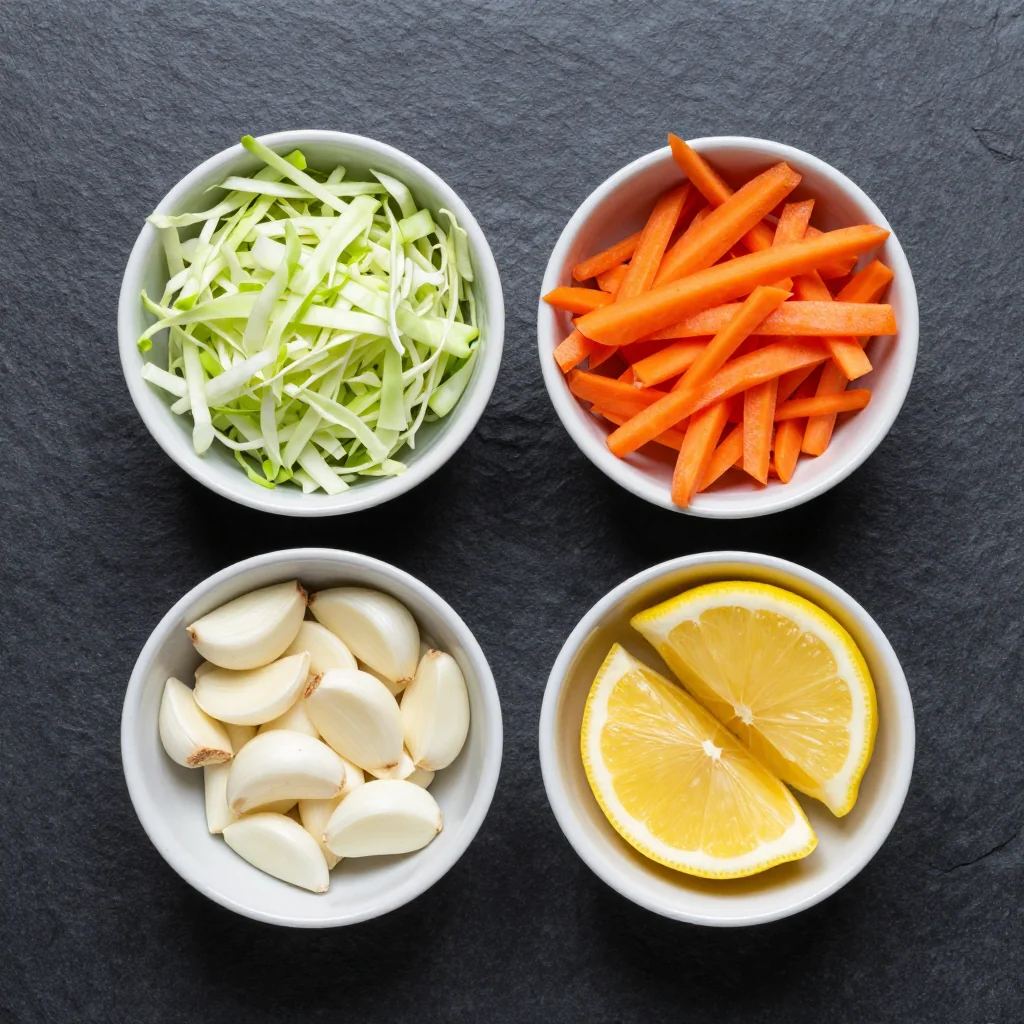
The magic of this stir-fry lies in the contrast between soft, silky cabbage and bright, barely-cooked carrots. Choose vegetables that feel heavy for their size and smell faintly sweet—signs of freshness that translate directly to the finished dish.
Green cabbage is my go-to because its broad leaves wilt quickly yet keep a pleasant chew. Look for heads with tight, brightly colored leaves; avoid any with yellowing outer layers or a sulfurous smell. A 2-pound (900 g) head yields roughly 10 cups shredded—enough for four generous dinners. If you prefer a milder sweetness, swap in Napa or savoy; both work, though Napa releases more water so you may need an extra minute over high heat to drive off steam.
Carrots bring color and natural sugar. I peel them into long ribbons using a Y-peeler; the thin edges cook in seconds and grip the lemony dressing. Heirloom rainbow carrots are gorgeous but not mandatory—conventional orange carrots taste identical once kissed with garlic. Buy firm roots with no white “sunburn” spots; if they come with tops, remove before storing to prevent moisture loss.
Garlic is the backbone. Six cloves may sound brave, but cabbage loves bold aromatics. Mince half for the hot oil and slice the rest for a late addition; this staged approach layers flavor. If you’re garlic-shy, substitute half with fresh ginger for a warmer, slightly peppery note.
Lemon is non-negotiable. The zest goes in early to bloom in fat; the juice finishes the dish, waking up every other ingredient. Choose unwaxed, fragrant lemons—organic if possible since you’ll be zesting. In a pinch, lime works, though the finished dish tastes more tropical than Mediterranean.
Toasted sesame oil adds depth. A teaspoon at the end perfumes the entire skillet. Store yours in the fridge to keep those nutty volatiles from going rancid; you’ll be rewarded with a fragrance that smells like a sesame candy factory.
Soy sauce supplies umami and salt. I keep both light soy (for seasoning) and dark soy (for color) by the stove, but either alone is fine. Tamari keeps things gluten-free; coconut aminos reduce sodium if needed.
Neutral oil with a high smoke point—grapeseed, avocado, or refined peanut—lets vegetables sear rather than stew. Olive oil is lovely but can bitter at wok temperatures, so save it for finishing.
How to Make Batch-Cook Friendly Cabbage and Carrot Stir-Fry with Garlic and Lemon
Prep your vegetables batch-style
Remove the tough outer leaves from the cabbage, quarter the head, and cut out the core. Slice each quarter across the grain into ¼-inch (6 mm) ribbons; this width softens quickly yet keeps body. Peel the carrots into long, paper-thin strips; rotate as you go so the remaining carrot stays flat against the board. Finally, mince 3 garlic cloves, slice the remaining 3, and zest the lemon before juicing it—order matters here, because sticky lemon zest is easier to handle when the fruit is still whole.
Mix the stir-fry sauce
In a small jar combine 3 tablespoons light soy sauce, 1 tablespoon dark soy (optional for color), 1 teaspoon sugar to balance lemon, 2 tablespoons water, and 1 teaspoon cornstarch. Shake until smooth; the starch will thicken the juices released by cabbage, giving you glossy, restaurant-style glaze rather than watery pool at the bottom of your container when you reheat later.
Heat your widest pan until smoking
Place a 14-inch (35 cm) carbon-steel wok or 12-inch cast-iron skillet over high heat. When a bead of water evaporates in 1 second, swirl in 2 tablespoons neutral oil. Tilt the pan so the oil races up the sides, creating a non-stick surface—essential for batch cooking because you’ll crowd the pan and need every inch to stay slick.
Aromatics first: garlic and zest
Add the minced garlic and all of the lemon zest. Stir-fry for 10 seconds—just until the kitchen smells like garlic bread and the zest sizzles. Do not let the garlic brown; bitter specks will haunt tomorrow’s leftovers.
Cabbage in mountains—don’t panic
Tip in all the cabbage. Yes, it will tower above the rim like a leafy Vesuvius. Using tongs or two wooden spoons, lift from the bottom and fold for 30 seconds; the salt in the cabbage draws moisture, collapsing the mountain by half. Drizzle another tablespoon of oil around the edge to help edges caramelize.
Carrots join for color and crunch
Scatter the carrot ribbons across the cabbage. Stir-fry 90 seconds; you want them to pick up toasted edges but stay vivid. Keep the heat heroic—if the pan goes quiet, the vegetables are steaming, not searing. Push a few pieces against the metal; golden freckles mean you’re on the right track.
Sauce and the final flash
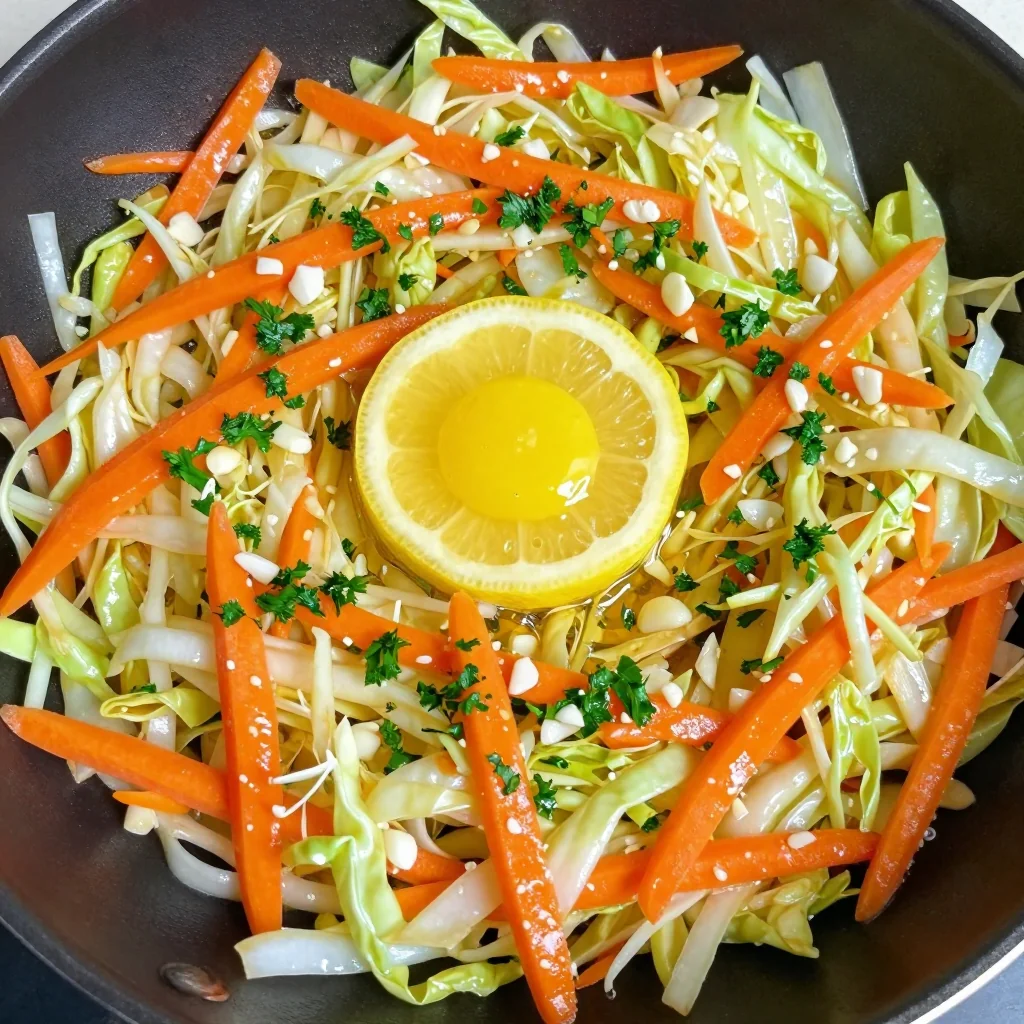
Restir the sauce (cornstarch settles), then pour in a thin stream around the pan perimeter. Everything will hiss and tighten within 30 seconds. Add the sliced garlic for a pop of raw pungency, then kill the heat. Finish with lemon juice and sesame oil, tossing to coat every strand. Taste: you want bright, savory, faintly sweet. Adjust with more soy for salt or more lemon for zing.
Cool quickly for safe batch storage
Spread the stir-fry on a large sheet pan; the thin layer releases steam and halts carry-over cooking. Once lukewarm, portion into 2-cup (480 ml) containers—my sweet spot for single lunches. Refrigerate up to 5 days or freeze up to 3 months. Reheat in a skillet with a splash of water to reinvigorate, or microwave covered for 90 seconds.
Expert Tips
Screaming hot pan = no soggy veg
If your stove is modest, cook half the cabbage, remove, then repeat. A crowded pan drops temperature and boils vegetables in their own juice.
Blot excess water before cooking
Cabbage straight from the produce mister holds hidden water. A quick spin in a salad dryer or a pat with a towel prevents stewy stir-fry.
Under-cook by 30 seconds for meal-prep
Vegetables continue cooking when packed hot; stopping early keeps them crisp through reheat cycles later in the week.
Flash-freeze single portions
Spread cooled stir-fry on a parchment-lined tray, freeze 1 hour, then bag. The grains stay loose, so you can pour out exactly what you need.
Revive with acid, not just salt
Leftovers tasting flat? A squeeze of fresh lemon or a splash of rice vinegar perks up flavors without more sodium.
Scale by weight, not volume
Cabbage shreds compress unpredictably. Weighing (1 kg cabbage : 400 g carrot) guarantees the same flavor balance whether you’re feeding four or forty.
Variations to Try
-
Spicy Korean-style
Add 1 tablespoon gochujang to the sauce and finish with toasted sesame seeds and scallions. The fermented chile paste deepens overnight, making next-day lunches irresistible.
-
Protein punch
Fold in a can of drained chickpeas or 300 g cubed tofu during the final 30 seconds. Both absorb the garlicky lemon glaze and turn a side dish into a one-bowl meal.
-
Thai basil crunch
Swap sesame oil for coconut oil, finish with a handful of torn Thai basil and a drizzle of coconut milk. The herbs stay dark green even after freezing.
-
Winter comfort
Stir through 1 teaspoon smoked paprika and ½ cup raisins. The sweet-smoky pairing turns summer produce into cold-weather comfort that reheats beautifully under a blanket of melted cheese if you dare.
Storage Tips
Cool leftovers within two hours to maintain both safety and texture. Divide into shallow containers so the center chills rapidly; a deep tub stays in the bacterial danger zone longer than you think. Refrigerated stir-fry keeps 5 days without loss of crunch, thanks to the quick hot-to-cold sheet-pan method described above.
For longer keeping, freeze portions in labeled zip bags with the air pressed out. Lay flat on a freezer shelf; once solid, stack like books to reclaim space. The vegetables will stay perky for 3 months. Thaw overnight in the fridge or, in a pinch, submerge the sealed bag in cold water for 20 minutes. Reheat in a dry skillet over medium-high heat, stirring often, until steam rises—usually 3 minutes. Microwaving is acceptable; cover and use 70 % power to avoid rubbery carrots.
If you plan to freeze, consider under-seasoning slightly; salt perception dulls when food is cold. Brighten with fresh lemon juice after reheating and you’ll swear it was cooked minutes ago.
Frequently Asked Questions
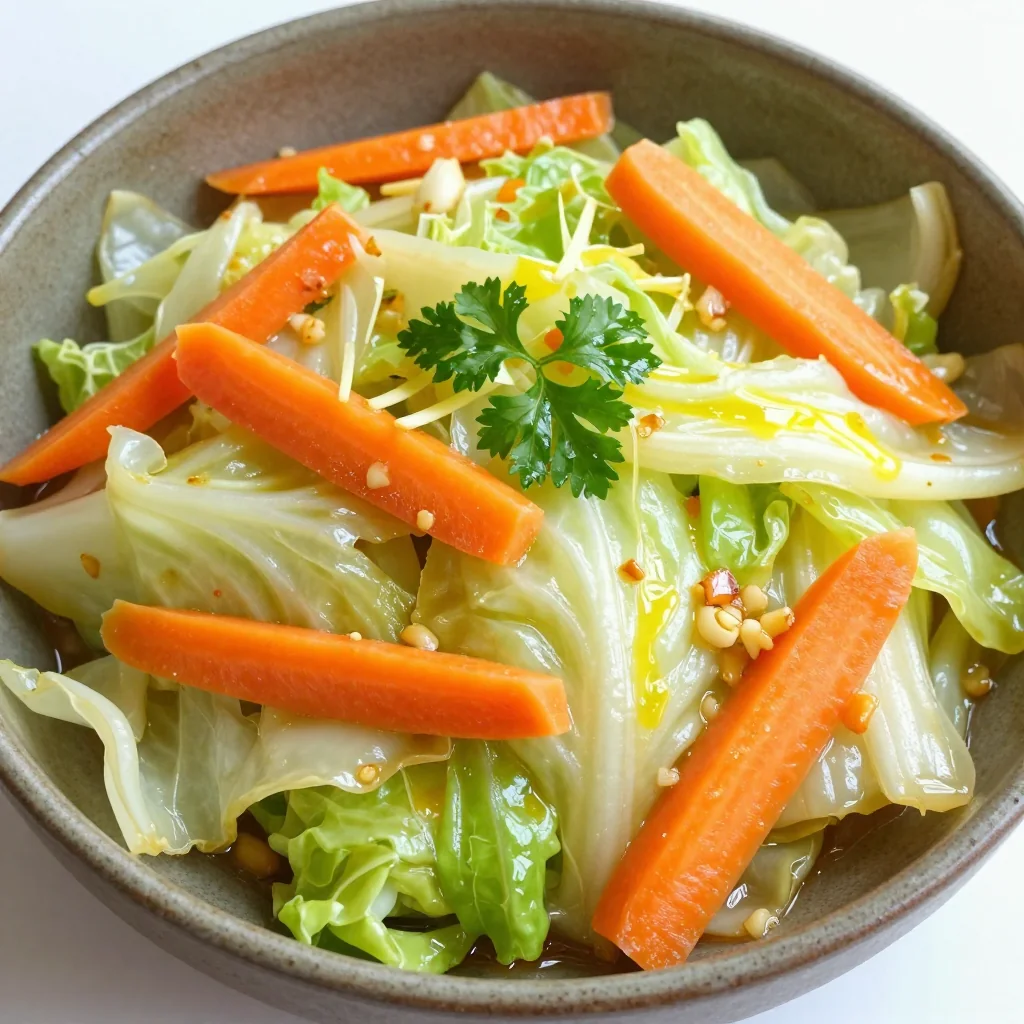
batchcook friendly cabbage and carrot stir fry with garlic and lemon
Ingredients
Instructions
- Prep: Shred cabbage, peel carrots, mince/slice garlic, zest and juice lemon.
- Stir sauce: Whisk soy sauces, sugar, cornstarch, and 2 tablespoons water until smooth.
- Heat pan: Set wok over high heat until smoking; swirl in 2 tablespoons neutral oil.
- Aromatics: Add minced garlic and lemon zest; stir-fry 10 seconds.
- Cabbage: Add cabbage, fold 30 seconds, drizzle 1 more tablespoon oil, cook 2 minutes.
- Carrots: Add carrot ribbons; stir-fry 90 seconds until edges toast.
- Season: Stir sauce, pour around edges; toss 30 seconds until glossy.
- Finish: Off heat, add sliced garlic, lemon juice, and sesame oil. Serve or cool for batch storage.
Recipe Notes
Under-cook slightly if freezing; vegetables finish cooking when reheated. Add fresh lemon after thawing for best flavor.