I was halfway through a midnight dinner prep, juggling a pot of simmering stock, a skillet of caramelized onions, and a stubborn chicken thigh that refused to brown. Suddenly, the skillet slipped, sending a splash of oil into the stove, and the kitchen was a smoky mess of panic and burnt garlic. I stared at the charred edges and thought, “If only I had a trick that could turn this disaster into a showstopper.” That moment sparked the creation of the ultimate Coq au Champagne, a dish that turns a kitchen fiasco into a celebration of flavor.
Picture this: the first sizzle of pancetta releasing a buttery aroma that mingles with the sharp scent of fresh thyme. The air thickens with the earthy perfume of mushrooms, the sweet tang of shallots, and a whisper of citrus from the Champagne. As the sauce simmers, it turns from a clear broth into a velvety glaze that clings to each chicken piece like silk. The sound of the pot bubbling is a metronome, guiding you toward that moment when everything comes together.
What makes this version stand out is that it doesn’t just mimic the classic French technique—it elevates it with a splash of Champagne, a generous amount of pancetta, and a final swirl of cream and mustard that gives the sauce a depth and richness that feels both indulgent and approachable. The chicken remains tender and juicy, the sauce is thick yet glossy, and the herbs provide a fresh lift that balances the richness. In short, this is hands down the best version you’ll ever make at home, and it’s built for both novice cooks and seasoned chefs who crave a dish that’s as impressive as it is delicious.
I dare you to taste this and not go back for seconds. I’ll be honest—by the time you finish the first bite, you’ll be planning the next dinner. Picture yourself pulling this out of the oven, the whole kitchen smelling incredible, and the table set with a glass of chilled Champagne to toast the triumph. That’s the kind of moment you’ll be replaying in your mind for days. Stay with me here—this is worth it.
What Makes This Version Stand Out
- Flavor: The combination of Champagne and heavy cream creates a sauce that is both effervescent and velvety, giving the dish an unmistakable French flair while remaining approachable for home cooks.
- Texture: The bone‑in, skin‑on thighs develop a crisp edge that contrasts beautifully with the tender meat inside, and the pancetta adds a satisfying crunch.
- Simplicity: Despite its luxurious ingredients, the cooking method is straightforward, making it an ideal dish for busy weeknights.
- Ingredient Quality: Using fresh herbs, premium pancetta, and real Champagne elevates the dish from ordinary to extraordinary.
- Make‑Ahead Potential: The sauce can be prepared ahead of time and reheated without losing its silky texture.
- Crowd Reaction: Guests will marvel at the aroma, taste the depth of flavor, and ask for the recipe—this dish guarantees conversation and compliments.
Inside the Ingredient List
The Flavor Base
The 4 ounces of diced pancetta is the cornerstone of the sauce’s savory depth. As it renders, it releases a smoky, salty richness that grounds the dish. If you skip pancetta, you lose that subtle, meaty undertone, and the sauce becomes overly acidic from the Champagne. For a vegetarian version, use finely chopped mushrooms instead, but note that the flavor profile will shift noticeably.
The 1/2 cup small‑diced carrots add a touch of natural sweetness and color contrast. Carrots also provide a gentle sweetness that balances the acidity of the Champagne. If you’re in a hurry, you can use frozen diced carrots; just be sure to thaw them first to avoid excess moisture.
The 4 medium shallots are the aromatic foundation, releasing a subtle onion sweetness that melds with the garlic. Shallots are less pungent than onions, giving the dish a refined flavor. If you’re allergic to onions, finely diced leeks can be a suitable substitute.
The 6 cloves of minced garlic add a punch of aroma that lingers through the sauce. Garlic’s sharpness is mellowed by the Champagne, creating a layered taste experience. For a milder garlic flavor, reduce the amount to 4 cloves or use garlic powder sparingly.
The Texture Crew
The 8 ounces of cremini mushrooms bring earthiness and a meaty texture that complements the chicken. They also help thicken the sauce slightly as they release their moisture. If you prefer a cleaner sauce, use button mushrooms or even a small amount of finely grated Parmesan for thickness.
The 2 tablespoons of all‑purpose flour act as a roux, helping to thicken the Champagne reduction into a luscious glaze. Flour also helps to bind the sauce, preventing it from separating. If you’re gluten‑free, replace the flour with cornstarch or a gluten‑free flour blend.
The Unexpected Star
The 1.5 cups of Champagne is what sets this dish apart from the traditional Coq au Vin. The effervescence adds a subtle lift, while the subtle sweetness balances the savory elements. If you don’t have Champagne, a dry white wine or a sparkling rosé can work, but the flavor will be noticeably different.
The 6‑8 fresh thyme sprigs and 1 rosemary sprig infuse the sauce with aromatic herbs that echo classic French cuisine. The combination of thyme and rosemary offers a fragrant bouquet that elevates the dish’s complexity. If you’re out of fresh herbs, use dried thyme and rosemary, but add them later in the cooking process to preserve their flavor.
The kitchen twine and bay leaf are small but essential touches. Twine holds the chicken thighs together, ensuring even cooking, while the bay leaf adds a subtle herbal note that disappears after simmering. If you don’t have kitchen twine, use a clean kitchen towel or simply skip it; the result will still be delicious.
Everything's prepped? Good. Let's get into the real action...
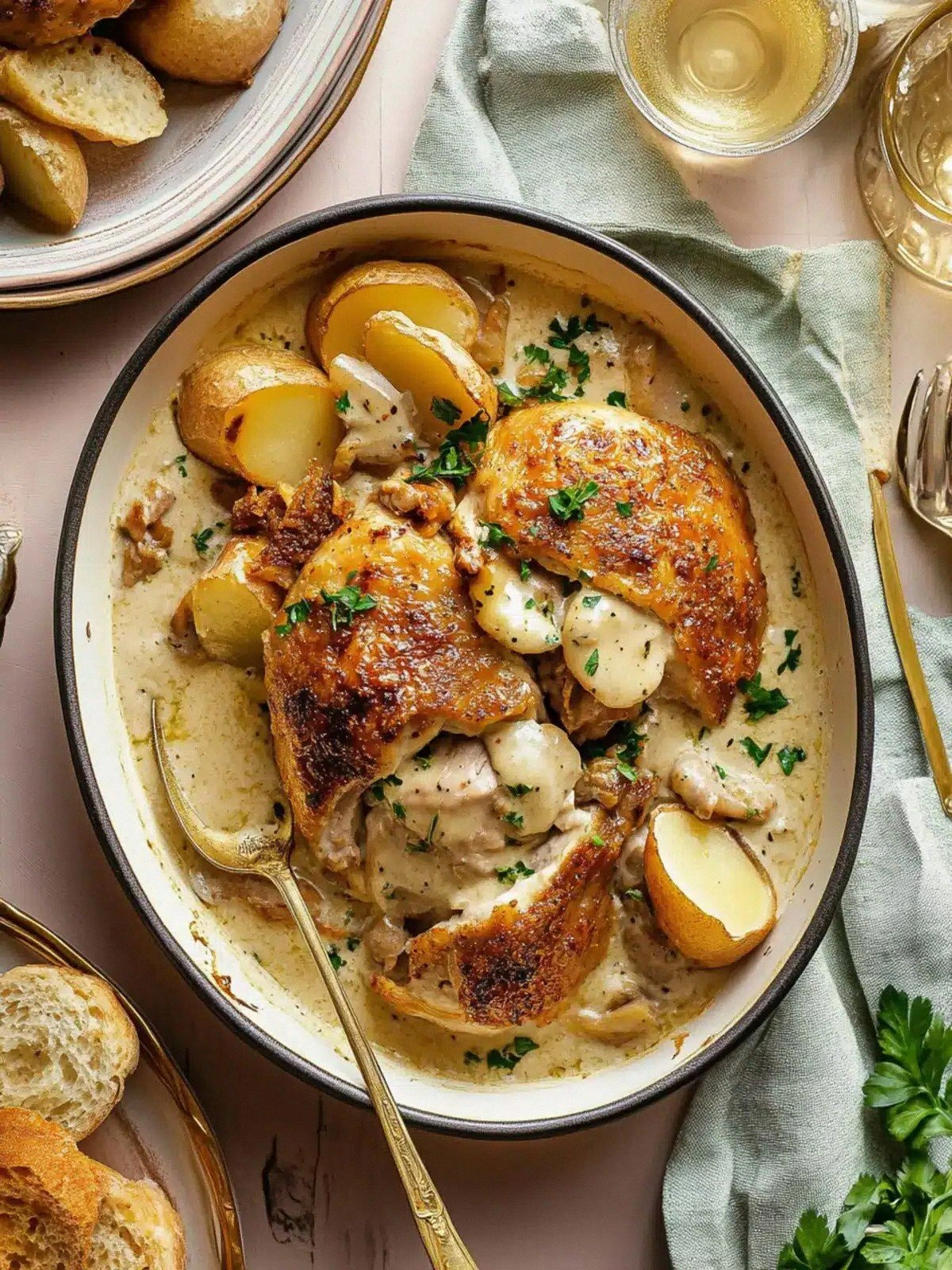
The Method — Step by Step
- Season the chicken thighs with 2 teaspoons kosher salt and 1 teaspoon freshly ground black pepper. Pat them dry with paper towels; moisture is the enemy of crisp skin. Let them sit at room temperature for 15 minutes—this ensures even cooking.
- Heat a heavy‑bottomed Dutch oven over medium heat. Add the pancetta and let it render until golden and crisp, about 5 minutes. The sizzling sound is a cue that the fat is ready to embrace the aromatics.
- Add the diced carrots, shallots, and garlic to the pan. Sauté until the shallots soften and the carrots begin to caramelize, about 3–4 minutes. The aroma should be intoxicating—this is the foundation of the sauce.
- Fold in the mushrooms and cook for another 2 minutes, letting them release their juices. The mushrooms should look glossy and slightly browned on the edges.
- Stir in the flour, coating the vegetables evenly. Cook for 1 minute to eliminate the raw flour taste. This roux will help thicken the Champagne reduction.
- Pour in the Champagne, scraping the bottom of the pan to release browned bits. The liquid should reduce by half, concentrating the flavors. Keep an eye on the heat to prevent boiling.
- Tie the chicken thighs with kitchen twine, then place them skin‑side down in the pan. Sprinkle thyme, rosemary, and the bay leaf over the top. Cover and simmer gently for 30 minutes, turning the thighs halfway through.
- Remove the chicken and set aside. Whisk in 1/2 cup heavy cream and 2 teaspoons Dijon mustard until the sauce is smooth and glossy. Taste and adjust seasoning with salt and pepper if needed.
- Return the chicken to the pan, nestling it in the sauce. Simmer for an additional 5 minutes to reheat the meat and marry the flavors. The sauce should coat the chicken like velvet.
- Garnish with finely chopped parsley and serve immediately over a bed of creamy mashed potatoes or buttered noodles. The final flourish should make your guests swoon.
That's it—you did it. But hold on, I've got a few more tricks that'll take this to another level...
Insider Tricks for Flawless Results
The Temperature Rule Nobody Follows
Many cooks over‑cook the chicken, resulting in dry meat. The secret is to keep the skillet at a steady, medium heat so the thighs cook through without scorching. Use a thermometer; the internal temperature should hit 165°F (74°C) for perfect doneness.
Why Your Nose Knows Best
Your sense of smell is your best judge of readiness. When the sauce turns from a thin liquid to a thick glaze, that’s the cue to reduce the heat. If the aroma becomes overly wine‑y or bitter, lower the temperature immediately.
The 5‑Minute Rest That Changes Everything
Let the chicken rest for 5 minutes after cooking. This allows the juices to redistribute, keeping the meat moist. Cover it loosely with foil to keep it warm while you finish the sauce.
The Sauce‑to‑Chicken Ratio
Don’t skimp on the sauce. The ratio should be about 1:1 by volume. If the sauce feels thin, add a tablespoon of flour or a splash of heavy cream to thicken.
The Final Cream Swirl
Add the heavy cream just before serving. This keeps the sauce silky and prevents it from thickening too much during the final simmer. A quick stir will make it glossy and luxurious.
Creative Twists and Variations
This recipe is a playground. Here are some of my favorite ways to switch things up:
Herb‑Infused Champagne
Add a handful of fresh basil or mint leaves to the Champagne before reducing. The herbal note will give the sauce a bright, unexpected twist that pairs well with roasted vegetables.
Spicy Kick
Introduce a pinch of red pepper flakes or a splash of hot sauce during the aromatics stage. The heat will cut through the richness and add a lively contrast.
Smoky Sear
Finish the chicken thighs with a quick sear in a hot cast‑iron skillet after the simmer. The caramelized crust will add depth and a smoky flavor that elevates the dish.
Vegetarian Version
Replace the chicken with thick slices of seared portobello mushrooms. Use vegetable stock instead of Champagne, and keep the rest of the ingredients unchanged for a hearty, plant‑based meal.
Rustic Rustic
Swap the Champagne for a robust red wine like Burgundy and add a splash of tomato paste. The result is a richer, heartier sauce that’s perfect for a cozy winter dinner.
Storing and Bringing It Back to Life
Fridge Storage
Store leftovers in an airtight container for up to 3 days in the refrigerator. Keep the sauce and chicken separate to maintain texture, then reheat together gently on the stove.
Freezer Friendly
Freeze the sauce and chicken in separate containers for up to 2 months. Thaw overnight in the refrigerator and reheat on low heat, adding a splash of water or stock to revive the sauce’s richness.
Best Reheating Method
Reheat on low heat, stirring frequently. Add a tiny splash of water or stock to keep the sauce from drying out. The dish should feel warm and silky, just like the first time.