Picture this: I’m standing in my cramped kitchen, the clock ticking, and a craving for something spicy and comforting that feels like a hug from the inside. I’ve tried the store‑bought version of General Tso’s cauliflower, but it felt like a distant memory of a restaurant that never quite lived up to the hype. The sauce was thin, the florets soggy, and the overall flavor was a bland whisper instead of the bold, tangy roar I expected. That night, after a handful of disappointing bites, I swore I’d create a version that would make my taste buds do the cha‑cha on their own.
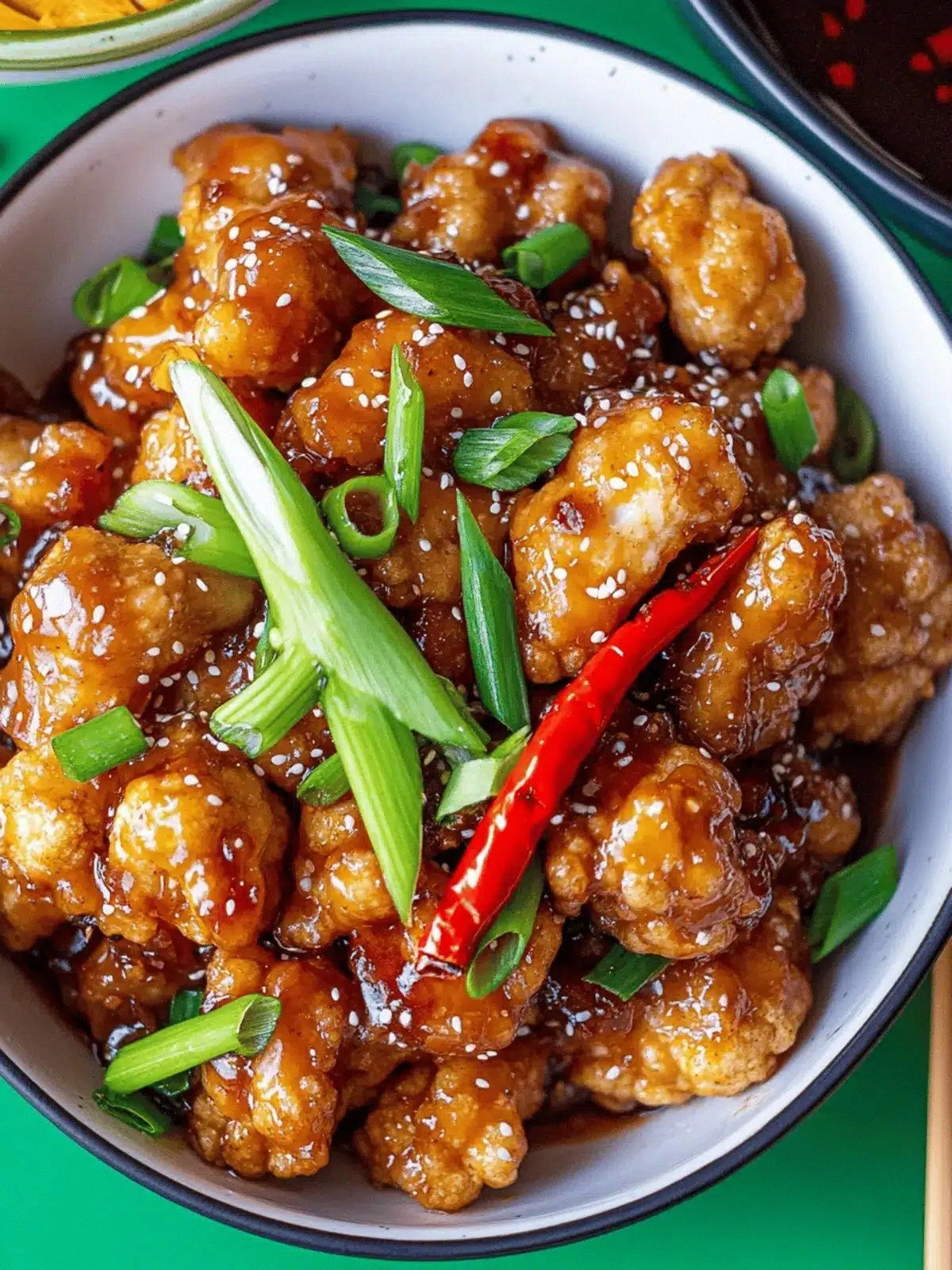
Fast forward a few weeks, I’m in a kitchen that smells like toasted sesame oil, sweet orange, and a hint of fermented rice vinegar. My cauliflower florets are crisped to a golden perfection that shatters like thin ice when you bite into them. The sauce is thick, glossy, and coats each bite like velvet, while the heat from the red chilli dances across my tongue. The moment the first bite hits your palate, the sweet, salty, and umami notes explode in a harmonious crescendo that makes you want to taste again and again. I dare you to taste this and not go back for seconds.
What sets this recipe apart is not just the flavor profile but the method that transforms ordinary cauliflower into a dish that feels like a gourmet experience. The combination of rice flour and cornstarch creates a batter that’s airy yet crunchy, a texture that holds the sauce like a secret handshake. I’ve tweaked the sauce’s balance of orange juice and soy sauce to give it a bright citrus lift, while the subtle heat from the chilli keeps it grounded. The result? A dish that’s hands down the best version you’ll ever make at home, and I’m not exaggerating. Picture yourself pulling this out of the oven, the whole kitchen smelling incredible, and knowing you’re about to serve a crowd‑pleaser that’ll leave everyone begging for the recipe.
Let me walk you through every single step — by the end, you’ll wonder how you ever made it any other way. I’ll share the secrets that most recipes get completely wrong, and the techniques that elevate the dish from a simple side to an unforgettable star of any meal. Ready? Let’s dive in.
What Makes This Version Stand Out
- Flavor: The sauce is a symphony of sweet orange, savory soy, and subtle heat, delivering a depth that’s both familiar and adventurous.
- Texture: A batter of rice flour and cornstarch gives the cauliflower a light, airy crunch that contrasts beautifully with the silky sauce.
- Convenience: All steps are streamlined, with a single pan for frying and a quick sauce assembly that saves time.
- Health‑Friendly: Using cauliflower as the star keeps calories low while packing in fiber and vitamins.
- Versatility: The recipe scales for any number of servings, and the sauce can be adapted for gluten‑free or keto versions.
- Make‑ahead Potential: The sauce can be pre‑made and stored, and the batter can be portioned for quick frying later.
Inside the Ingredient List
The Flavor Base
The foundation of this sauce starts with a fragrant sauté of garlic, ginger, and a single small red chilli. Each ingredient is carefully measured: 3 cloves of garlic for a punch of umami, 4 cm of ginger for a zesty kick, and a whole red chilli to keep the heat at just the right level. If you’re a heat‑hater, you can reduce the chilli to a quarter, but the sauce will lose some of its signature bite. These aromatics form the aromatic backbone, ensuring every bite carries a depth that goes beyond the surface.
The Texture Crew
The batter that coats the cauliflower is a marriage of rice flour and cornstarch. The rice flour gives the coating a light, airy quality, while the cornstarch adds a subtle chew that prevents the batter from becoming too brittle. The 1.5 tablespoons of cornstarch in the sauce act as a thickening agent, giving the sauce its glossy sheen. If you’re looking for a gluten‑free option, simply swap the rice flour for almond flour, but the texture will be slightly denser.
The Unexpected Star
Orange juice might seem like an odd choice for a Chinese‑style dish, but its bright citrus notes cut through the richness of soy sauce and balance the sweetness of sugar. The 150 ml of orange juice adds a subtle sweetness that lifts the entire dish. If you’re in a pinch, you can replace it with pineapple juice for a tropical twist, but the orange flavor is essential for authenticity.
The Final Flourish
The finishing touch comes from a splash of sesame oil and a pinch of baking powder. The sesame oil adds a nutty aroma that elevates the sauce, while the baking powder helps the batter rise slightly, creating a fluffier coating. The 0.5 teaspoon of salt is crucial; it enhances all the flavors without overpowering them. A quick pinch of pepper can also be added for a subtle undertone of spiciness.
Everything’s prepped? Good. Let’s get into the real action.
The Method — Step by Step
- Step 1: Prep the Cauliflower. Rinse a small head of cauliflower and cut it into bite‑size florets. Pat them dry with a clean towel; moisture is the enemy of crispness. This step is crucial because any leftover water will steam the cauliflower instead of frying it. I always let them sit on a paper towel for a few minutes to absorb excess moisture.
- Step 2: Make the Batter. In a shallow dish, whisk together 100 g of rice flour, 2 tablespoons of cornstarch, 1 teaspoon of baking powder, and 0.5 teaspoon of salt. Slowly add 60-80 ml of water, stirring until you have a smooth, thick batter that coats the back of a spoon. The batter should be thick enough to cling to the florets but not so thick that it clumps. A good test: drop a spoonful into cold water; it should hold its shape.
- Step 3: Coat the Florets. Dip each cauliflower floret into the batter, ensuring it’s fully covered. Shake off any excess batter before placing it in the hot oil. The batter should form a thin, even layer that crisps beautifully. This is where the magic begins; the batter transforms the cauliflower into a golden, crunchy shell.
- Step 4: Fry the Cauliflower. Heat 3 cups of oil in a deep pan or wok to 180°C (350°F). Carefully drop the battered florets into the oil in batches to avoid overcrowding. Fry for 4-5 minutes until they’re golden brown and crisp. Use a slotted spoon to remove them, letting excess oil drain on a paper towel. The key is to maintain consistent temperature; if the oil drops too low, the batter will become soggy.
- Step 5: Prepare the Sauce. While the cauliflower is frying, heat 1 tablespoon of oil in a separate pan over medium heat. Add 3 cloves of minced garlic, 4 cm of minced ginger, and the finely sliced red chilli. Sauté for 1-2 minutes until fragrant. This aromatic base is the soul of the dish.
- Step 6: Combine the Liquids. Add 2 tablespoons of tomato paste, 150 ml of orange juice, 125 ml of soy sauce, 80 ml of rice vinegar, and 50 g of sugar to the pan. Stir until the sugar dissolves. Let the mixture simmer for 3-4 minutes, allowing the flavors to meld. Watch Out: the sauce can scorch if the heat is too high; keep it at a gentle simmer.
- Step 7: Thicken the Sauce. In a small bowl, whisk 1.5 tablespoons of cornstarch with 2 tablespoons of water to create a slurry. Stir this into the sauce and simmer for another 2 minutes until it thickens to a glossy coating. The sauce should cling to the cauliflower without dripping.
- Step 8: Combine. Add the fried cauliflower to the sauce, tossing gently to coat each floret. Drizzle 1 teaspoon of sesame oil over the top and give it a final stir. The sesame oil adds a nutty aroma that completes the flavor profile. Serve immediately for the best texture.
That’s it — you did it. But hold on, I’ve got a few more tricks that’ll take this to another level.
Insider Tricks for Flawless Results
The Temperature Rule Nobody Follows
Maintaining the oil at a steady 180°C (350°F) is the secret to a crisp coating that doesn’t absorb too much oil. Use a thermometer or the “paper test” — drop a small piece of batter into the oil; if it sizzles and rises to the surface within 30 seconds, the oil is ready. If it takes longer, the oil is too cool and the batter will become greasy.
Why Your Nose Knows Best
Before you finish cooking, give the dish a sniff. If the aroma is bright and citrusy with a hint of soy, you’re on the right track. If it smells too sweet or too raw, adjust the balance by adding a splash of vinegar or a pinch of salt. Your nose is the ultimate judge of flavor.
The 5-Minute Rest That Changes Everything
After frying, let the cauliflower rest on a rack or paper towels for 5 minutes. This step allows excess oil to drain and the coating to set, ensuring each bite remains crisp. Skipping this rest often leads to soggy edges.
Use a Deep Pan for Even Frying
A deep, heavy‑bottomed pan or wok distributes heat evenly and prevents hot spots that can burn the batter. If you don’t have a wok, a large skillet works fine as long as it’s wide enough to accommodate the florets without overcrowding.
Don’t Overcrowd the Pan
Frying in small batches keeps the oil temperature stable and ensures the cauliflower crisps rather than steams. If you’re short on time, you can fry a little at a time, but make sure to keep the oil level consistent by adding more oil as needed.
Serve With a Fresh Side
Pair the cauliflower with a simple cucumber salad or steamed bok choy to cut through the richness. The fresh greens provide a cool contrast that balances the heat and sweetness of the dish.
Creative Twists and Variations
This recipe is a playground. Here are some of my favorite ways to switch things up:
Spicy Peanut Crunch
Add 2 tablespoons of creamy peanut butter to the sauce and a pinch of crushed peanuts on top. The nutty flavor complements the citrus, and the peanuts add an extra crunch that’s hard to resist.
Herb‑Infused Cauliflower
Stir in a tablespoon of chopped fresh cilantro or basil into the batter before coating. The herbs infuse the cauliflower with a fresh aroma and a subtle green note that brightens the dish.
Low‑Carb Version
Replace rice flour with almond flour and reduce the cornstarch to 1 tablespoon. The texture will be slightly denser, but the dish remains flavorful and satisfies the craving for a crispy coating.
Sweet and Smoky
Add a teaspoon of smoked paprika to the sauce and use smoked sea salt. The smoky undertone adds depth and pairs beautifully with the orange juice’s brightness.
Vegan Upgrade
Use a vegan soy sauce and ensure the sesame oil is plant‑based. The dish remains 100% plant‑based and delivers all the same flavor punch.
Storing and Bringing It Back to Life
Fridge Storage
Store leftover cauliflower in an airtight container in the refrigerator for up to 3 days. The coating may soften slightly, but the flavor remains intact.
Freezer Friendly
Freeze the fried cauliflower in a single layer on a parchment paper tray before transferring to a freezer bag. Store for up to 2 months. Reheat in a hot oven at 200°C (400°F) for 10 minutes.
Best Reheating Method
To revive the crispness, reheat in a skillet over medium heat for 3-4 minutes, turning once. Add a splash of water to create steam, then cover for 30 seconds to keep the coating moist before removing the lid.